Yemen’s pregnant women face double toll of conflict and extreme heat
Want to bookmark your favourite articles and stories to read or reference later? Start your Independent Membership today.
The Houthis’ rapid advance through western Yemen has displaced more than 130,000 people, and dragged a an 11-year conflict that has too often been overlooked back into the headlines. But behind the latest fighting lies a hidden toll from this civil war.
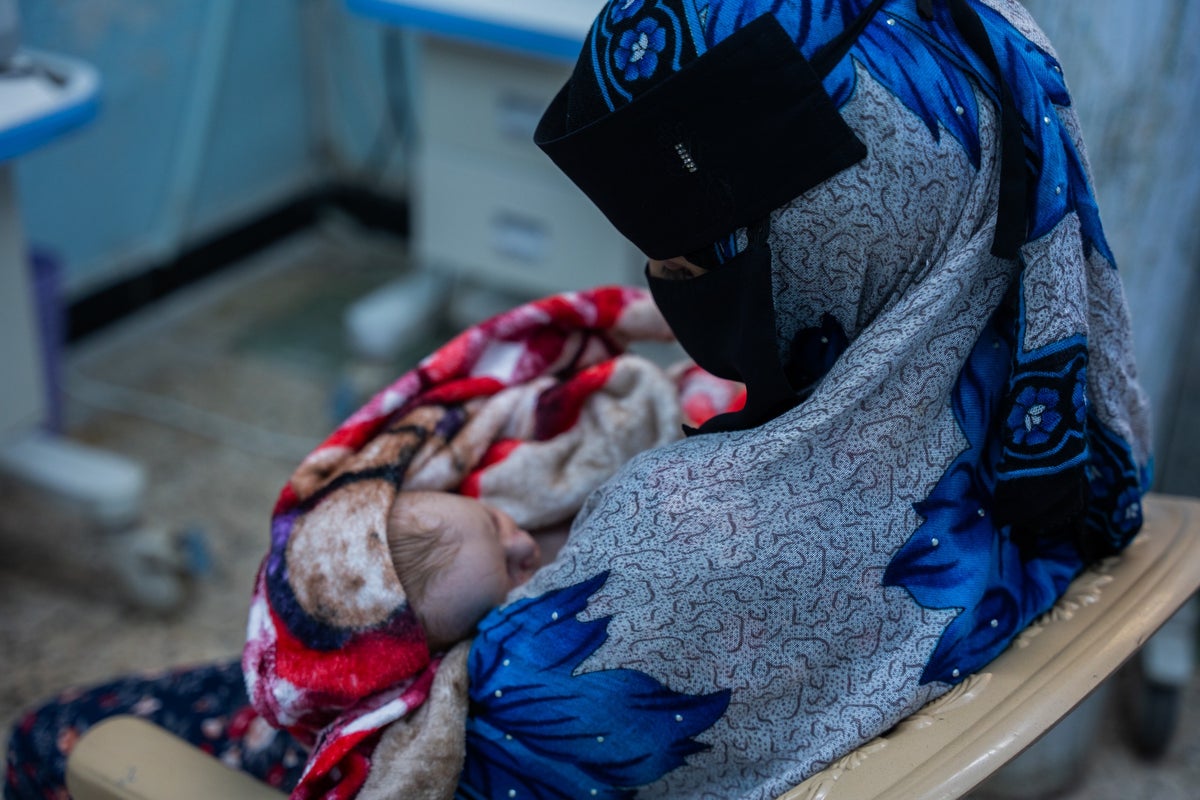
After 13 years without having another child, Umm Ali, a mother of three from Aden – the southern port that serves as the interim base of the Yemeni government – was overjoyed to learn that she was pregnant again.
But what should have been a happy event quickly became a physically and emotionally exhausting experience. The overwhelmingly intense heat this summer, and prolonged electricity cuts in Aden, resulted in Umm Ali struggling with intense exhaustion and nausea.
Stuck at home without ever having the opportunity to consume, or even feel, something cold due to the lack of reliable electricity, eventually she completely lost her appetite and had to be taken to one of the city’s severely understocked hospitals.
According to Ali Daoudi, policy lead at Oxfam Yemen, pregnant women should be considered among those hardest hit of the combined impacts of the ongoing conflict, record extreme heat, and chronic power shortages facing Yemen right now.
“I have lived in this country for 17 years and I have never experienced a summer as hot as the one we have just come across – and the added impact of high humidity makes it truly unbearable,” says Daoudi. “Now imagine you have the added burden of pregnancy. You do not have the freedom to go outside and sleep in the streets as the men do, and all you have is a piece of paper to fan yourself.”
Umm Ali was able to receive intravenous fluids and nutrition when in hospital. She assumed her symptoms would soon ease, but she instead developed a blood clot in her right leg due to the prolonged period of dehydration and physical exhaustion.
Now in the final days of her ninth month of pregnancy, she remains in hospital under medical supervision as she waits to give birth. The strain, though, has not only been physical: “Everyone struggles to control their temper,” she says, suggesting that heat-driven tensions at home are also creating major difficulties.
Recent extreme heat in Yemen has been made much worse by the fact that acute fuel shortages and damaged infrastructure have residents of Aden with sometimes only two hours of electricity per day.
With temperatures regularly crossing 40C over the summer, hundreds took to the streets over the summer demanding improvements in electricity and water supplies, in what became known as the “mattress revolution” due to how many spent the nights sleeping in the streets. But women, for whom it is not socially acceptable to sleep outside in Yemen, would not generally partake.
“What you see in the news tends to be about missiles, bullets, and frontlines reactivated," says Daoudi. “But here - it’s not that people don’t have air-conditioning. They also don’t have fans, and they don’t even have fridges… and there is often no chance of buying these things as prices are increasing by hundreds of dollars.”
He continues: “We understand that there have been heatwaves in Europe - but that is nothing like what it is like here if you are pregnant, where the heat is not only unbearable, but there are also more mosquito-borne diseases, and the sewage is now leaking from the ground.”
Studies show that extreme heat seriously increases risks of cardiovascular complications for pregnant mothers, as well as decreasing blood flow to the placenta which can exacerbate conditions like pre-eclampsia. Other papers find that high heat exposure increases the odds of premature birth by as much as 26 per cent, and that high temperatures increase the rate of stillbirths by roughly five per cent per 1°C rise in temperature.
Charity-workers in Yemen stress that this picture can change if money is available. Nineteen-year-old Amal faced similar difficulties to Umm Ali during the early months of her pregnancy, suffering from a drop in blood pressure as temperatures soared this summer and electricity became increasingly unreliable.
In this instance, however, her husband was able to borrow money to install a solar power system at home, allowing the family to reduce the heat inside the home and keep drinks and food cool. As conditions improved, Amal says her health gradually stabilised.
For families who cannot afford these measures, the choices can be far more drastic. Some are selling whatever they can to pay for basic protection from the heat.
“Many folks have been selling gold and family heirlooms that they have inherited in order to buy solar panels and fans… I havea neighbour who did this, who had little option because his daughter was breaking out in hives from the heat” says Daoudi. “Setting this up is not easy: not only do you have to buy a solar panel, but you have to buy a solar inverter. It all costs hundreds of dollars.”
An exodus of charities and humanitarian support in the wake of the US Agency for International Development (USAID) closing under Donald Trump, as well as aid cuts from countries like the UK, is also not helping matters.
One of the organisations Ali worked with before Oxfam, he says, was forced to cut its headcount by 95 per cent. “It was a near extinction event - and many other organisations have faced similar,” he says. “Another organisation we worked with essentially closed 43 health facilities overnight, which means you lose doctors, midwives, and the ability to monitor communicable diseases like polio and measles.”
The latest UN data suggests that Yemen has received around one third of the aid funding it received in 2024 so far this year. And the pressures on the funding that comes to Aden are increasing, as huge influxes of people come to the city as more of the country falls to Houthi rebels.
“Recent escalations present a dire threat to civilians in Yemen, who have already endured more than a decade of conflict and humanitarian crisis,” says Oxfam Yemen’s country director Ferran Puig. “Two thirds of the population in Yemen needs humanitarian assistance, and thousands are facing famine. Further military escalations will only deepen hunger and displacement and disrupt the humanitarian assistance millions depend on to survive.
“The international community must support efforts towards a peaceful solution and use its influence to de-escalate tensions and urgently restore and sustain vital aid to the country. Recent aid cuts have devastated lives.”
For now, mothers like Umm Ali have little they can do but pray that their pregnancies will be safe, and hope that some level of peace might return soon.