Yemen: International Maritime Security Faces a Difficult Test After the Fall of Bab al-Mandab - IOL
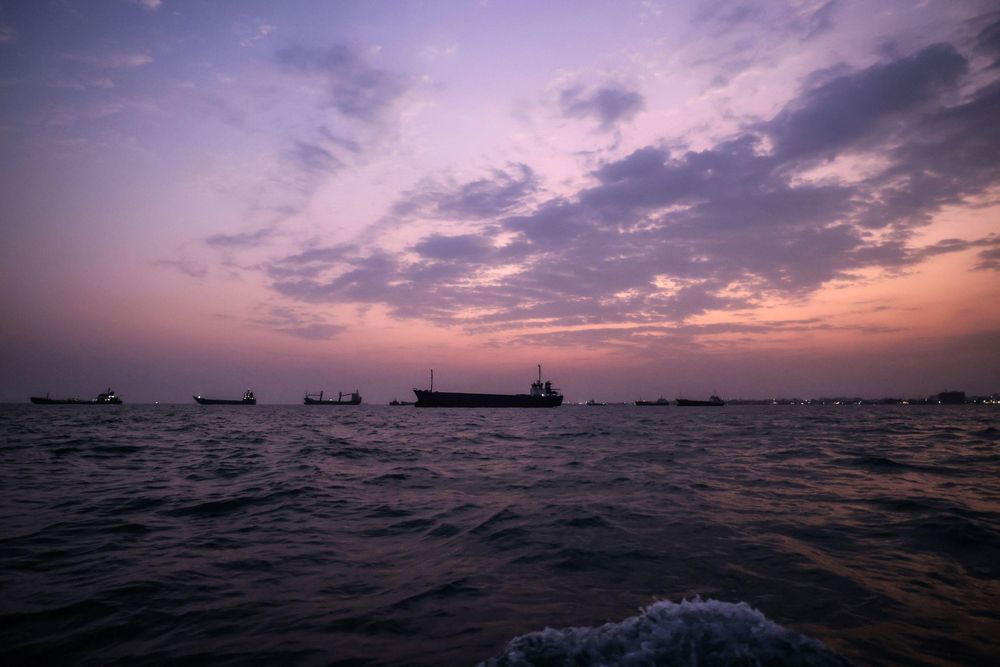
Vessels transit the Strait of Hormuz off the coast of the port city of Bandar Abbas in southern Iran on September 5, 2026.
Yemen’s military situation has undergone rapid developments following a week of fierce fighting between government forces and Ansar Allah (the Houthis) on several fronts, culminating in the Iran-backed group taking control of the western coast.
The Saudi-led Arab coalition forces had reached a fragile truce with the Houthi group in 2022. The Houthis control most of Yemen, including the capital, Sanaa. But during the current year, Yemen has begun to witness political, military, and battlefield shifts.
Amid the latest escalation in military tensions, an informed source told CNN on Friday that Saudi Crown Prince Mohammed bin Salman spoke twice on Thursday with US President Donald Trump and urged him to launch strikes against the Houthis, but Trump rejected the request.
News of the two calls—first reported by Axios—comes as the Houthis have made significant gains in recent days, while the conflict between the United States and Iran threatens to spread further to other fronts.
France 24 confirmed Trump’s rejection of the Saudi Crown Prince’s request, while sources indicate that US support is currently subject to strict restrictions, with American forces not directly participating in the strikes, nor assisting in refueling Saudi warplanes or providing any other operational support.
Meanwhile, the Houthis seized the islands of Greater and Lesser Hanish on Friday, the last two islands around the Bab al-Mandab area that had remained in government hands, according to a government military official. This came hours after Iran-backed fighters seized the strategic Mayyun Island in the middle of the strait, thereby completing their control over the strategic passage.
A Saudi-backed Yemeni government military official told Agence France-Presse on Friday: “Everything that was in our possession along the western coast has fallen,” referring to the Houthis’ control of the entire Red Sea coastline around Bab al-Mandab.
Unofficial estimates indicate that the maritime route extending from the Arabian Sea through the Gulf of Aden and Bab al-Mandab to the Suez Canal carries large quantities of oil and gas bound for Europe and Asia, making any security disruption there a direct source of pressure on maritime insurance rates, shipping costs, and supply chains.
Observers believe that the Sana’a forces’ control of the western coastal cities and their ports, stretching from the shores of Khokha south of Hodeidah to the shores of Dhu Bab east of Mokha, gives them direct oversight of maritime traffic, after previously exercising indirect oversight—before the fall of Mokha and Dhu Bab. It also enables them to track ships heading toward Saudi ports with extreme precision, amid the continuation of the “blockade for blockade” equation.
Meanwhile, the western coast, Bab al-Mandab, and Yemen’s strategic islands had been liberated by Emirati and southern forces in battles that lasted for years. They remained under the protection of Emirati forces for ten years, until January of last year, when Saudi-backed authorities requested the withdrawal of Emirati forces from Yemen at Riyadh’s direction.
In this context, Yemeni researcher Yaqoub al-Sufyani says that “most of the major battlefield breakthroughs achieved against the Houthis were linked to the presence of effective local forces on the ground, in whose establishment, support, and backing the UAE played a direct and pivotal role, whether in the south or along the western coast.”
He noted that Riyadh allowed “hardline ideological Yemeni forces, including currents linked to political Islam and the Muslim Brotherhood and hostile to the Southern Transitional Council, to gradually shift the Saudi compass from confrontation with the Houthis toward confrontation with its allies and partners in the anti-Houthi camp.”
He continued: “The UAE went from being the most important military partner on the ground to an adversary in the calculations of some Yemeni forces, and the Southern Transitional Council and southern forces that had fought the Houthis came to be presented to Riyadh as the threat that needed to be contained.”
He stressed that Saudi Arabia had thereby lost “a regional ally with direct experience on the Yemeni battlefield, as well as local forces that had demonstrated their ability to fight on the ground.”
Observers believe that Saudi Arabia’s bombing of southern forces last January, parts of which had been protecting the western coast, squandered all the security efforts that had been achieved in this regard. They pointed out that Riyadh had failed to protect international maritime routes and to deal effectively with local forces.
Activist Mohammed al-Falahi said in this context: “Bab al-Mandab was in the hands of the southern armed forces led by Aidarus al-Zoubaidi, but Saudi Arabia bombed them and accused their leadership of treason and acting as agents.”
He added: “Today, we are watching Saudi Arabia and the ‘Yemeni legitimacy’ confined to hotels in Riyadh squander Bab al-Mandab and Mayyun Island.”
The Bab al-Mandab Strait is a gateway for the route linking Asia and Europe via the Suez Canal, and a geopolitical chokepoint comparable in strategic importance to the Strait of Hormuz. Although it is less vital to the oil trade than the Strait of Hormuz, it remains a passage for transporting essential goods to all parts of the world, including millions of barrels of oil every day.
According to Reuters, the Houthis’ control of the Bab al-Mandab Strait threatens to exacerbate disruptions to Saudi oil supplies to Asia, amid the group’s earlier announcement of a maritime navigation ban in the Red Sea targeting Saudi Arabia, the world’s largest oil exporter.
Bab al-Mandab, also known as the “Gate of Tears” because of the dangers of navigation there, is the southern gateway to the Red Sea. It lies between Yemen on the Arabian Peninsula and Djibouti and Eritrea on the African coast, making it a major strategic gain for the Houthis, who control Yemen’s most densely populated areas and most of the north, according to the same source.
The Houthi group disrupted maritime navigation in the Red Sea in 2023, saying it was acting in support of Palestinians during Israel’s war on the Gaza Strip. The group also resumed attacks on shipping in the Red Sea, as well as on Saudi Arabia, this year in response to the US war on Iran, the Houthis’ close ally.
According to the available information, any prolonged disruption in Bab al-Mandab could affect the movement of trade bound for Egypt’s Suez Canal. It would also lead ships to reroute around Africa, meaning longer voyages and higher operating and insurance costs for companies.
Observers do not rule out the possibility that the group could gain additional leverage in the regional conflict, as the presence of the Houthis near maritime routes gives them greater capacity to threaten navigation as the confrontation escalates.
With this threat present in Bab al-Mandab, shipping companies may move to reassess the risks and costs associated with transiting the passage amid heightened security risks, potentially affecting maritime insurance, transportation costs, and global supply chains.
* Bayethe Msimang is an independent writer, analyst and political commentator.
** The views expressed do not necessarily reflect the views of IOL.