Xi suffered stroke, fainted at BRICS summit? China's CDP chief's big claim
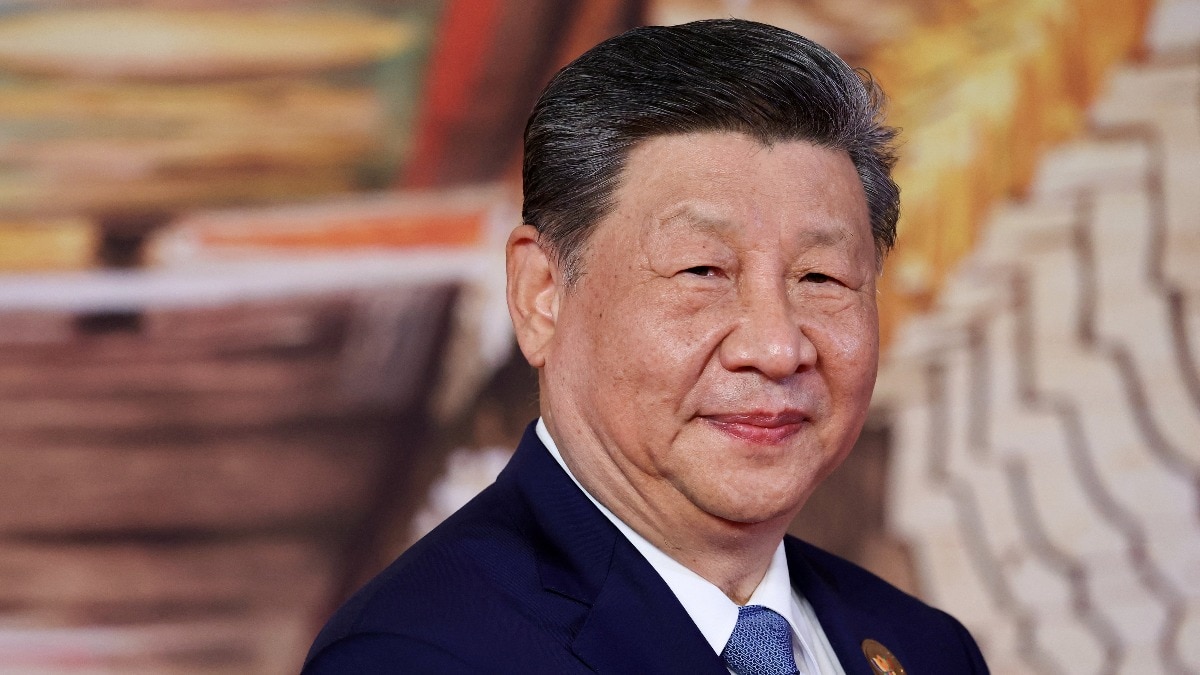
Chinese President Xi Jinping's health has become the subject of fresh speculation after Wanjun Xie, chairman of the China Democracy Party, claimed that Xi fainted during the BRICS summit in New Delhi and later suffered a severe ischaemic stroke.
Xie made the allegations in a series of posts on social media, claiming Xi was flown back to Beijing for emergency treatment at the People's Liberation Army General Hospital, commonly known as 301 Hospital. However, there has been no official confirmation from either Beijing or New Delhi that Xi suffered a stroke, fainted or was admitted to a hospital after his India visit.advertisement❮❯ Read Full StoryXI'S ABSENCE FROM BRICS DINNER FUELS QUESTIONSXi arrived in New Delhi on September 12 for the 18th BRICS summit, his first visit to India in seven years. He attended the summit and held a bilateral meeting with Prime Minister Narendra Modi before skipping the gala dinner hosted by Modi at Bharat Mandapam.
Russian President Vladimir Putin and several other BRICS leaders attended the dinner, while Chinese Foreign Minister Wang Yi represented Beijing in Xi's absence. Reports said Xi returned to his hotel to rest after a busy day, although there was no official explanation for his absence.
During the summit, Xi called on BRICS countries to play a role in resolving the West Asia conflict, saying the war "does not serve the common interests of the international community". He also announced that China would assume the BRICS chairmanship next year and host the 19th summit.
Xi and PM Modi also held bilateral talks focused on improving ties between India and China, including issues linked to the border and trade relations.
Speculation about Xi's health intensified after a brief exchange during PM Modi's opening remarks at the summit.
Video footage showed PM Modi turning towards Xi's delegation and asking, "Is it okay?" The Chinese president appeared to respond before PM Modi continued with his remarks. Xi's subsequent absence from the dinner added to the speculation.CLAIMS OF STROKE, HOSPITALISATION
In his first post, Xie claimed Xi "fainted at the BRICS summit" and received emergency treatment from his accompanying medical team before being flown back to China on a special plane. He alleged that Xi refused treatment at an Indian hospital because he feared his health condition could become known to the Indian side.
Xie further claimed that, after the plane landed in Beijing, Xi was taken directly from the airport to 301 Hospital by military helicopter rather than being received by a large group of officials in a formal welcome ceremony.
According to Xie, doctors at 301 Hospital diagnosed Xi with a severe ischaemic stroke, which he described as a transient cerebral infarction. He alleged that the long flight from New Delhi to Beijing meant Xi missed the "golden window" for emergency treatment and surgery. He also claimed that doctors could provide only basic treatment during the flight because surgery was not possible on board.
In a subsequent post, Xie claimed Xi had undergone surgery at 301 Hospital and was being monitored in an intensive care unit.
"It is rumored that Xi Jinping is currently receiving emergency treatment at Beijing's 301 Hospital and has not yet escaped life-threatening danger," Xie wrote.
He also alleged that Chinese military theatre commands and group armies had entered a heightened state of combat readiness, with their headquarters holding meetings and monitoring developments in the country's situation.
None of these claims has been independently verified. There has been no official confirmation from Beijing or New Delhi that Xi fainted, suffered a stroke, underwent surgery or was admitted to 301 Hospital.WHO IS WANJUN XIE AND WHAT IS CDP?
The claims come from Wanjun Xie, chairman of the China Democracy Party (CDP), also known as the Democracy Party of China, a banned political organisation founded in China in 1998.
The CDP was established by democracy activists, including former participants in the 1989 Tiananmen Square protests. Between June 25 and 28, 1998, founders, including Wang Youcai, Wang Donghai and Lin Hui attempted to register the party with civil affairs authorities in Hangzhou, Zhejiang province, during a visit to China by then-US President Bill Clinton.
The Chinese Communist Party banned the organisation shortly after its formation. Several of its leaders were arrested, tried and imprisoned, while the group subsequently operated largely from outside China. It has since established branches and committees in countries including the United States and the United Kingdom.
The CDP advocates multi-party constitutional democracy, direct elections, separation of powers, freedom of speech and association, and the rule of law. Its stated principles include "Prosperity, Fairness, Democracy" and "Freedom, Rule of Law, Human Rights."
The organisation is banned in China. US State Department human rights reports and Human Rights Watch have documented the Chinese authorities' monitoring, detention and imprisonment of current and former CDP members.- EndsPublished By: Satyam SinghPublished On: Sep 17, 2026 03:37 IST