
Xi Jinping’s US visit: What Trump will discuss and list of top CEOs who would attend state dinner - The Indian Express
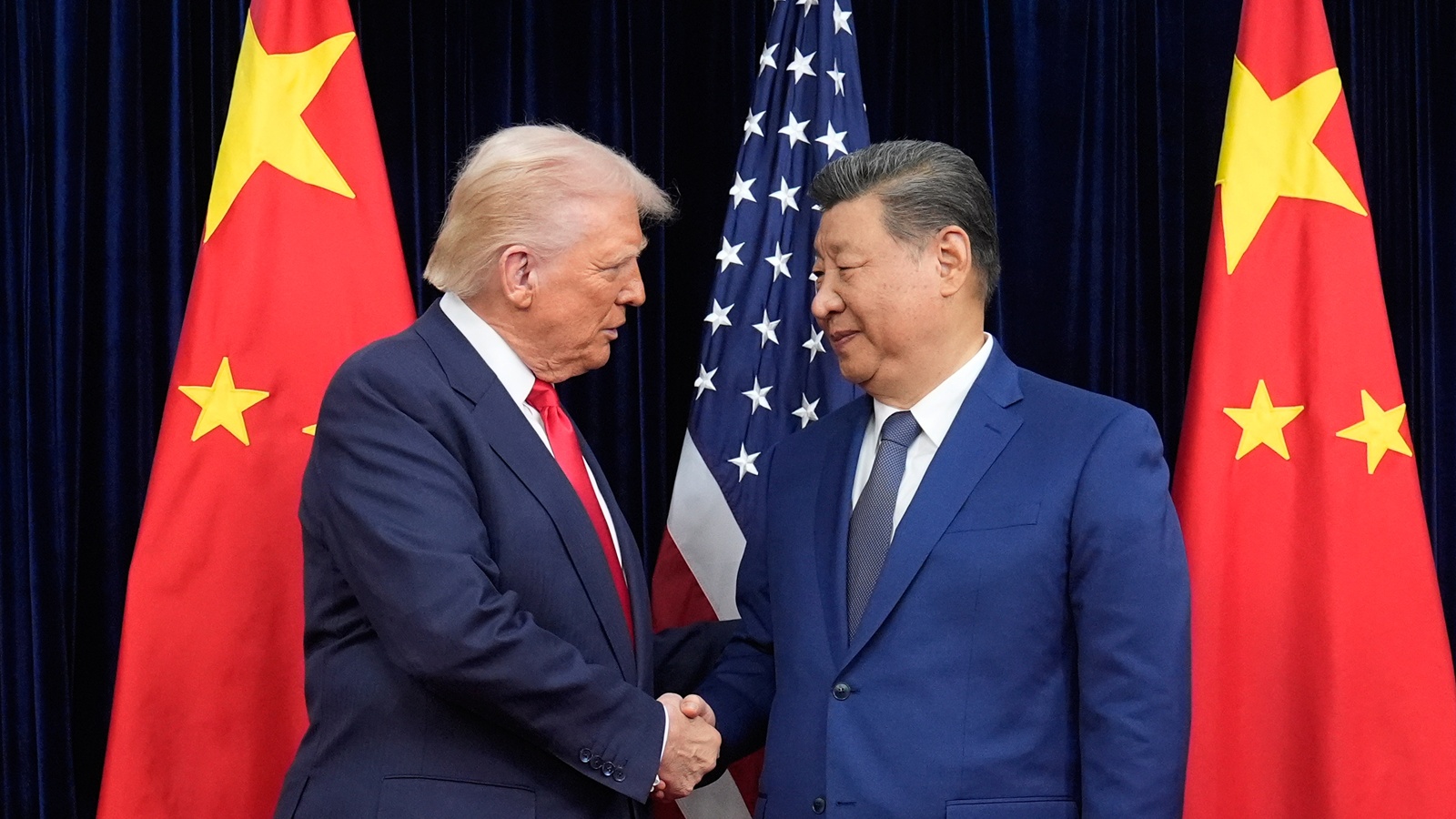
Chinese President Xi Jinping’s state visit to the United States will bring together a powerful collection of technology and business tycoons when President Donald Trump hosts a state dinner at the White House on Thursday, with Elon Musk, Sundar Pichai, Satya Nadella, Sam Altman, Tim Cook and Jensen Huang among those expected to attend.
The guest list brings together executives from some of the world’s most influential companies at a moment when artificial intelligence, advanced semiconductors, rare-earth supplies and technology restrictions have become central to US-China competition.
The dinner will be held in the White House’s East Room on September 24, as part of Xi’s first US state visit in more than a decade. Trump is also expected to personally greet Xi when the Chinese leader arrives at Joint Base Andrews on Wednesday — an unusual protocol gesture for a visiting foreign leader.
JPMorgan CEO Jamie Dimon and Citigroup CEO Jane Fraser are also expected to attend, while Pfizer CEO Albert Bourla is also set to be there, news agency Reuters reported.
The composition of the dinner is significant because technology has become one of the main fronts in the US-China relationship.
Washington and Beijing are competing over AI, advanced chips and computing infrastructure, while US restrictions on technology exports to China and Chinese controls on rare-earth materials have become important sources of friction.
AI is expected to be discussed during Xi’s visit, alongside trade and the flow of rare-earth materials into global markets.
Musk is expected to attend alongside executives whose companies have complicated commercial relationships with China.
Tesla operates its largest manufacturing hub in Shanghai, making China an important part of the company’s global production and sales network. Musk has also maintained a high-profile relationship with Trump.
His presence at a dinner for Xi, therefore, comes as Washington and Beijing try to manage tensions over trade and technology while American companies continue to have significant commercial interests in China. Reuters reported that Musk described Xi as a “great leader” in an interview with Chinese state television.
The state dinner comes after months of efforts by Washington and Beijing to stabilise their relationship. Among the major issues expected to feature in the discussions are:
Trade and tariffs: The two countries remain locked in a long-running trade dispute. Their existing tariff truce is due to expire in November, making an extension or further arrangement an important issue.
Rare earths: China’s dominant position in the processing and export of rare-earth materials has given Beijing significant leverage in negotiations with Washington. US officials have said the flow of rare earths to global markets will be discussed.
Artificial intelligence: AI has moved from being primarily a technology issue to a national-security and geopolitical issue. Washington and Beijing are discussing how to manage risks associated with the technology while competing for leadership in the sector.
Taiwan: Taiwan remains one of the most sensitive issues in US-China relations. Beijing regards Taiwan as part of China and has not renounced the use of force to bring the island under its control. Washington remains Taiwan’s major international arms supplier.
Iran: The two countries’ positions on Iran are another source of tension, particularly as the Trump administration seeks to exert pressure on Tehran.
The dinner comes against a backdrop of explicit warnings from Beijing. Chinese Ambassador to the US Xie Feng said Wednesday that Taiwan, democracy and human rights, China’s development path and system, and China’s development rights were among Beijing’s “red lines” that could not be challenged.
He called for the two sides to manage differences through dialogue and warned that confrontation would hurt both countries.
Chinese state media also criticised what it described as Washington’s continued reliance on the idea of strategic competition with China.
The White House says Thursday’s state arrival ceremony will involve 479 military personnel from all branches of the US armed forces, followed by a military review and a flyover featuring a B-2 bomber and four F-22 Raptors.
Trump will also host Xi and Peng for tea on Friday before accompanying them to the National Archives.
The Express Global Desk at indianexpress.com which delivers authoritative, verified, and context-driven coverage of key international developments shaping global politics, policy, and migration trends. The desk focuses on stories with direct relevance for Indian and global audiences, combining breaking news with in-depth explainers and analysis. A major focus area of the desk is US immigration and visa policy, including developments related to student visas, work permits, permanent residency pathways, executive actions, and court rulings. The Global Desk also closely tracks Canada’s immigration, visa, and study policies, covering changes to study permits, post-study work options, permanent residence programmes, and regulatory updates affecting migrants and international students. All reporting from the Global Desk adheres to The Indian Express’ editorial standards, relying on official data, government notifications, court documents, and on-record sources. The desk prioritises clarity, accuracy, and accountability, ensuring readers can navigate complex global systems with confidence. Core Team The Express Global Desk is led by a team of experienced journalists and editors with deep expertise in international affairs and migration policy: Aniruddha Dhar – Senior Assistant Editor with extensive experience in global affairs, international politics, and editorial leadership. Nischai Vats – Deputy Copy Editor specialising in US politics, US visa and immigration policy, and policy-driven international coverage. Mashkoora Khan – Sub-editor focusing on global developments, with a strong emphasis on Canada visa, immigration, and study-related policy coverage. ... Read More

