Woman Told She Has IBS and Stress, Then Doctors Reveal the Real Diagnosis - Newsweek
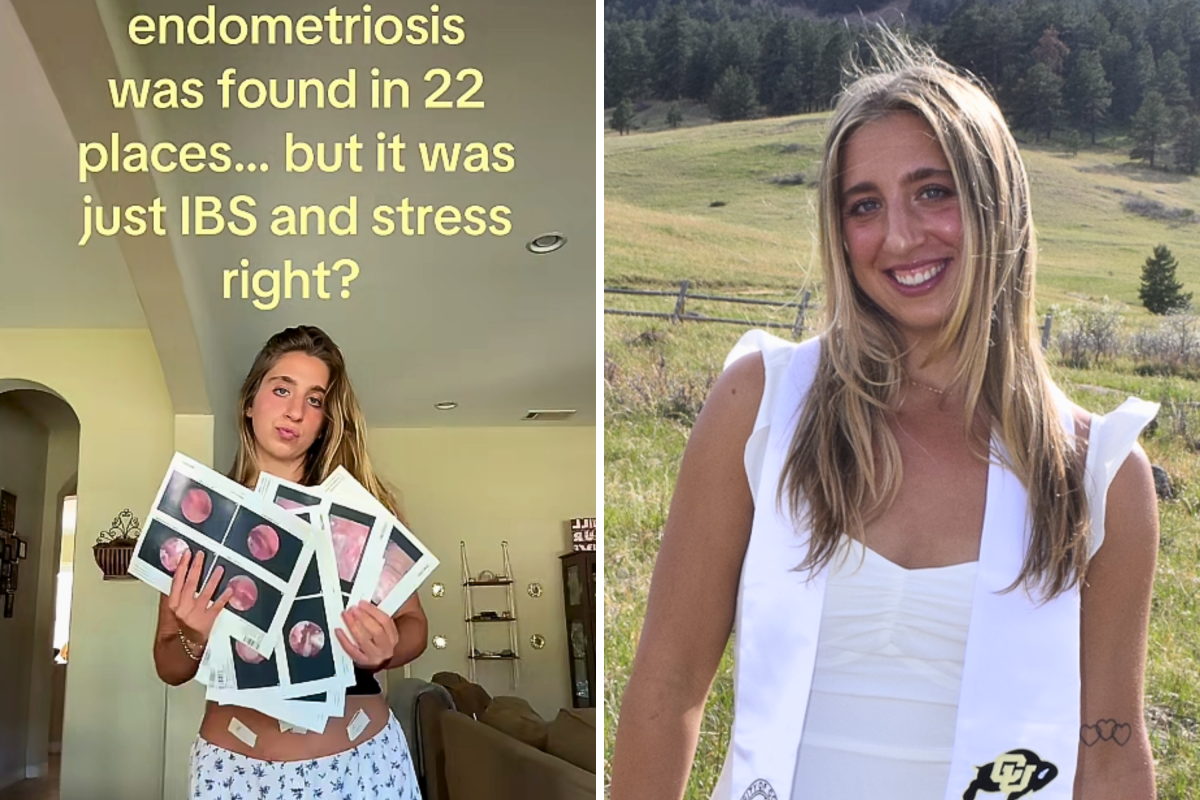
For years, Ally Ostedt was told that the debilitating symptoms disrupting her life were something she would simply have to endure.
Doctors failed to attribute her chronic pain, digestive issues and exhaustion to anything more specific than stress and common gastrointestinal disorders. In fact, one specialist even told her she needed to learn to live with the pain "like amputees learn to live without limbs," without bothering to investigate her condition further. But after more than a decade of searching for answers, the 23-year-old from California finally received a diagnosis that validated her years of suffering: endometriosis.
"The gold standard for diagnosing endometriosis is a laparoscopic surgery," Ostedt told Newsweek. "An MRI or ultrasound can be helpful, but in my case, both showed nothing.
"Still, I was suffering with pain every day, and sadly, I knew I wasn’t alone in this feeling."
Ostedt's journey began at 12 when she was diagnosed with PMOS. The condition brought a host of uncomfortable symptoms including cystic acne, weight gain, excessive hair growth, fatigue and irregular periods. In an attempt to manage those symptoms, she was prescribed the contraceptive pill.
"Since then, everything has felt like an uphill battle," she said.
What followed were years of severe gastrointestinal problems that often overshadowed every aspect of her life. Nearly everything she ate caused stomach pain. She was frequently constipated, persistently bloated and lived with a level of discomfort that became her daily reality.
Throughout her teens and into early adulthood, Ostedt pursued countless avenues in search of relief. She underwent extensive gastrointestinal testing, experimented with dietary changes and tried natural remedies. Nothing worked.
The challenges Ostedt faced extended beyond physical symptoms.
During college, she watched friends enjoy new experiences while she struggled to function through constant illness and fatigue.
"It was hard to see my friends living normal lives while I felt so sick all the time," she said. "However, nobody would have known I was sick.
"I even questioned it sometimes, but deep down I knew what I was experiencing was far from normal."
The turning point came after she turned 21. Curious to see how her body would respond without hormonal contraception, she stopped taking birth control. Instead of improvement, her symptoms intensified dramatically.
She quickly developed excruciating periods, chronic pelvic pain, crushing fatigue and worsening health problems that eventually forced her onto disability leave. She later left her graduate job and moved back home to her Los Angeles-based family.
Back home, Ostedt met a pelvic floor physical therapist, a moment she now describes as transformative.
"They validated everything I felt and gave me the guidance I needed to get a diagnosis," she said.
The therapist referred her toward an endometriosis specialist. Together, they decided laparoscopic surgery offered the best chance of determining whether endometriosis was present. The surgery confirmed suspicions.
"Turns out, I had stage 2 endometriosis," Ostedt said.
Her relief of finally having an answer was profound, even if it came with the reality of a chronic disease.
Endometriosis occurs when tissue similar to the lining of the uterus grows elsewhere in the body. The condition can affect multiple organs, causing symptoms that include severe period pain, pelvic pain, fatigue, digestive problems and fertility challenges.
Treatments are available, but there is currently no cure.
The disease affects an estimated one in 10 women, yet advocacy groups have long highlighted significant delays in diagnosis. Ostedt noted that women often wait between several years before receiving confirmation of the condition.
Recent years have seen celebrities, athletes and content creators share their own experiences with the condition, helping drive greater public awareness and online visibility. Yet stories like Ostedt's demonstrate how difficult obtaining a diagnosis can still be.
Now about two months removed from surgery, Ostedt says recovery remains ongoing. She continues working with a pelvic floor physical therapist, a functional medicine doctor, a massage therapist and a therapist while adjusting to life with a chronic condition. She credits the endless support of her loved ones in keeping her afloat.
"My mom, especially, has been my rock," she said. "Doctors call us the 'power duo.'"
Determined to help others avoid the isolation she experienced, Ostedt began documenting her journey on TikTok under @allyinhealing earlier this year.
One video, posted July 7, features Ostedt after surgery holding photographs taken during the procedure. Overlaid text reads: "Endometriosis was found in 22 places...But it was just IBS and stress right?"
The post has been liked more than 200,000 times.
"That text represents the medical gaslighting and dismissal that many women face as we go to the doctors in pain and then are dismissed with a 'simple' diagnosis," she said.
The overwhelming response, she said, has been both encouraging and sobering.
"It's endearing but also heartbreaking that so many relate," she said. "To women who suspect they have endometriosis and aren’t taken seriously; keep fighting for yourself; you know something is not right with your body, and don’t let anyone tell you otherwise.
"Pain is not normal; you are valid, seen, heard, and nobody knows your body better than you do yourself. Don’t give up on yourself. I was close to doing that and I am so grateful I kept fighting."