
Will El Nino threaten India's post-monsoon Oct-Dec rainfall? IMD answers
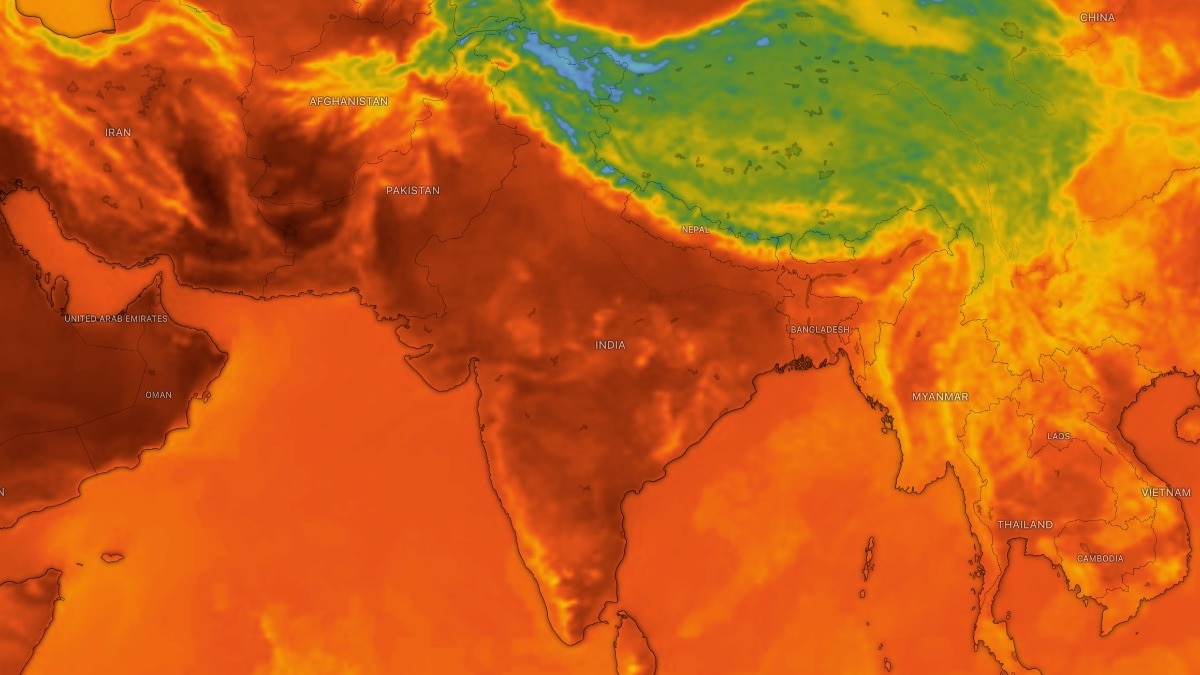
The El Nino climate pattern is strengthening and is expected to remain a major influence over the coming months.
But India has one factor working differently in the Indian Ocean, and that is the latest prediction by the India Meteorological Department (IMD), suggesting that the Indian Ocean Dipole (IOD) is expected to remain neutral during the northeast monsoon season.
The India Meteorological Department (IMD), during its September 30 press conference, said strong El Nino conditions are currently prevailing over the equatorial Pacific Ocean, with sea surface temperatures significantly above average across the east-central and eastern Pacific. A vendor sells fruits amid heavy rain. (Photo: PTI)
Forecasts from IMD’s Monsoon Mission Coupled Forecast System (MMCFS), along with other major global climate models, indicate that El Nino will continue strengthening through the end of 2026.
The IOD is a natural climate pattern involving differences in sea surface temperatures between the western and eastern parts of the tropical Indian Ocean.
In a positive IOD, waters in the western Indian Ocean near Africa become warmer than usual while the eastern Indian Ocean, closer to Indonesia, becomes cooler. A positive IOD can support rainfall over parts of the Indian subcontinent by altering winds and moisture flows.
A negative IOD is broadly the opposite, with warmer waters in the eastern Indian Ocean and cooler conditions in the west. Thus, it can be associated with weather patterns that are less favourable for rainfall over parts of India. (Source: IMD) A neutral IOD means neither side has a strong enough temperature difference to qualify as either positive or negative, and therefore, it does not provide the additional rainfall-supporting influence that a positive IOD can sometimes bring.
The IMD said that neutral IOD conditions are currently prevailing over the Indian Ocean, and its latest MMCFS forecast indicates that these conditions are most likely to persist through the northeast monsoon season.
The prediction from the IMD was stated alongside the fact that India concluded its rainy season, the southwest monsoon, with a 13% deficit.IS INDIA'S POST-MONSOON SEASON AT RISK?
The combination of a strengthening El Nino and a neutral IOD is important as India moves into the October-December post-monsoon period.L'animation satellite vapeur d'eau montre bien le corridor d'humidit partant de la zone cyclonique du Pacifique Nord-Est o #ElNio est oprationnel. Il gnre une dpression de type Nor'Easter sur l'Est des E-U, puis poursuit sa route vers l'Europe avec ses remontes chaudes pic.twitter.com/4lf6PZXpSL— Mto Pdagogie (@MeteoPedagogie) September 25, 2026
The northeast monsoon becomes particularly important for southern peninsular India, bringing a substantial share of the annual rainfall to Tamil Nadu, Puducherry and parts of Andhra Pradesh, Kerala and Karnataka.
El Nino can influence atmospheric circulation and rainfall patterns well beyond the Pacific. However, its impact is not uniform across India and does not mean that every region will necessarily remain dry.
The neutral IOD also does not mean that El Nino's influence will be cancelled out. A patch of a warm Pacific Ocean is captured by a satellite image. (Photo: Windy)
Rather, the Indian Ocean is not expected to provide the additional positive IOD signal that can sometimes help support rainfall over India.
For the coming months, therefore, El Nino remains the stronger climate signal, while a neutral IOD means the Indian Ocean is unlikely to provide a significant counter-effect.- Ends
