Why you should visit this tiny island capital in the Mediterranean - The Independent
Want to bookmark your favourite articles and stories to read or reference later? Start your Independent Membership today.
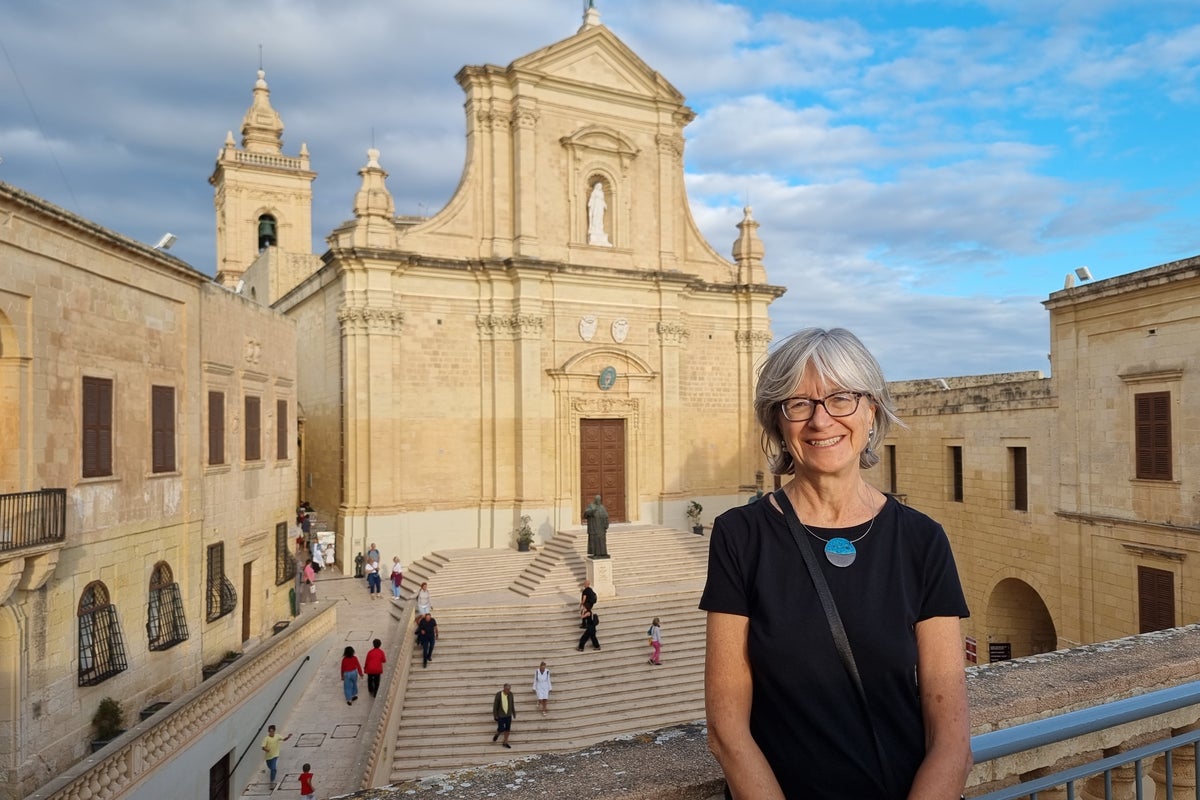
Honey-hued limestone towers above me, glowing in the morning sun. The day-trippers haven’t arrived yet, and the Citadel is peaceful. Fortified since the Bronze Age and occupied by Romans, Arabs, Medieval Christians, the Knights of St John (of Malta), and the British colonial administration, it offers a great introduction to Victoria, the tiny island capital named European Capital of Culture 2031.
I sip my takeaway coffee as I wander atop the bastion walls, enjoying a 360-degree panorama of flat-topped hills and verdant valleys, oversized churches sprouting like show-blooms from village clusters, and, surrounding it all, the azure Mediterranean sea. Beneath me, the town gears up for the day: cafe tables are scattered across squares, colourful doors open onto narrow Medieval streets.
Known locally as Rabat (the “new” name, given for the queen’s golden jubilee in 1897, hasn’t fully caught on yet), Victoria has a population of just 7,500, and an area of less than three square kilometres. It sits at the centre of Gozo, Malta’s second island, itself only 14 by seven kilometres. But to dismiss Victoria would be foolish.
I’ve been writing about this place for more than 15 years, and there is plenty to justify its selection, from the historic citadel to colourful festas; opera and music; local wine and craft beer; skilled artisans and cafe culture. A brand new Gozo Museum displaying hundreds of artefacts (and a Roman quarry) is due to open next year, and just out of town lie Unesco World Heritage temples older than Stonehenge, as well as beaches, scenic coastal walks and Michelin Guide restaurants.
Victoria isn’t even the smallest European Capital of Culture. That miniature crown (tiara perhaps?) belongs to Malta’s national capital, Unesco World Heritage-listed Valletta (less than one square kilometre; 7,000 souls), which was Capital of Culture in 2018.
Victoria’s mayor, Brian Azzopardi, tells me he’s proud to be in the company of Valletta – and of Liverpool, Paris and Prague. We are having coffee on Victoria’s main square, officially Independence Square, but always known as It-Tokk – literally “The Meeting Place”.
To one side of us rises the citadel, to the other runs a maze of atmospheric alleys, overhung by gallariji, colourful enclosed wooden balconies. Here you may find artisans working: at 88 Triq Palma is Alda Bugeja, an eccentric traditional weaver, while Nancy is sitting calmly in her doorway at 53 Triq Santa Marija, making lace.
You’ll see colourful plaques and statues with two names recurring: Santa Marija, San Georg.
Victoria has two parishes delineated not by geography but choice. St Mary’s centres on the cathedral up in the citadel (with a wonderful trompe l’oeille dome) while St George’s richly baroque basilica sits in a cafe-laden square behind It-Tokk.
Allegiance is tribal – parishioners are even known to occupy different parts of the local beaches.
“The intense competition is actually positive,” insists the mayor. “It raises the cultural quality.” Quantity too. Tiny Victoria has two theatres almost opposite each other, Astra and Aurora, one belonging to each parish. Each hosts a resident wind band and produces operas in spring and in autumn, and each stages a month-long free classical music festival and an intensely felt annual festa of parading church statues (swung along on the shoulders of eight straining men), marching bands, food and drink stalls and fireworks (made by volunteers in stone hut “factories” outside of town). There is even horse racing along the main street.
The mayor hopes being Capital of Culture will leave a legacy of cultural investment and self-respect. Opinion among residents is divided. Some share his pride and economic hopes; others fear overtourism. Currently, 90 per cent of foreign tourists come to Gozo for the day, and they are all in the same places at the same time. I would strongly recommend staying a few nights and exploring at leisure. The Capital of Culture bid actually covers the whole island, and there is much to explore beyond the city limits. Odysseus stayed a full seven years, apparently.
Gozo claims to be Homer’s Isle of Calypso (Ogygia), and the sea nymph’s cave is said to perch high above the warm red sands of Ramla Beach, a delightful place to swim – and possibly the point of arrival (from Sicily) of early settlers on Gozo. Just inland on the Xaghra plateau (15 minutes’ drive from Victoria) stands a monumental megalithic building with a six-metre facade, constructed in the mid-fourth millennium BC, long before even the Great Pyramids. The Ggantija Temples were so named by locals – who but giants could have created such a building?
In the visitors’ centre I meet one of the real builders – or at least a forensically reconstructed temple-period woman – and admire some of their exceptional craftwork, including carved peg men and the so-called “fat ladies”, human heads and a piece of pottery inscribed with delicate images of lapwings. Culture is nothing new here.
Back in Victoria, the Citadel museums are open, and I visit the Old Prison, complete with graffiti of crosses, calendars and boats, and try out the stocks outside. I drop by the Gran Castello Historic House Museum, the oldest building in the Citadel, before passing the anonymous blue door opposite. I know this is the entrance to Rikardu’s dairy because I have watched him bring sheep and goat milk here from his farm two miles away and turn it into fresh gbejna, a little round traditional Gozitan cheese.
Today I am going to his Citadel restaurant to eat it – stuffed into his delectable home-made ravioli and in three stand-alone forms (fresh, dried, peppered) on a salad platter with local tomatoes, olives and capers. A truly delicious Gozitan meal.
Lunch digested, it’s time for a wander down to Xlendi Bay (a 30-minute walk) to sunbathe on the rocks and a swim in that azure sea, before heading back to Victoria for a candlelit dinner in St George’s Square, once again peaceful with the day-trippers long gone.
You can fly to Malta from the UK in around three hours and 15 minutes, with multiple airlines including British Airways, KM Malta Airlines, EasyJet and Ryanair flying from London and regional airports.
From the airport take a bus or taxi to Valletta (about a 20-minute drive) then the Gozo Fast Ferry, which takes around 45 minutes (€7.50 each way, rising to €10.50 in 2027). Alternatively, take a bus or taxi to Cirkewwa (about an hour’s drive) and the Gozo Channel car ferry (€4.65, rising to €11 in 2027), which takes around 25 minutes.
Take a ferry in the middle of the day to avoid the day-trippers and commuters. Both ferries arrive at Gozo’s Mgarr Harbour, where you can catch buses (hourly) and taxis (including Bolt), or arrange car hire.
Palazzo Giuseppe is right on It-Tokk. It’s smart and comfortable, with access from the back directly onto the lower walls of the Citadel. Doubles start at €95 room only.