Why some Singaporean women are speaking out about sexual harm in the wake of Cornell 7 - The Straits Times
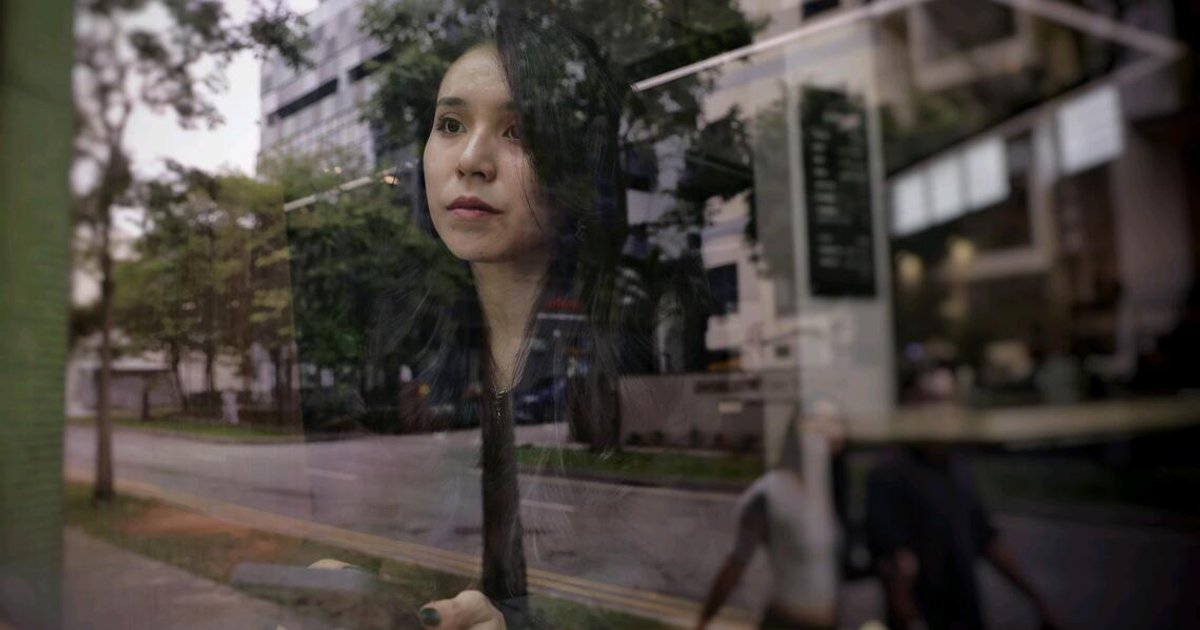
Eunice Chua, 33, was inspired by the Cornell 7 case in the United States to speak for the first time about her experience of sexual harassment.
SINGAPORE – The Cornell 7 gang rape case in the United States has spurred some women to call attention to sexual harm in Singapore.
Speaking out on social media, a few Singaporeans are expressing support for Jane Doe – the legal placeholder name used for anonymous victims of crime – and adding their voices to a worldwide movement against sexual assault. These women are also sharing their own experiences of predatory male behaviour and sexual violence, hoping it might help other women.
They say they want to raise awareness about the issues raised in the Cornell University case – such as the importance of consent and the danger posed by the bystander effect, where individuals are less likely to offer help to a victim when others are present – and show these are also relevant in Singapore, where public discussion about sexual violence and misogyny is rare.
In September, a woman, identified as Jane Doe in court documents, filed a civil lawsuit against Cornell University and her alleged attackers, now known as the Cornell 7. She alleged that she was drugged and raped, while intoxicated, in a fraternity house at the Ivy League university.
The incident took place in October 2024 when Jane Doe was a 20-year-old Cornell undergraduate. Seven men from the university’s Chi Phi fraternity allegedly sexually assaulted her for hours, during which she lost consciousness.
As the alleged rape took place, there was a discussion in a group chat of the fraternity on Snapchat, said to have 57 members, where coarse language was used, including a message about a “free” sexual encounter with Jane Doe.
Two of the perpetrators were expelled, while Cornell imposed other disciplinary measures on the rest. Part of the punishment for two other defendants involved writing “essays”.
The case, which sparked global headlines, prompted Eunice Chua, 33, to post recently about her own encounter with sexual harassment, which she says she had never told anyone about.
The owner of VEU Alchemist, which offers image consulting, make-up services and personalised colour analysis, tells The Straits Times why she chose to speak out: “What if the seven guys from the Cornell 7 case, or others like them, were out there doing the same thing to other women? What if it were an underaged girl?”
She says she wants to make herself “louder and bigger” in raising awareness of sexual violence, which is not always physical.
In a video she posted on TikTok and Instagram in October, headlined “We Are Jane Does”, she spoke about starting her business in March 2025.
She had posted her business contact details to answer inquiries and take appointment bookings, and was happy to get her first message soon after the launch of her website.
The person asked if she did home visits, then asked her to come over to perform a sexual act on him. Shocked, she took a screenshot and blocked and deleted the contact.
She took down her business contact number and office address but began to fear for her safety.
A while later, she installed CCTV cameras at her workplace and took the opportunity to move to another office in January 2026 once her lease agreement ended. She did not confide in anyone, concerned they might brush it off as an over-reaction.
After the incident, she became acutely aware of how she interacted with men, especially strangers. If a man happened to enter a lift with her, she ensured as much distance between them as possible. If he occupied a corner of the elevator, she positioned herself in the corner diagonally opposite.
“Now, I’ll think: ‘Ok, we are in an enclosed space. What could happen? How can I escape if anything happens?’ Honestly, you can never get over it,” she says.
“I know there are good men and they do not deserve such cautiousness from us, but at the same time, they would never understand what women go through.”
The World Health Organization estimates that, globally, one in three women experience physical and/or sexual violence in their lifetime, mostly by an intimate partner.
While women are disproportionately victims of sexual violence, male sexual victimisation has traditionally been significantly under-reported due to factors like stigma and jurisdictions that define rape as being perpetrated against a woman.
Chua says: “Singapore is a very safe country. I never really thought that such things would happen and it happened to me. But at the same time, people might not be able to speak up easily because we keep saying that Singapore is a very safe country.”
Posting about the Cornell 7 case is not the first time property agent Melissa Faith Yeo, 40, has spoken against sexual violence.
The topic of misogyny resonates strongly with the Singaporean. “I am a woman and I face it almost every day,” she says.
She adds that she has lodged police reports of incidents when she was molested and sexually harassed. No arrests were made.
Property agent Melissa Faith Yeo says she often faces misogyny.
On Instagram and TikTok in October, she posted a few videos referring to the Cornell case. In one of them, which displayed photos of those associated with the case, she wrote: “Behind every rapist is a network of enablers.”
“The reason so many women are talking about this is that, in one way or another, we can relate,” she added.
In the clip, she recounted a past incident where a friend laughed off a request from a male acquaintance who asked Yeo twice if he could stay at her home. She interpreted it as “normalising” unsolicited sexualised overtures.
In another video about Cornell University, she said that local universities can be unsafe, too, referring to past cases of voyeurism on campuses here.
She says the Cornell 7 case has prompted her to reflect on a painful subject: her own rape as a minor.
In a video in early October, Yeo posted about her “childhood abuser” at the age of 14, with the hashtag #iamjanedoe.
“It got me thinking. I consented to making out; I didn’t consent to having sex. I consented to being alone with this person, whom I regarded as a boyfriend. I didn’t want to lose my virginity. I didn’t consent to that,” she says.
“For the longest time, I was in denial. I convinced myself that it didn’t happen, that I had actually lost my virginity when I was of age,” she says, adding that she is inspired by the new generation of young women who are unafraid to speak out against sexual assault, rather than “throwing a blanket” over it, like past generations did.
“Victim-blaming is essentially rapist-protecting,” she says, alluding to how the Jane Doe in the Cornell case, like many before her, was treated. Jane Doe was blamed for going to the fraternity house in the first place; she was also doxxed and received death threats.
“People are like, ‘Oh, you shouldn’t go to clubs; you should not go out late at night; you should not dress a certain way. You should take preventive measures,’” says Yeo.
Lim Jia Jun, also known as Claire, has posted a couple of videos on TikTok and Instagram directed at men in the wake of the Cornell 7 scandal.
Lim Jia Jun, also known as Claire, posted videos on TikTok and Instagram directed at men because she was annoyed by comments from men defending the Cornell 7 and discrediting women for speaking up.
In one clip, which had 324,000 views, the 30-year-old chef and live streamer posted: “This one is specifically for Singaporean men, especially those who think that the Cornell case has nothing to do with us because it’s in another country and Singaporeans are faultless and blameless.
“Are you aware that there are Telegram groups in Singapore spreading and selling child pornography?… There are thousands of people involved in this. Meaning, there’s a very high chance that you know one of them, if you are not one of them.
“Nobody’s spreading hate here. Yes, while we know it’s not all men, enough men have done such violent crimes that we can’t help but to be scared.
“And let’s be so for real: How many of you, if you know that your friends are part of these Telegram groups, will you report them to the police? Or will you, like the other 50 men in the house, shut up and stay silent because these are your friends and you’re trying to protect them?”
In September, Singapore police confirmed the arrest of two men after receiving information from Italian authorities about an Italy-based international investigation targeting a group that was sharing child abuse material on messaging platform Telegram.
In 2023, several groups were uncovered by The Straits Times to be sharing sexually explicit videos on Telegram, which showed images of mainly Singaporean females, including girls as young as secondary school age.
The groups had learnt to evade detection unlike the SG Nasi Lemak Telegram chat group, which disseminated similar content and had more than 44,000 members before being shut down in 2019.
Lim says she made those videos because she was annoyed by online comments from men defending the Cornell 7 and discrediting women for speaking up.
Why does it seem like only women are speaking up on this matter?
Responding to queries from The Straits Times, academic Razwana Begum Abdul Rahim says the reality is probably more nuanced than what appears on social media.
“Women have historically carried much of the responsibility for speaking about sexual violence and harassment,” says Razwana, an associate professor at the School of Humanities and Behavioural Sciences at Singapore University of Social Sciences. “Male allyship should not only emerge when a serious incident attracts public attention.”
She adds: “People are often reluctant to challenge behaviour within their social circles because they fear being ridiculed, excluded or seen as disloyal. Interestingly, some men may privately disagree with sexist behaviour but assume that others are comfortable with it simply because nobody objects. This can create a false impression that such attitudes are widely accepted.”
It would be unfair to suggest that men are entirely silent on the topic as some do challenge misogynistic attitudes both privately and in public, she adds.
Male allyship should be approached not simply as an expression of support for women, but as “a willingness to question behaviours and attitudes within one’s social circles”, she says.
While Lim has received both hate and support for her videos, she posted on social media recently that she appreciated her male friends and followers, who have sent her messages of support for her videos on the Cornell case, even though “the rhetoric of (her) being a man hater runs rampant”.
Although she has experienced sexual assault as well as harassment – she once lodged a police report when a man took upskirt photographs of her – she does not consider herself a victim.
“It feels like a loss of control. The connotation doesn’t sit well with me, either, because it gives helpless vibes, whereas for me, it’s ‘okay, it happened. How do we move on?’”
When a former boyfriend circulated nude images of her, she was angry and upset. “But the positive was that I could make a 10-step instructional video on what to do if your nudes get leaked,” she says.
This video has been saved more than 24,000 times on TikTok and she has since started a Telegram group for Singaporean women in the same plight.
Lim has also shared about her past eating disorders, her borderline personality disorder diagnosis and her family struggles on social media.
She says: “Sometimes, you just need someone to listen, and to feel ‘I’m not alone in this’, which is what I try to provide with my platform.
“A lot of the things that I say and do are what the younger version of me would have needed to hear. I’m trying to be the person that could have helped myself.”
Venessa Lee is a feature writer and senior correspondent at The Straits Times.