Why reading could be your ticket to a job - IOL
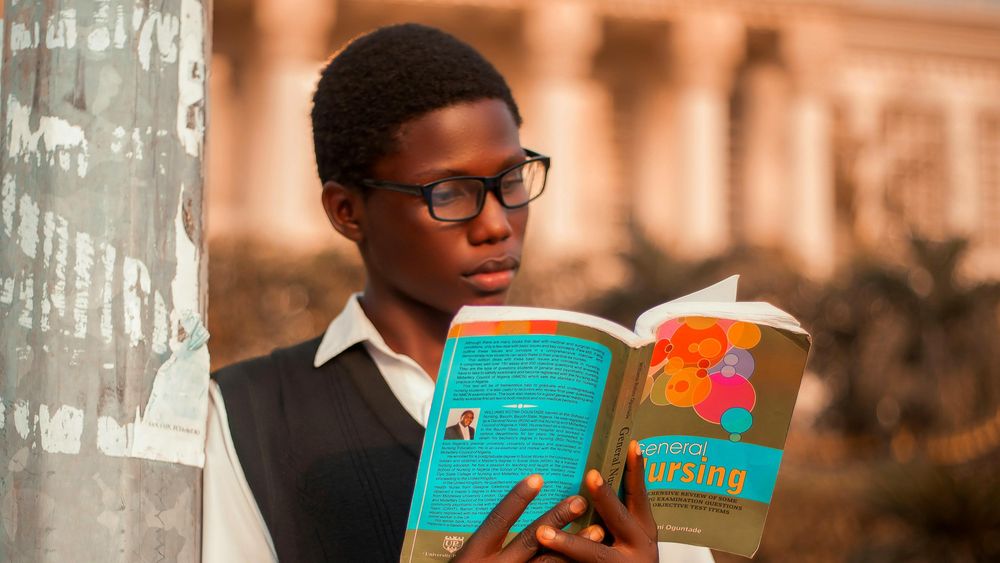
The proportion of people aged 20 and older with no schooling declined from 11.4% in 2002 to 3% in 2024, while the share who had completed at least Grade 12 increased from 30.5% to 52.1%.
South Africans with lower levels of education are far more likely to be unemployed, with the latest labour data putting the unemployment rate among people without matric at 39.2%.
This compares with 12.4% among graduates, while South Africa's overall unemployment rate stood at 33.6% in the second quarter of 2026. The gap matters in a country where millions of adults still have very low levels of education.
Census 2022 found 14.2% of South Africans aged 20 and older had either no formal education or had not reached Grade 7, the measure Statistics South Africa uses as a proxy for functional illiteracy.
This equated to about 5.35 million adults, of whom just over three million were women and 2.35 million were men.
The unemployment figures cannot be directly applied to people classified as functionally illiterate. Statistics South Africa’s “less than matric” labour category is much broader and includes people who completed Grade 7 or higher but did not finish matric.
However, research outside South Africa has found a relationship between literacy and what people earn and the type of employment they are able to secure.
A 2011 study published in the Economics of Education Review, based on Brazilian employment data, found that people who became literate earned more and were more likely to work in the formal sector.
Initial results showed a 21.25% wage increase among people who became literate after researchers controlled for observable characteristics. While there was no significant effect on the likelihood of being employed, the probability of formal-sector employment increased by 8.1%.
When researchers accounted for differences between individuals over time, the effects were smaller. Literacy was linked to a 4.4% increase in wages and a 4.3% greater chance of formal employment.
In 2024, 3.1% of South Africans aged between 20 and 39 were classified as functionally illiterate, compared with 9.4% of those aged 40 to 59 and 33.1% of people aged 60 and older.
Separate research using adult-skills data from 23 countries also found a relationship between skills and earnings.
A one-standard-deviation increase in numeracy skills was associated with an average 18% increase in wages among prime-age workers, although returns differed substantially between countries.
Literacy can also affect people's ability to apply for jobs, understand workplace instructions and employment documents, participate in training and develop new skills as their jobs change.
An analysis of literacy and language proficiency by RARA Education Project points to these practical effects in the workplace, arguing that literacy influences employability, career progression, access to training and people's ability to communicate effectively at work.
South Africa's latest labour figures show a substantial difference in unemployment rates according to educational attainment.
Almost 40% of people without matric were unemployed in the second quarter, compared with 12.4% of graduates.
Unemployment among both people without matric and those with matric was above South Africa's overall unemployment rate of 33.6%.
The labour market itself also weakened during the quarter. The number of unemployed South Africans increased by 345,000 to 8.5 million, while employment declined by 16,000 to 16.7 million.
The official unemployment rate consequently increased from 32.7% in the first quarter to 33.6%.
Stats SA's longer-term data, tracking unemployment by education level from 2018 to the second quarter of 2026, show the difference is not the result of a single weak quarter. Unemployment among people without matric has consistently been considerably higher than among graduates.
South Africa's literacy picture has nevertheless improved substantially over the past three decades. The proportion of adults classified as functionally illiterate fell from 35.7% in Census 1996 to 14.2% in Census 2022.
More recent household survey data suggest the decline has continued. Stats SA's 2024 General Household Survey estimated that 9.4% of South Africans aged 20 and older were functionally illiterate, down from 28.5% in 2002.
The proportion of people aged 20 and older with no schooling also declined from 11.4% in 2002 to 3% in 2024, while the share who had completed at least Grade 12 increased from 30.5% to 52.1%.
The difference between generations is substantial. In 2024, 3.1% of South Africans aged between 20 and 39 were classified as functionally illiterate, compared with 9.4% of those aged 40 to 59 and 33.1% of people aged 60 and older.
Among younger adults, the rate was 3.8% for men and 2.4% for women. Among people over 60, it rose to 29% for men and 35.8% for women.