Why land still matters: from forced removals to community food gardens - IOL
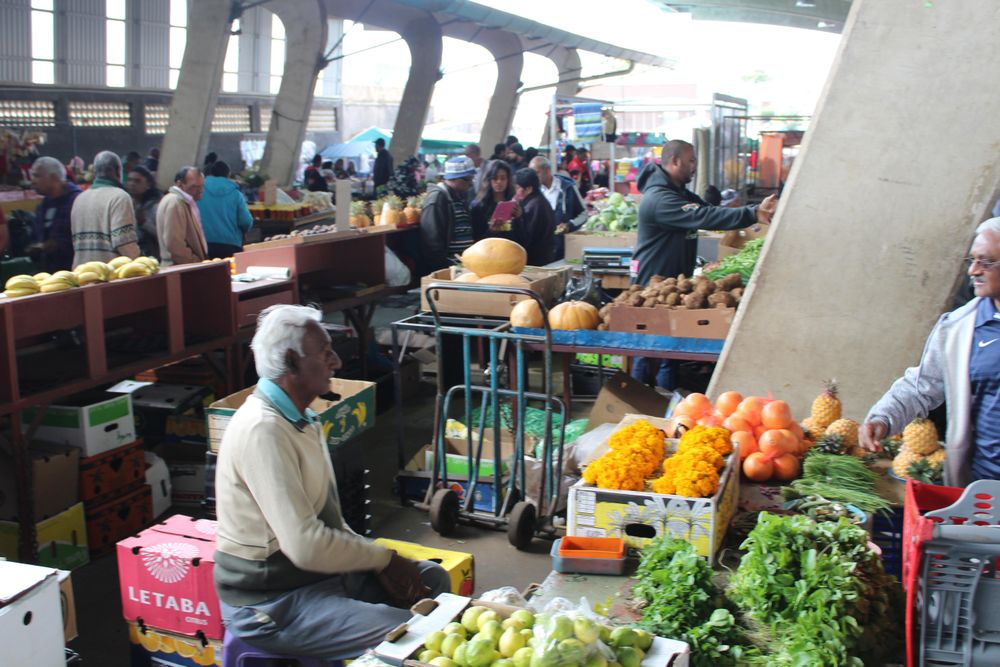
Market gardeners working either their own or leased land were the bread basket of the province. Many of their descendants may be found trading their produce in markets like Bangladesh, Verulam and Tongaat.
"Invade the land!", bellowed Phyllis Naidoo when a comrade came to her to say they were struggling to obtain permission to plant on a vacant plot in Chatsworth. On the face of it and in the context of the challenge our country faces with illegal occupation of land, that sounds like a hugely irresponsible instruction from a decorated hero in the Struggle for South African freedom. Or was it?
The motivation was to plant food crops to supply a voluntary kitchen for school meals. The government's feeding scheme, while nobly keeping millions of children from starvation, is riddled with tender corruption and wastage. A schoolteacher once related how she was appalled that one or two of her colleagues would help themselves to porridge even before their hungry charges had a chance to sit down to breakfast.
The Natal Government Railways and the Durban Corporation ran worker compounds for over 80 years at the Railway and Magazine Barracks off Somsteu Road. In spite of the meagre rations, malnourishment was a common ailment. Community members were active in supplying milk to children.
Land is a powerful resource from a multitude of angles. Descendants of Indian indentured workers will be all too aware of the preoccupation of people freed from the plantations saving to buy a piece of land. Even a postage stamp plot was sufficient if they could call it their own. The banking system involved the matriarch of the extended family household receiving everybody’s untouched wages before handing out necessary allowances. There was no quarrel. One received bus fare and even a few bob for smokes.
Everyone understood that the mother of the house was responsible for the collective good. Ask around among the people who might have held freehold land on Umgeni Road, Riverside, Clairwood, Cato Manor, Farm Chatsworth or Sea View, and there will usually be the common thread of having collectively saved to buy the property. Those folks were eventually dispossessed by the Group Areas Act of 1950, or other legislation and the forced removals that followed.
The history of land dispossession runs deep.
Among the “push factors” prompting indenture from the Indian subcontinent in the 19th century was that people lost their ancestral land. This was either through the invading British with superior firepower or moneylenders who made loans in times of drought or other calamity against the surety of the land.
Readers of Shakespeare will be aware of the moneylender, Shylock, demanding his “pound of flesh”. Destitute Indians were forced into the hands of the “arkatiyas” recruiting workers to slave-like conditions on the far-flung colonies of Natal, Fiji, Mauritius, Reunion, Guyana, Surinam and the Caribbean among others.
For indigenous Africans right across the continent, the experience was even more devastating. Poet John Samuel writes with epic fervour about the 1915 Chilembwe Uprising in Nyasaland (now Malawi). The struggle against colonialism and land dispossession there saw the martyrdom of its leader, John Chilembwe, who popularised the rousing slogan, "… strike a blow and die…”.
In South Africa, either by interminable wars of conquest or the stroke of a pen, like in the 1913 and 1936 Native Land Acts, Africans were rendered landless and strangers in their own country overnight.
The journalist and intellectual, Sol Plaatjie, lamented: “Cattle belonging to Natives may be hounded out of their grazing areas, and widows may be driven from home with their belongings on their head by this Act. … I saw the little children shivering… and when their mothers told me of the homes they had left behind, and the privation and exposure they have endured since eviction, I could scarcely suppress a tear.”
No wonder then, ownership and access to land remain one of the most emotional subjects in South Africa. Over the past 32 years of freedom, the democratic government has worked vigorously on land restitution and redistribution. That task remains unfinished business. One tragic consequence has been the inability or unwillingness of people to work the land. Despite massive grants in KwaZulu-Natal to establish cooperatives, the record card shows very little success. There is an apparent aversion to getting one’s hands dirty in the soil.
There is a compelling story told by another veteran in the Struggle for freedom, Professor Ben Turok, who went into exile in the newly liberated Tanzania with the South African Communist Party in the early 1960s. He recalled how the “Ujamaa” socialism, with the village as the centre of social and economic transformation spearheaded by Mwalimu Julius Nyerere, demanded that at specific hours in the day everyone should be tilling the soil, planting or harvesting.
Turok taught at the University of Dar Es Salaam. When a bell rang, they rolled up their sleeves and picked up hoes and spades. There were no pretty flowers in the patches of ground between the classrooms. There were food crops everywhere supplying the university kitchens and the wider society. Ujamaa was a revolutionary seed which never really came to full blossom in the capitalist world in which Tanzania had to operate.
One can safely assume that the model was successfully replicated closer to home in a secondary school in Newlands West where the foresight of a principal, his team and spirited community leaders created a successful food garden on fallow land. Not only did they introduce sustainable farming methods, but they were also mindful of water usage by harvesting from the groundwater source. Like in Tanzania, the surplus supported the surrounding community and was sent to the market. Land is plentiful in our country. We should not have to own it to work it.
Kiru Naidoo is the founder of the Indian Diaspora Research Academy (INDRA).