
Why EC must come clean on 97 eligible Goa voters kept off rolls
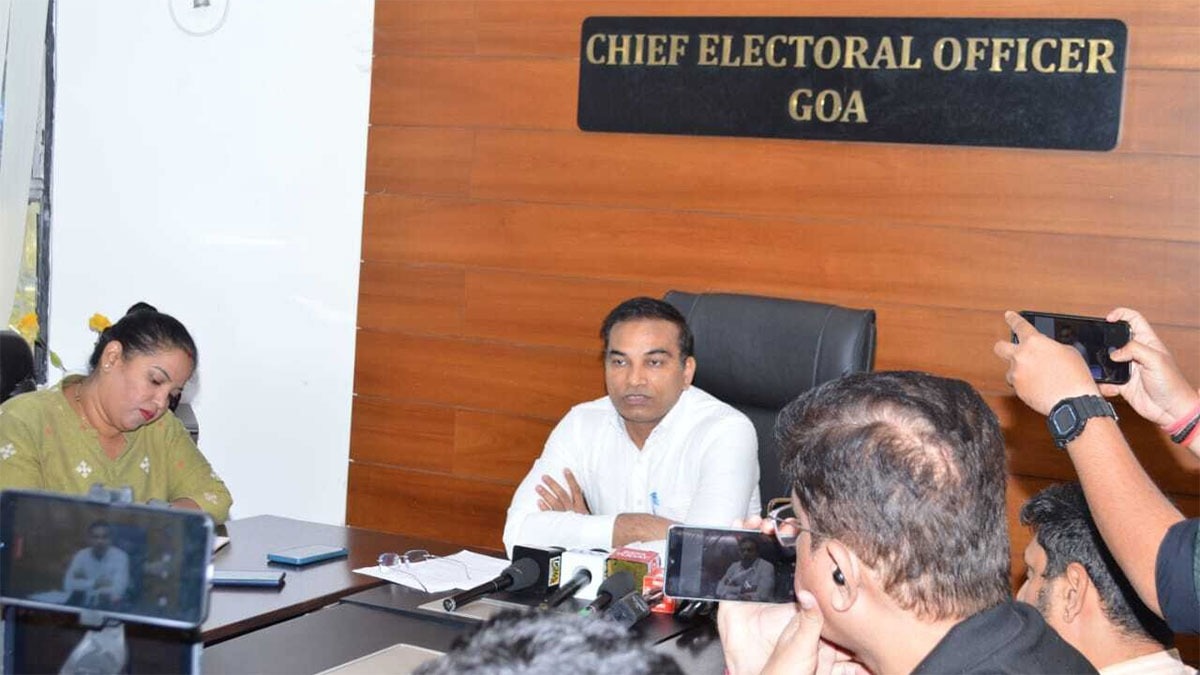
On February 21, Goa published its final electoral roll after the Special Intensive Revision (SIR). Ninety-seven people were left out of it. Each of them had been heard, each had documents checked, and electoral registration officers (EROs) had declared each of them eligible.
But ECINet, the Election Commission’s (EC) electoral software, gave EROs no way to reverse the earlier decision that had flagged them.
That is perhaps the most serious finding in The Indian Express investigation that has shaken the EC this week. The public argument has focused on two election commissioners objecting to decisions taken by chief election commissioner Gyanesh Kumar without their knowledge. Goa shows what happens further down the line. When the software and the statutory officer disagree, the software wins, and a citizen loses the right to vote.
The 97 people had been flagged during the SIR for what the EC calls “logical discrepancies”. These flags came up when the database failed to match a voter with a parent or grandparent in an older roll; for instance because of differently spelled names, unusual age gaps between parents and children, or ages that did not add up across old and new rolls.
The Supreme Court had provided a remedy. Its January 19 order in the West Bengal SIR case directed that such names be displayed publicly and that voters get an additional 10 days to file documents or objections and be heard. Goa followed the order. Of the 649 electors who came forward, officials found 97 eligible for the final roll.
Then the EROs tried to enter their decision. Between February 11 and 17, the Goa chief electoral officer's office sent eight communications to senior deputy election commissioner Gyanesh Bharti, with director general of IT Seema Khanna copied, asking for a rollback facility.
Goa Electronics Limited, which supports the state office, also took the problem to Tata Consultancy Services, the software vendor, and reported that rollback, reversion and document re-upload functions were still unavailable.
On February 17, Goa formally sent the EC the list of 97 voters. The roll came out four days later without them. Some of these 97 people were told to apply afresh through Form 6, the application for new voters. Goa chief electoral officer Sanjay Goel has said that ECINet should give EROs a way to re-include voters after examining their cases.
The damage goes beyond election day. In Goa, the electoral roll also decides eligibility for some state schemes, including the Goa Mediclaim Scheme, which helps pay for dialysis, angioplasty, open-heart surgery, organ transplants, chemotherapy and cochlear implants. So, a missing software function can also cut a family off help with a transplant or chemotherapy.
Goa is a small state. Its final SIR roll had 1,057,566 voters. Its officials caught the problem, documented it, and escalated it eight times in a week. The same platform runs the revision everywhere else. More than 130 million names have been struck off draft rolls across 30 states and Union territories since the SIR began in Bihar in June 2025.
Every state that held logical-discrepancy hearings had to record its outcomes in the same system. In West Bengal alone, judicial officers examined about 6 million flagged voters, and about 2.7 million were deleted. The EC has not said whether the rollback gap was limited to Goa, when it was fixed, or how many ERO decisions in other states never made it into a final roll.
ECINet was launched on January 22, bringing more than 40 applications and portals onto one platform. In May, election commissioner Vivek Joshi raised concerns about centralisation of the electoral-roll database and proposed an audit to check that only authorised statutory officials could change voter records.
After state officials reported they did not have full access to ERONet, election commissioner Sukhbir Singh Sandhu asked whether the director general of IT had the legal authority to restrict what statutory election officials could reach. In late July, a change in work allocation for the IT division removed an existing layer of oversight. Sandhu and Joshi wrote separately to cabinet secretary T.V. Somanathan, and the order was set aside until the EC could reach consensus.
The EC responded to the allegations on September 23 with a media note signed by deputy director P. Pawan. It says written notes and differing views are a normal part of deliberation in any institution. It describes the commissioners’ inputs as “for further improving the electoral processes”. It argues that highlighting internal notes from 10 months “give only one part of the picture”, and points to around 40 new initiatives, the countrywide roll revision, and elections in Bihar, Kerala, Tamil Nadu, Puducherry, Assam and West Bengal. It says all these decisions came from “the unanimous decisions of the full Commission in the past one year”.
On technology, the note says ECINet operates under strict data security protocols. It adds that EROs and district election officers “function as per statutory powers for registration and deletion under law”. The note does not mention Goa. It does not explain the missing rollback function, the eight communications from Goa, or the 97 names.
The last line of the note is the one Goa contradicts most directly. In Goa, the EROs used their statutory powers exactly as the law and the Supreme Court required. They heard the voters and found them eligible. The software blocked that decision, and the EC has said nothing about it.
