Why Does the President Keep Seeking the Right Head of Communication?
Why Does the President Keep Seeking the Right Head of Communication?
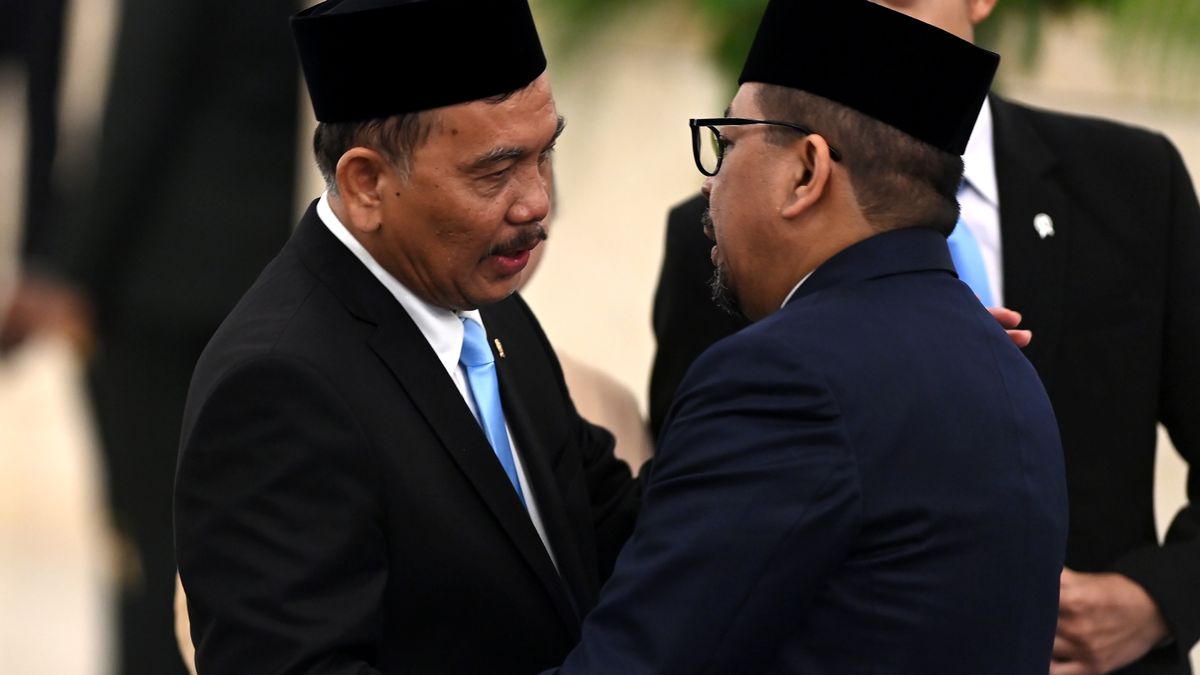
CHANGE of head of the Government Communication Agency (BAKOM) has occurred again. On October 2, 2026, President Prabowo Subianto appointed Syahganda Nainggolan as head of BAKOM and Fadli Tri Hartono as Deputy Head of BAKOM.
Since the establishment of the Presidential Communication Office (PCO) in August 2024, the communication architecture surrounding President Prabowo's administration has been led by four figures: Hasan Nasbi, Angga Raka Prabowo, Muhammad Qodari, and now Syahganda Nainggolan.
Hasan Nasbi led the Presidential Communication Office from August 19, 2024, until the institutional transformation on September 17, 2025, for approximately 394 days or 13 months.
Angga Raka Prabowo then led BAKOM for about 222 days or 7.3 months, from September 17, 2025, until Muhammad Qodari was appointed on April 27, 2026.
Qodari himself served for only about 158 days or 5.2 months before being replaced by Syahganda on October 2, 2026.
Thus, from August 2024 to October 2026, there have been four figures in 775 days or about 25.5 months, with an average tenure of around 8.5 months.
Counting only the BAKOM era, from September 17, 2025, to October 2, 2026, there have been three heads in 380 days, or about 12.5 months. This means the average tenure of BAKOM heads is only about 6.3 months.
This frequency of changes is noteworthy because the head of government communication appears very dynamic compared to many other strategic government positions.
In a span of about two years, several changes in figures at the center of the President's communications have occurred.
This does not automatically mean that previous heads failed to perform their duties. Changes in officials are the prerogative of the President and can be influenced by various political and administrative considerations.
However, from a political communication perspective, this frequency can be interpreted as a signal. There is a possibility that the President is still searching for a figure that best meets the communication needs of his administration.
In other words, the issue is not merely about who replaces whom, but whether there has been a political-communication fit between the President, the government's agenda, and the communication leaders around him.
From the process of change, the Head of BAKOM can now be deemed one of the government leadership positions highly sensitive to turnover.
Since BAKOM was established in September 2025, there have already been two changes in leadership within about a year.
Looking back further to the PCO era, there were four figures leading the communication function in the President's circle.
Why is this position so sensitive? Because the head of communication works in an area where success is not easily measured by administrative indicators.
He or she deals with public perceptions, media dynamics, political issues, government reputation, communication crises, and direct expectations from the President.
Miscommunication can even lead to new problems when messages intended to clarify policies instead become subjects of public debate.
Therefore, the position of Head of BAKOM has a character different from many other technocratic positions. It operates in an incredibly fast-paced environment that is very open to public judgement.
A single statement can affect perceptions of a policy; one frame can change how the public understands an agenda; and a single communication error can shift attention from the substance of the policy to its communication.
Here, a more crucial question needs to be asked: what does President Prabowo actually expect from a head of communication?
Presidential Regulation Number 82 of 2024 regarding the Presidential Communication Office shows from the outset that the function of presidential communication is not merely to act as a spokesperson.
It includes functions such as analyzing strategic and political issues, developing communication strategies, disseminating information, and coordinating government communications.
With this mandate, the head of communication is essentially at the intersection of politics, policy, media, and the public.
Thus, the President needs more than just someone who speaks well. What is required is a figure capable of understanding the government’s political agenda, how that agenda translates into policy, how the policy should be communicated, how the media will frame it, how stakeholders will respond, and what needs to be relayed back to the President as public feedback.