Why Bihar is investing big infra in Gaya's sacred geography
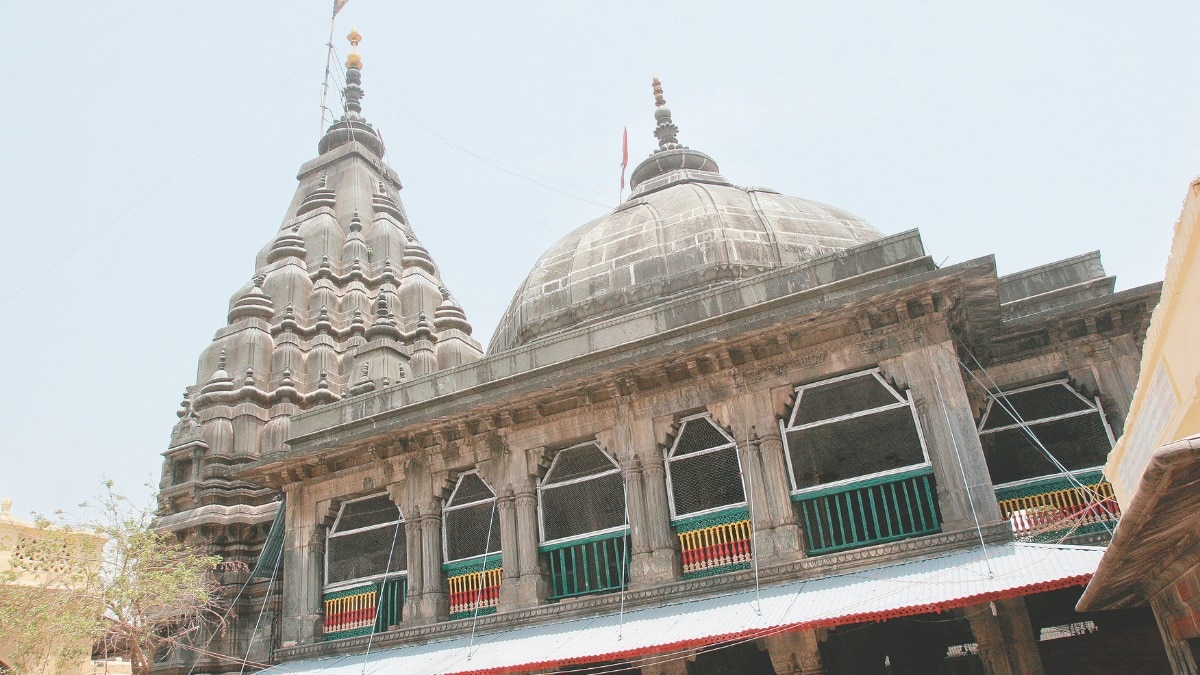
Bihar’s Samrat Choudhary government, on September 15, put Gaya on the fast track to development, approving a Rs 3,516 crore package that brings together two seemingly unrelated projects. One is the Rs 2,520 crore redevelopment of the Vishnupad Temple precinct on the lines of Varanasi’s Kashi Vishwanath Corridor. The other is a Rs 996.05 crore project to link the Son and Falgu rivers.
Taken together, the two projects point to a larger ambition: if Gayaji is already one of Bihar’s biggest religious-tourism destinations, its infrastructure must keep pace with the scale of its pilgrimage economy. That means not only upgrading the spaces around its sacred sites but also addressing the water challenge that has long shaped the Falgu.
The September 15 cabinet approval is part of Choudhary’s broader push to develop Bihar’s religious-tourism centres and give them infrastructure commensurate with their growing significance.
Gaya is one of the few places in the state that draw a great number of Indian pilgrims and foreign visitors. Provisional Bihar tourism figures for January to July 2026 put domestic tourist visits to Gaya at 1.14 million; alongside are 96,465 foreign visitors. This is in addition to the footfalls recorded at Bodh Gaya, where another 1.46 million domestic visitors and 134,000 foreign visitors were recorded in the same period. Together, the two destinations accounted for about 231,000 foreign visitors in the first seven months of the year.
The scale becomes more striking when placed against the state capital. Patna recorded only 6,429 foreign visitors in the same seven-month period, according to the provisional figures. In other words, the Gaya-Bodh Gaya belt is the state’s principal meeting point between two very different streams of religious travel—Hindu pilgrimage at Gaya and global Buddhist pilgrimage at Bodh Gaya.
And even those numbers understate the annual load. The January-July figures do not capture the Pitripaksha Mela, which falls in September-October. That is when Vishnupad, the Falgu ghats and the city’s pind daan economy get their biggest annual rush. The government's Vishnupad plan reads almost like a response to that pressure: multi-level parking, elevated pathways, ghats, bridges, ramps, dormitories, a canteen, pedestrian infrastructure and public amenities are all part of the package. The project will be implemented by the Bihar State Road Development Corporation.
For Hindus, the Vishnupad Temple is revered as the place where Lord Vishnu is believed to have left his footprint on a rock. The temple is also closely associated with pind daan, the ritual of offering prayers and food for departed ancestors. During Pitru Paksha, families from across India come to Gaya to perform these rites. The temple therefore is not merely a place of worship but the spiritual centre of a pilgrimage built around remembrance of the dead and the fulfilment of filial duty.
That is also why the Kashi Vishwanath Corridor comparison matters. Bihar is not merely proposing to renovate a temple. It is proposing to reorganise the space around one of its most important pilgrimage sites. The idea is to turn an intensely crowded pilgrimage zone into a more organised destination without stripping it of its religious purpose.
The second half of the package addresses a different problem. The Son-Falgu link proposes an intake well about 23 km upstream of the Indrapuri barrage. Water from the Son will be lifted and carried through an approximately 11-km-long pipeline to the North Koel main canal at about the 32.77-km point.
The logic is broader than tourism alone. The Son-Falgu project addresses one of the physical constraints around the city’s landscape, seeking to bring water into the Falgu river whose religious importance far exceeds its visible flow in many parts of the year.
For the Choudhary government, the significance of the decisions lies in putting these two pieces together. Gaya already has something most destinations have to manufacture: a year-round Hindu pilgrimage base, a globally important Buddhist destination next door, and a huge seasonal Pitripaksha surge. The Rs 3,516 crore package is an attempt to build the infrastructure around that inherited advantage and turn religious footfall into a more durable tourism economy.