Who decides who gets to participate in society? Galloway's banking dispute raises critical questions - IOL
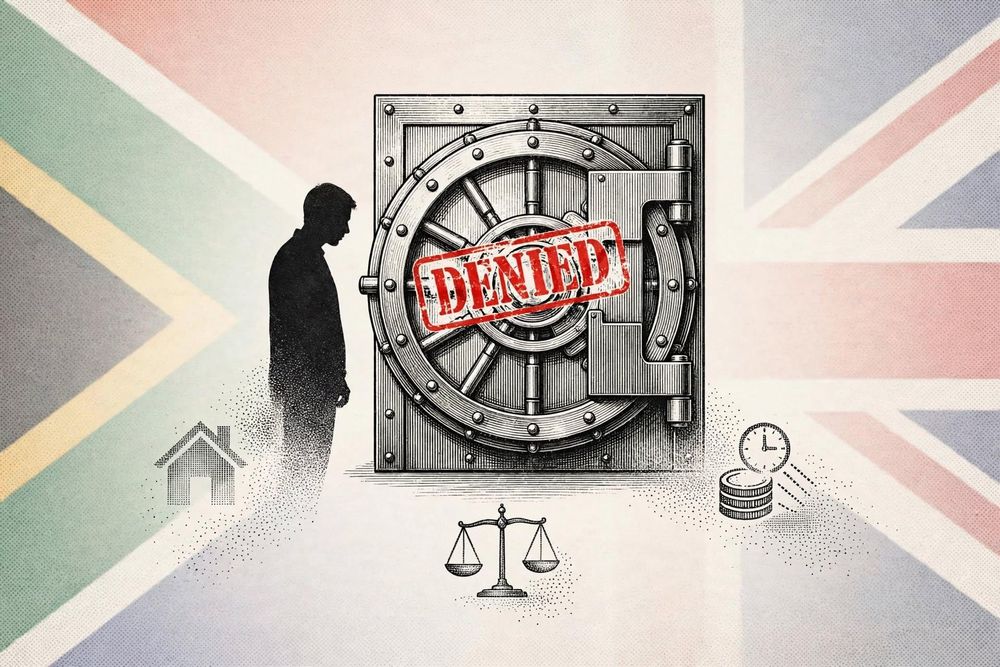
In a world where financial institutions wield immense power, George Galloway's recent banking dispute ignites a vital discussion on the intersection of finance and political expression. As South Africa grapples with its own legacy of exclusion, the questions surrounding who gets access to banking services and under what conditions become increasingly urgent.
Who has the power to decide who is financially and socially acceptable? George Galloway's banking dispute forces that question into the open. Via social media, Galloway shared that after 39 years as a Bank of Scotland customer, his accounts were closed with no explanation or warning. The consequences extend to his pension and his home. His lawyers are now challenging Lloyds Banking Group.
The facts will ultimately have to be established through the legal process — or perhaps Lloyds will choose to negotiate a resolution. But the deeper issue is bigger than one person: how much power should a financial institution have over someone's ability to participate in economic life?
South Africans understand why this matters. We understand institutional exclusion. Research tells us that under apartheid, banks were not neutral. They financed the state, excluded black South Africans from credit, and profited from racial capitalism. When the 1985 debt crisis hit, the apartheid government secretly bailed out banks in transactions later found unlawful. The bailout continued until 1995, and the Public Protector ordered repayment of more than R2.25 billion. Today, many institutions remain concentrated and exclusionary. Our constitutional democracy was built in rejection of that model, but the debt and related poverty structures persist. This seems to be a worldwide pattern.
That does not mean banks should be unable to close accounts. They have legitimate responsibilities. Issues such as the Panama Papers, fraud, money laundering and currency manipulation must be investigated. Legitimate sanctions must be enforced. But enforcing the law legitimately is not the same as using financial power to punish lawful political activity.
Britain recognised the problem. New rules introduced in April 2026 require banks to give at least 90 days' notice before terminating accounts, and to provide an explanation. Older accounts remain under the previous rules. For someone who banked with an institution for 39 years, that raises a legitimate question: why should the date an account was opened determine the protection a customer receives?
Galloway is not the first prominent figure to raise the issue. The media outlet The Canary was debanked the same day as Galloway. Francesca Albanese has faced similar treatment. Nigel Farage's banking dispute brought debanking into Britain's mainstream in 2023. Activists, journalists and human rights organisations are increasingly asking whether banks take political or reputational considerations into account, and whether this is an opportunity to think about alternative banking models, such as credit unions.
The International Criminal Court offers a stark example. The United States sanctioned ICC judges over the court's work involving US and Israeli nationals. Sanctioned judges reported cancelled credit cards, frozen assets and restricted banking. Three judges sued the Trump administration in June, arguing that the measures punish them for judicial decisions and threaten judicial independence. The lawsuit is pending.
One does not have to agree with every ICC decision to see the problem. If financial pressure can follow a decision that displeases a government, the implications reach far beyond the individual.
South Africa has particular reason to take notice. Our country chose international law in bringing its case against Israel before the International Court of Justice. Some may disagree, just as they may disagree about Galloway, or the ICC. George Galloway and Yvonne Ridley are coming to South Africa for the People Power Tour. He has long supported South Africa and Palestine. Defending someone's rights is not endorsing their arguments. People may reject political claims and refuse to platform figures they consider war criminals. Freedom of expression does not mean freedom from critique.
Nor should access to financial services become a form of political punishment. A bank account is how many people receive salaries and pensions, pay rent and mortgages, buy food and medicine, pay children's school fees, and keep the water and lights on. Losing access makes life extraordinarily difficult and stressful, perhaps that is the point. This makes banking far deeper than a private commercial matter. It is a question of unchecked institutional power, and power needs accountability. South Africa has a National Financial Ombud, and comments on its social media posts are telling.
Who Gets to Participate Fully in an Equal Society?
Transparency: who authorises these devastating decisions, and on what legal basis? Accountability: when proven unjustified, when will Galloway's accounts be reinstated? Parliamentary scrutiny: how can account closures be appealed without full information? Regulation: how will local regulators protect against exclusion for views or political activity?
South Africans know the consequences of unchecked institutional power. We do not need another lesson. One does not have to agree with Galloway, or with Helen Zille, to recognise that essential financial services must be governed by law, transparency, fairness and due process — not hidden political agendas. Once financial power becomes a means of political coercion, the question is no longer who gets a platform. It is who gets to participate in society. These are questions worth discussing openly, as human beings.
Shabnam Palesa Mohamed is an activist, journalist, lawyer and strategist. She is the founder of Wage Peace International, a trustee of Palestine House SA, and is passionate about skills development.