When ballots do not guarantee better futures - IOL
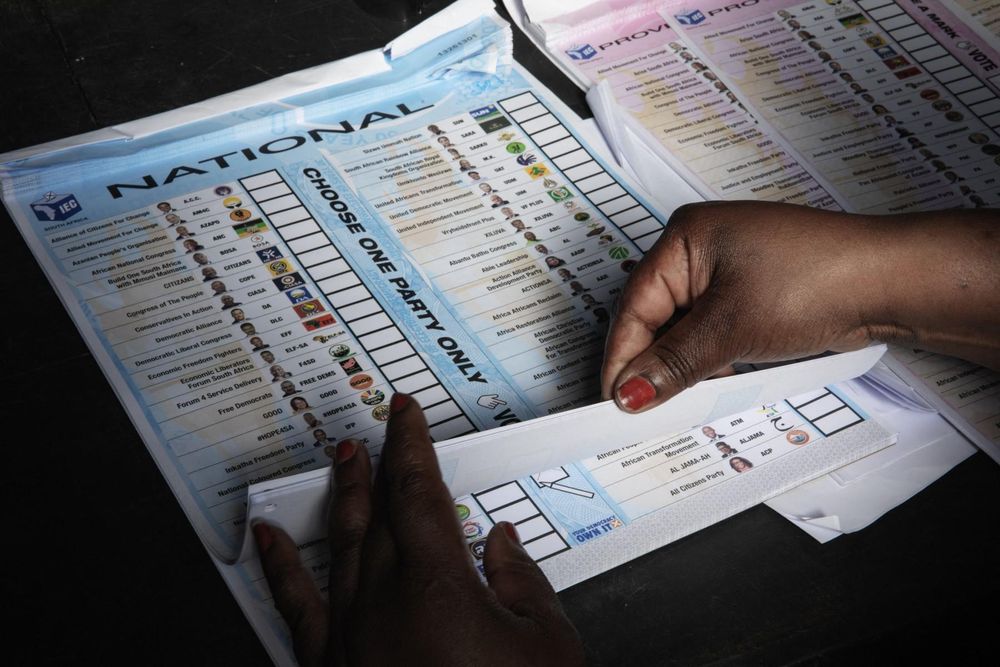
South Africa’s 2026 local elections will test whether voting can restore public trust amid unemployment, failing municipalities, water shortages and coalition instability.
The period 2027–2028 is not merely an electoral interval in our democracy; it is a diagnostic period in which South Africa’s future trajectory will increasingly come under the spotlight. There is a temptation to imagine the future announcing itself. It does not.
The future is here. It is in the statistics we dismiss, in the institutions that are collapsing, in the water that does not flow from taps, in the police that fail to investigate, and in the municipality that cannot account for its money. It is in the citizens who begin to doubt whether voting makes any difference to their lives.
The philosopher Seneca advised us to send our minds "forward in advance" and consider “what can happen.” As South Africa approaches two consequential elections - in November 2026 and in 2029 – it is important to consider what can happen. We cannot know with certainty what South Africa will become. But we can examine the indicators. I see seven markers that will impact our future.
The first marker is the capacity of the state. South Africa does not suffer from a shortage of laws, policies, or constitutional promises. Our problem is increasingly the distance between what the Republic promises and what the state delivers. Although South Africa has exited the FATF grey list and our electricity systems have improved substantially, we must not, for a single moment, ignore the opposite evidence.
Our state institutions are functioning in a cesspool of corruption and incompetence. If the state cannot maintain infrastructure, administer municipalities, or spend public money properly, constitutional rights increasingly become theoretical, with no grounding in fact. If the South African state fails to rescue its institutions from corruption and incompetence, its constitutional promises will remain out of reach.
The second marker is whether the economy can create a future for those excluded from it. Our official unemployment rate is 33.6%, with 8.5 million people unemployed. A young South African who cannot enter the labour market experiences a total absence of opportunity. The consequence is not just lingering poverty. It is permanent dispossession from the future. It produces people who cannot see any future. A democracy established to ensure better futures cannot indefinitely ask multiple generations to believe in a social contract they cannot see.
The third marker is local government. It is where citizens encounter the Republic. The latest figures show that of South Africa's 257 municipalities, only 39 received clean audits for 2024/25. These signs point to institutional capture and collapse. The November election will therefore occur against a necessary question: can democracy still persuade citizens that changing political leadership can change the quality of their daily lives? When citizens lose faith in the ballot's efficacy, they do not necessarily become apolitical. They become disillusioned and ultimately violent.
The fourth marker is organised crime and weak institutional integrity. Our state institutions are in the stranglehold of criminality and corruption. When political influence intersects with criminal networks, the distinction between a capable state institution and the criminal economy begins to erode. A democracy cannot survive the normalisation of illegal activities and prosecutorial inertia.
The fifth marker is water. South Africa has learnt that infrastructure failure is never only about infrastructure. Electricity became an economic crisis, then a political crisis and eventually a crisis of confidence. Water now carries these same characteristics. The recently released National Water Action Plan identifies municipal governance, infrastructure maintenance, financial management and accountability as central problems. Water scarcity largely stems from institutional incompetence and corruption.
The sixth marker is the integrity of the social contract. Societies under severe social pressure such as ours begin to search for someone to blame. The danger is not disagreement. Disagreement is the oxygen of democracy. The danger is when citizens begin to believe that another ethnic or racial group is responsible for their hardship and politicians lead in this noxious exercise of allocating blame. Race blame has a dangerous new dominance in our social discourses.
Lorenzo Davids, CEO, Development Impact Fund.
The seventh marker is whether coalition politics leads to democratic maturity or democratic exhaustion. The GNU has ended an era when one party could assume its political dominance was permanent. This is healthy, but only if political parties learn that governing together is different from merely dividing power. The test is whether coalitions produce better government or simply more of the same incompetence and corruption.
These seven markers indicate a growing national trust deficit. The question before us in November is: what kind of Republic are we voting for? The future is not waiting somewhere beyond 2029. It is already here. In the audit reports. In the unemployment figures.
In the municipal water pipe. In the young graduate's unanswered applications. Alvin Toffler is attributed with saying: “The future always arrives too fast — and in the wrong order.” That future is now upon us.