What's still within Trump's power even if the Democrats sweep the U.S. midterms - CBC

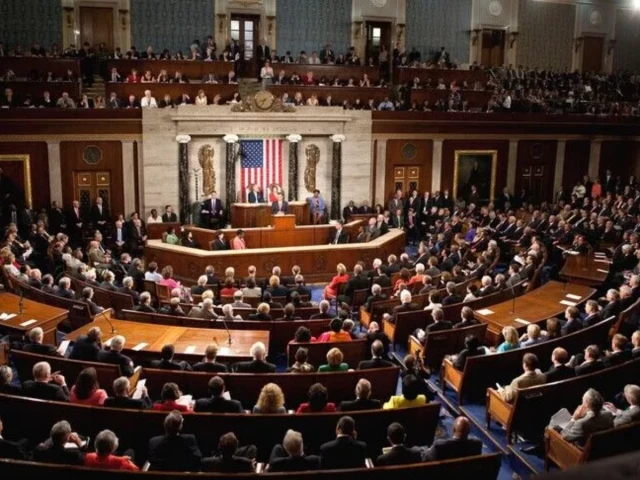
U.S. Vice President JD Vance and Speaker of the House Mike Johnson applaud as U.S. President Donald Trump addresses a joint session of Congress at the U.S. Capitol on March 04, 2025 in Washington, DC. (Win McNamee/Getty Images)Social SharingRepublicans are heading into November’s U.S. midterm elections facing mounting pressure to defend their House majority, as Democrats make gains in several key races.
The stakes extend beyond the balance of power in Congress. If Democrats win both the House and Senate, they would unlock tools to investigate the Trump administration, challenge its policies and shape what legislation moves forward.
But a change in Congress doesn’t necessarily mean a change in the president’s ability to act.
Washington correspondents Katie Simpson, Willy Lowry and Paul Hunter break down whether a party switch in Congress and the Senate could curb Trump's power, and what it could mean for Canada-U.S. trade relations.
We've included some highlights below, edited for length and clarity. Listen to the full podcast discussion here. Willy Lowry: Let’s get to our listener question of the week. Ben essentially wants to know how much Democratic control of Congress would actually matter if Trump makes most of his policy decisions outside legislation, like executive orders.
For the Canadians listening, could we talk about how presidents usually try to introduce policy change, and how Trump's approach differs?
Katie Simpson: So, passing legislation — huge bills that have legacy policies in there and getting them through Congress — take a look at Donald Trump and the way he promoted passing the big, beautiful bill — which included all kinds of changes to be rolled out through the time of his presidency, related to funding cuts, tax cuts, all of these different kinds of things that are his policy priorities.
That typically is how things go, where a president works with lawmakers in Congress to get things through that entire process — the lawmaking process — to advance your agenda that you were elected to implement, and so he is trying to do that.
But if you don't have the cooperation of Congress, Donald Trump has illustrated — even though Republicans do control Congress right now, it's divided — the small minority in the House can be difficult to get things through, but he can still operate very effectively outside of that, through executive orders.
Paul Hunter: [To] declare things an emergency, declare things [a] national security matter, and it's incredible what he has shown the executive office, a.k.a. the president, can do without needing the approval of Congress.
He went to war in Iran. He went and got Nicolás Maduro out of Venezuela. He brought in the tariffs — some have been reversed, some are still facing challenges.
He [also] challenged birthright citizenship, which was overturned in the courts, but is still back in the court.
He has shown intent and ability to get things through simply with the stroke of a pen and that won't change no matter what Democrats do in the midterms.
Will he face more hurdles? Will he face investigations? Subpoenas to his family, to his business associates, other things like that? Will he face impeachment? That's a question Democrats have to ask themselves because they can impeach him. Is it worth the energy?
But all that to say, it'll be a lot of optics, but I'm not convinced it'll actually slow him down in terms of what he wants to do outside of the legislative agenda, which would be paralyzed.
Willy Lowry: I think you're right. It is amazing over the last nearly two years, how irrelevant Congress has been outside of the government shutdowns and the Epstein files, which outside of those two factors, they've basically been relegated.
Katie Simpson: It's illustrated that it's not the balance in power that it is intended to be. The only thing right now that really is a check on Donald Trump's power is the court system.
Willy Lowry: So, how much would actually change if power does go to the Democrats in Congress?
Katie Simpson: Donald Trump did an interview with Fox News host Laura Ingraham on the sidelines of the midterm convention that they held in Dallas, and he openly declared, ‘I'm going to become a blocker.’
So, if legislation is passed through Congress that he does not approve of, he will use his veto power, and then between blocking legislation that does not align with his agenda, and continuing on with executive orders — the powers that his different departments have, to pursue particularly tariff policy and foreign policy, Trump is signaling how he will continue to fight for his agenda, even if American voters send a message to Washington that they want change.