What South Africa can take from Fujian's growth - IOL
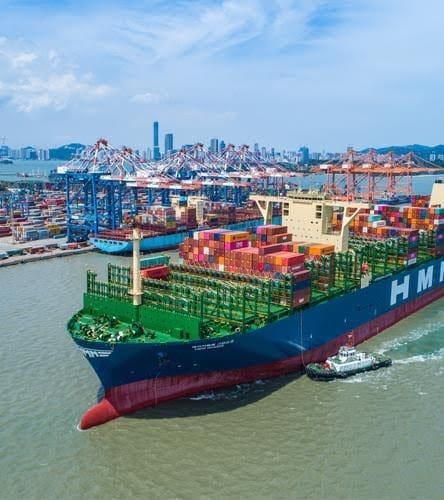
Fujian's ports are central to its trade growth, with Fuzhou Port handling more than 100 million tonnes of foreign-trade cargo.
FUZHOU – South Africa is looking for ways to create jobs, ease its energy crisis and restart growth. Fujian province offers one example of how another country has done it.
More than 200 delegates from 182 media outlets and institutions in 100 countries gathered in Fuzhou for the 2026 Media Cooperation Forum on Belt and Road, held on 3 and 4 November.
The forum was hosted jointly by the People's Daily, the official newspaper of the Communist Party of China's Central Committee, and the Fujian provincial government. Its theme was "Pursuing Common Understandings and Shared Aspirations along the Belt and Road". After the forum, delegates were taken on a tour of Fuzhou hosted by the People's Daily and the Fujian provincial government, taking in museums, businesses and tourist attractions.
As part of the tour, they heard a lecture titled Fujian's Practice of Chinese Modernization from Cheng Mengyao, an Associate Professor of Economics at the Party School of the Fujian Provincial Committee of the Communist Party of China. She said the province grew from a per capita GDP of about 273 yuan in 1978 to an economy of roughly $836 billion by 2025.
An aerial view of a forested landscape with waterways and mountains in the background. Fujian's economic growth has been accompanied by investment in clean energy.
In 1992, Fuzhou's leaders adopted the "3820" strategy, a plan for the city's development that ran across three, eight and 20 years, with targets for the Min River waterfront, industry and infrastructure. The lecture said successive administrations kept to it, and that lasting results take "patient, steady effort." South Africa's policy often shifts with each political cycle, and the lecture held up Fuzhou as the opposite approach.
In 1978 Fujian was 80% mountains, 10% water and 10% farmland, with no major state industrial projects, no national rail line and little central investment. The lecturer said officials responded by cutting regulatory hurdles and letting ordinary people start businesses, an approach known as the "Jinjiang Experience".
Private firms now account for more than 70% of the province's GDP, 80% of urban employment and 90% of market entities, according to the lecture. The lesson for South Africa, is that less red tape lets local entrepreneurs create jobs without the state funding every project.
Fuzhou hosts the Digital China Summit every year. The lecture put Fujian's digital economy at more than $473.5 billion in 2025, over 56% of provincial GDP, with nearly 200,000 digital enterprises and more than 165,000 5G base stations.
It said non-fossil sources supply over 50% of the province's power, against about 43% nationally, helped by 3.83 million kilowatts of offshore wind capacity. Battery maker CATL, based in the province, reported $59 billion in revenue in 2025. South Africa faces grid constraints and uneven digital access.
Fujian's model is an example of building directly on newer infrastructure.
China has designated Fujian the core zone of the 21st-Century Maritime Silk Road. Fuzhou Port's foreign trade cargo passed 100 million tons in 2025 for the first time. Direct shipping routes link the province to South Africa, Kenya, Egypt and Nigeria, and annual trade with Africa reached $14.98 billion, made up of $9.06 billion in Fujian exports and $5.92 billion in African imports, according to the lecture.
The figures show a trade surplus in China's favour. South African debate over trade with China has also centred on that imbalance and on local manufacturing, which the lecture did not address.
Fujian's long-term development strategy has helped drive infrastructure investment and economic growth.
The lecture said Fujian ended absolute poverty by 2020, ten years ahead of the UN's 2030 goal, and narrowed its urban-to-rural income ratio to 2.04 to 1, among the narrowest in China. It put per capita disposable income at $7,042 and said unified health insurance and pension systems cover all residents.
Fuzhou was named one of China's "Most Happiest Cities" for 2025, Xinhua reported, in a selection run by its Oriental Outlook magazine.
South Africa's spatial inequality remains high, and the lecturer's argument was that growth lasts only if it reaches rural areas and comes with a safety net.