What Election Commission rift reveals: Cloud over its conduct
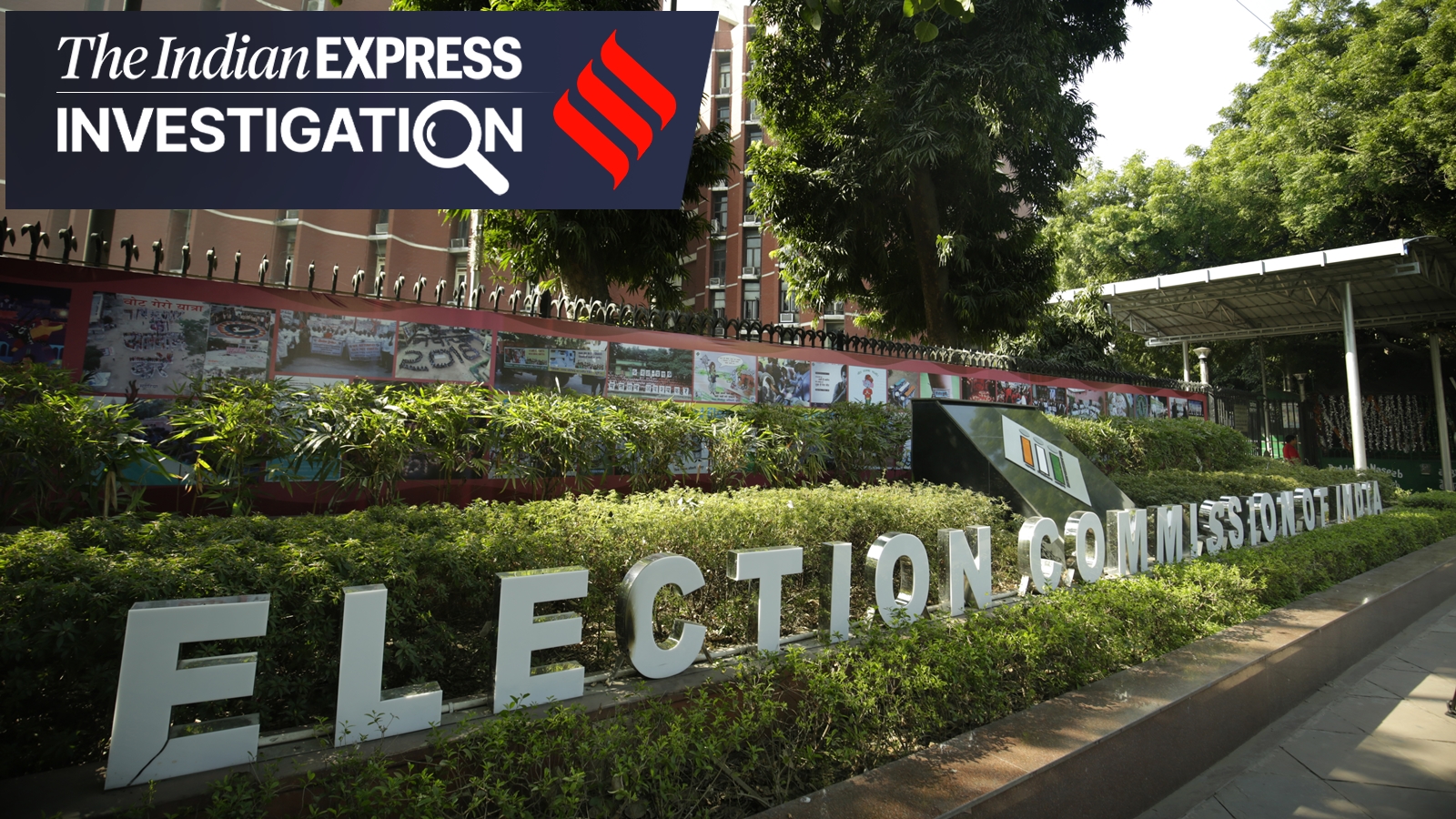
There has been dissent within the Election Commission earlier but never before have two Election Commissioners put on record objections that touch the heart of the electoral process itself: new voters, deleting names, the IT system that secures the entire voters’ list.
1. Concentration of powers: You may be legally entitled to vote but now you may hit the “system hurdle”. Your Electoral Registration Officer may not be able to ensure your right. That’s what happened in Goa where 97 people met the ERO’s requirements. They produced their documents, the ERO found them eligible but the software, controlled from EC headquarters in Delhi, didn’t allow the ERO’s decisions to be recorded. A voter can be eligible, prove it, be found eligible by the officer the law appoints, and still not be on the roll when the day comes, because the roll is a centrally controlled system that cut the ERO out.
2. SIR shadow over next generation: The change to Form-6 to which the ECs have objected asks new voters to mention if their parents, grandparents are on the roll of the last SIR. A parent’s deletion, in a deeply contested SIR, and what course it takes — appeal or adjudication — will now hang over their child. A critical form that decides who a new voter is was changed without the Government amending the rules as the law requires.
3. Erosion of safeguards: Decentralisation within the EC was itself its strongest safeguard. For decades, the Commission has answered charges of rigging the electoral roll with the same basic argument: no one person or team controls the list. Thousands of statutory officers do, constituency by constituency. That safeguard, the two ECs have complained, is weakened when control over the digital system is centralised. A team in Delhi can now stall, override or cancel what ground-level officials do.
4. Checks and balances crumble: The ECI is a three-member constitutional body. Its law provides that business should, as far as possible, be transacted unanimously and, where members differ, by majority. Yet Election Commissioners Sukhbir Singh Sandhu and Vivek Joshi repeatedly recorded that they had not been consulted or informed about decisions taken in the Commission’s name.
5. Violating the EC’s mandate: There has been dissent within the Commission earlier but this one is very different. In January 2009, CEC N Gopalaswami, who was appointed as an EC by the Vajpayee government and later became the CEC, wrote to the President recommending that EC Navin Chawla be removed alleging partisan conduct. The Manmohan Singh government rejected the recommendation on March 1, 2009, and Chawla succeeded Gopalaswami as CEC that April.
In May 2019, days before the last phase of the Lok Sabha election, Election Commissioner Ashok Lavasa wrote to CEC Sunil Arora that he would stop attending Commission meetings on Model Code of Conduct complaints until his minority decisions are recorded in the final orders. He had disagreed with the majority’s clean chits to Prime Minister Narendra Modi and then BJP president Amit Shah. Arora said the three members were “not expected to be templates or clones of each other”.
On May 21, 2019, the full Commission met and decided, 2-1, that dissents would be recorded in the file but not in the orders. Lavasa left EC the following year, before his turn as CEC, for the Asian Development Bank.
Both Arora and Lavasa were appointed by the NDA governments.
In both the Chawla and the Lavasa cases, the dissent was around a specific issue flagged by an individual.
This time, however, two Commissioners who make up the majority are not dissenting on decisions they have been overruled on. They are putting on record that decisions were taken, orders issued and cases filed and they are in the dark. Clearly, the Commission, that the 2023 Act requires to act “as far as possible, unanimously”, has not.
An award-winning journalist with 19 years of experience reporting on politics, governance, and public policy, Ritika Chopra is currently Resident Editor of The Indian Express, Mumbai. She oversees the edition’s editorial coverage and reporting on the city and the wider region. Previously, she has served as Chief of the National Bureau (Government) and National Education Editor in New Delhi, leading coverage of government policy and education. Ritika has closely tracked the Union Government, with a focus on politically sensitive institutions such as the Election Commission of India and the Education Ministry, and has authored investigative reports that have prompted official responses. Ritika joined The Indian Express in 2015. Previously, she was part of the political bureau at The Economic Times, India’s largest financial daily. Her journalism career began in Kolkata, her birthplace, with the Hindustan Times in 2006 as an intern, before moving to Delhi in 2007. Since then, she has been reporting from the capital on politics, education, social sectors, and the Election Commission of India. ... Read More