Warren Buffett just took a big risk with the $1.5 trillion giant he built
You have reached your maximum number of saved items.
Remove items from your saved list to add more.
Last week, Berkshire Hathaway announced that Warren Buffett’s son, Howard, would replace him as chairman of the sprawling conglomerate. There was no outcry.
At face value, Howard, 71, has no obvious qualifications to be appointed chairman of a venerated $US1.08 trillion ($1.5 trillion) company, other than that he is the founder’s son.
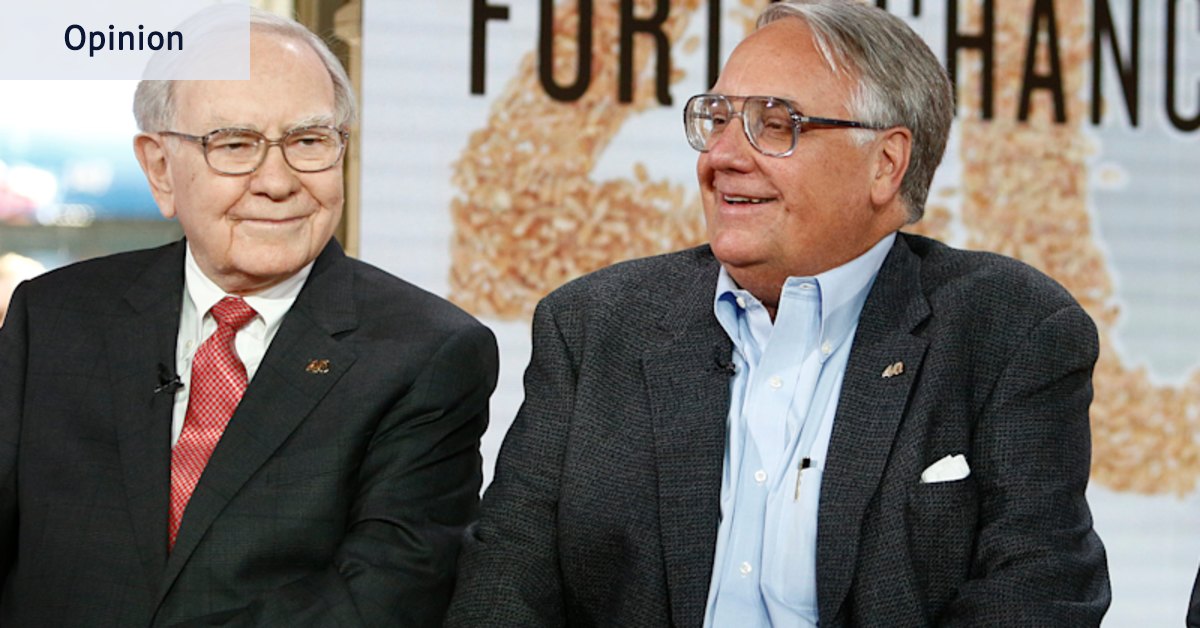
Warren Buffett with son Howard G. Buffett and grandson Howard W. Buffett.NBCU Photo Bank/NBCUniversal via Getty ImagesHoward is a farmer, on properties whose purchase was funded by his father. He is a philanthropist, deploying funds provided by his father. He’s not a college graduate and has little experience, if any, in operational management or asset management.
He has been on the boards of a number of major public companies – including Coca-Cola and Conagra – but it is a reasonable question to pose whether he would have been appointed had Warren not been his father.
Yet, there was no outcry in response to what would appear to be a clear case of nepotism. Even the proxy advisers, guardians of good corporate governance, seem to have fallen into line.
That may be because Warren’s succession plan has been a long time in the making, having been flagged at least as far back as 2000, when Warren told the Wall Street Journal that Howard would eventually succeed him as chairman, citing his business acumen and Warren’s desire to maintain Berkshire’s culture. It didn’t come as a surprise.
It might also, of course, because it is Warren’s plan and Berkshire shareholders, and the market-at-large, trust his judgement when it comes to the company that has always been built around Warren’s personal convictions and philosophies – and his success and folksy charisma – since he acquired an ailing textile company in 1965, built it into the world’s most revered investment conglomerate and became a cult figure to generations of investors and investment managers.
Howard’s main qualification as the incoming chairman, apart from being Warren’s son, is that he has been on the Berkshire board for 33 years.
“This is a longer apprenticeship than I served before taking the reins at the age of 34,” Warren, 96, wrote in a letter to shareholders last Friday.
Greg Abel, who succeeded Warren as chief executive in January last year, “runs the company,” Warren said.
Buffett’s successor as Berkshire Hathaway CEO Greg Abel will be left to making the calls on acquisitions, investments or divestments.Getty“Howard will guard its culture and values – both worth more than anything on our balance sheet. Think of Howard as a policy the shareholders own and hope never to claim against.”
The demarcation of responsibilities is clear. Howard won’t be making the calls on acquisitions, investments or divestments, those will be Abel’s responsibilities.
When Warren referred to culture and values, he was talking about something more than the way authority has historically been delegated to operational managers, or his focus on the long term, shareholder-first approach to investment and the deep personal engagement he developed with his shareholder base.
He made it clear in an interview last year that his greatest fear for the future of the group he built was that the unusual mix of financial and industrial operations, its $US350 billion portfolio of listed investments and a similar level of cash holdings would lead to calls for it to be broken up.
During Buffett’s era at the helm, Berkshire has had lengthy periods where it has done little but sit on its hoards of cash, underperforming the markets and increasing the apparent appeal of a break-up.
It has been going through one of those periods in recent years, where Buffet sees little value, the cash piles up and Berkshire underperforms the market. Berkshire has underperformed the S&P 500 over the past decade, as the technology stocks that Warren historically avoided have increasingly driven the market.
“I care more about the future of Berkshire after I die than during the period I’m alive. It’s my creation,” he told the Wall Street Journal.
“What I want is a company that’s successful and also embodies a company that belongs to shareholders.
“That is something that takes a long time to build and could be torn apart quite easily if it fell into the hands of people who would want to break it up.”
Buffett turned Berkshire Hathaway into an investing colossus. BloombergBerkshire’s new structure is not unique. Other large companies in the US have long had family members succeeding each other as chairs, overseeing the professional managers who actually run the companies. Ford, Walmart, Estée Lauder, Comcast and Fox and News Corps, where Lachlan Murdoch chairs both, spring to mind.
Howard, however – unlike some of those dynastic groups, including Fox and News, where Lachlan is executive chair – will be a non-executive chair.
He will be the guardian of Berkshire’s structure and values, charged with protecting and preserving what his father created while Abel, as long as he doesn’t try to cross Warren’s no-go zones, will be left largely free to decide the future nature and shape of Berkshire’s asset base.
So far, the market has absorbed the news of Howard’s elevation – and Warren’s to “chairman emeritus” – quite comfortably. Its shares are down about 0.1 per cent.
There was a far bigger reaction when Warren announced he was stepping down as CEO in May last year, from which the shares have yet to recover. The A-class voting shares have fallen more than 6 per cent since that moment, while the S&P 500 has climbed more than 36 per cent.
Whether Howard can deliver on his father’s expectations of maintaining the group’s culture and structure will hinge on Abel’s ability to generate some share price momentum, which given Berkshire’s sheer size – there are few transactions that could move the dial for shareholder returns – won’t be easy.
The market won’t extend the same trust and tolerance for periods of under-performance to Abel and Howard that it has for Warren, with the spectre of pressure for a break-up likely to remain a continuing threat to his legacy.
The family currently has an economic interest of about 13 per cent in Berkshire’s shares but, thanks to a capital base dominated by shares with reduced voting rights, has about 30 per cent of the votes.
Over time, once Warren is no longer around, that could reduce as those shares are progressively distributed to the individual charitable trusts that Howard and other family members run.
Warren will remain a board member despite vacating the chair, but in future it will be Howard and, more particularly, Abel, as the drivers and faces of the company. They couldn’t have a more daunting act to follow.
The Business Briefing newsletter delivers major stories, exclusive coverage and expert opinion. Sign up to get it every weekday morning.
You have reached your maximum number of saved items.
Remove items from your saved list to add more.