War, oil shocks, and diplomatic friction form the turbulent backdrop for Donald Trump’s UN speech
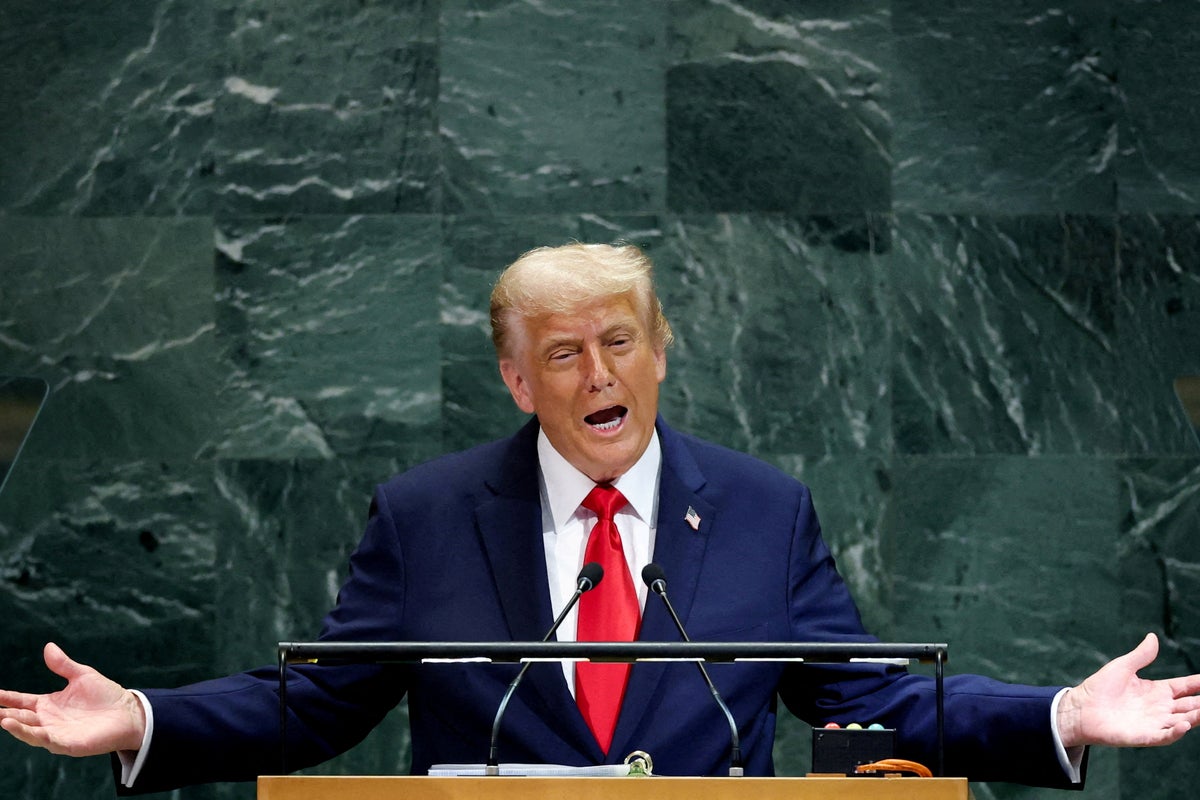
President Donald Trump is scheduled to address the United Nations General Assembly on Tuesday amid escalating global turmoil and mounting domestic pressure over his foreign policy.
Trump's speech follows his decision to launch a war against Iran—a conflict that has rattled the global economy—alongside surging international anxiety over artificial intelligence and deep funding cuts to the U.N. itself. The address comes as public pushback over the Iran conflict threatens Republican prospects in the upcoming midterm elections.
Despite the headwinds, White House officials said Trump will argue that his aggressive posture has stabilized global affairs.
"We expect the president will highlight how he and his administration have confronted complex problems head-on around the world," said U.S. Ambassador to the U.N. Mike Waltz. Waltz signaled Trump may also reiterate past grievances against the international body regarding climate policy, migration, and administrative inefficiency.
Following his address, Trump is slated to hold bilateral talks with British Prime Minister Andy Burnham, Japanese Prime Minister Sanae Takaichi, and an informal session with Venezuelan acting president Delcy Rodríguez. He will also meet with representatives from the Gulf Cooperation Council—including Saudi Arabia, Qatar, and the UAE—to address the ongoing war in Iran and recent regional rebel strikes.
Nearly seven months into a renewed military campaign against Tehran, Trump returns to the UN General Assembly insisting that armed conflict remains necessary to neutralize an Iranian nuclear threat. The assertion follows his address to the global body last year, when he stated the US had "demolished" Iran’s nuclear capabilities after directing the June 2025 strikes on three major facilities.
The war has grown increasingly complex despite joint American and Israeli operations destroying Iran’s navy and air force and killing much of its top leadership. At the same time, a US oil blockade has severely crippled Tehran's economy, yet broader regional instability persists.
Oil transit from other Gulf nations through the Strait of Hormuz has improved in recent weeks as the US Navy guides commercial vessels through the narrow waterway. However, overall supply flows remain significantly below pre-war levels. Brent crude continues to trade around $100 per barrel, up from roughly $70 in the weeks leading up to the conflict.
Energy markets remain uneasy following further disruptions. Saudi Arabia shuttered a vital relief pipeline earlier this month—which had provided an alternative route for blocked Gulf oil—after it was hit by Iranian-backed militants based in Iraq. Additionally, territorial advances near the Bab al-Mandab Strait by Yemen’s Houthi rebels, another group backed by Iran, have rendered the Red Sea shipping corridor treacherous for oil tankers.
Speaking Monday at the Concordia Annual Summit alongside the UN high-level week, Majed al-Ansari, chief spokesman for the Qatari Foreign Ministry, said mediators are trying to navigate a "deep deficit of trust" between Washington and Tehran to bring both sides back to diplomatic discussions.
"What we’re trying to say is that, ‘Listen, this will end at the negotiating table," said al-Ansari. "Either we sign a deal now or sign a deal 10 months away. The only difference is the number of dead and destruction that we see."
During last year's General Assembly, Trump highlighted his record as a peacemaker, claiming that "everyone says that I should get the Nobel Peace Prize" for his administration's diplomatic efforts to mediate conflicts globally.
This year, his officials plan to sign a side pact at the General Assembly alongside Danish and Greenlandic representatives designed to pave the way for expanding the U.S. military's footprint in Greenland.
Unveiled last week, the arrangement came together following recurring threats from Trump to "take over" Greenland, a territory belonging to NATO ally Denmark, using military force if necessary.
Under the deal, Greenland remains a Danish territory. "I’m looking forward to the meeting tomorrow. I think we have reached a good agreement," Prime Minister Mette Frederiksen told Danish broadcaster TV2 Denmark.
The ongoing war between Russia and Ukraine may feature in the president's upcoming address, recalling his 2024 campaign pledge to resolve the conflict on Day One of his second term.
Discontent over the fighting has been a recurring theme for the president, whose patience has been tested by Ukraine targeting Russian diesel refineries—destabilizing oil markets—and Russia hitting Ukraine's energy grid.
Trump claimed last week to have brokered an agreement halting attacks on energy infrastructure. Ukrainian President Volodymyr Zelenskyy agreed to the terms if Russia complied, but Moscow said it would accept Trump’s truce only if Western sanctions were lifted first.
Both combatants have nevertheless continued striking refineries and energy targets. Trump reiterated his frustration over these ongoing infrastructure attacks on Monday before traveling to New York.
"Russia has unfortunately lost control of its Diesel Oil Industry due to its War with Ukraine," Trump wrote on social media Monday, adding, "This ridiculous and never ending War with Ukraine must be ended."
The president is scheduled to hold his inaugural in-person session with Burnham, the center-left Labour Party figure who assumed the role of prime minister in July.
With rising oil prices pressuring the British economy, finding solutions to fully unblock the Strait of Hormuz may become a priority. He said on Monday that a Royal Air Force aircraft will be dispatched to the Middle East to help Saudi Arabia defend against Houthi rebel strikes by refueling Saudi planes on "defensive" sorties.
Trump’s discussions with Japan’s Takaichi precede his hosting of Chinese President Xi Jinping in Washington for a state visit later this week.
Long-standing friction between Japan and China grew sharper after Takaichi suggested last year that Tokyo's military could step in if Beijing moves against Taiwan — the self-governing island democracy claimed by China as its territory. This political strain has subsequently damaged China-Japan economic relations.
Trump's talk with Rodriguez, Venezuela’s interim president, represents their initial dialogue since Trump authorized a January U.S. military operation targeting former President Nicolás Maduro, who was brought to New York City on federal charges of narco-terrorism and drug smuggling.