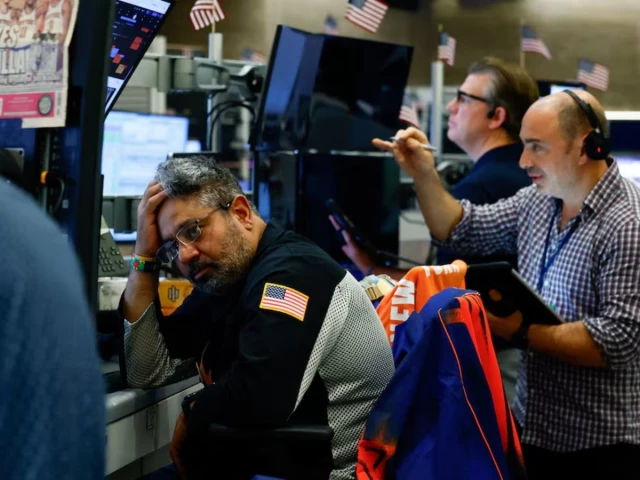
Wall Street suffers worst rout since 2020 as AI fears spark massive sell-off
Wall Street suffered a sharp sell-off on Thursday, with technology stocks bearing the brunt of the losses as investors grew increasingly worried about the future of the artificial intelligence boom. The sell-off spread beyond chipmakers to other parts of the market, suggesting that investors were reducing risk more broadly rather than simply moving away from a handful of expensive technology stocks.
The Nasdaq 100 plunged more than 6%, marking its worst single-day decline since the market turmoil triggered by the Covid-19 pandemic in March 2020. The S&P 500 fell 4.4%, while the Philadelphia Semiconductor Index, which tracks major chipmakers, tumbled 12% in its worst session since March 2020.
Nvidia, the world's most valuable company, dropped more than 9%, recording its steepest fall since January 2025 and wiping out its gains for the year. All 30 stocks in the Dow Jones Industrial Average ended lower.
The sell-off came after investors initially cheered the Democrats' sweeping victory in the US congressional elections, expecting a political check on President Donald Trump and a possible easing of tensions surrounding the Iran conflict.
But attention soon shifted to a different concern: whether the changing political environment could slow the enormous investment in artificial intelligence and the data centres powering it.
The biggest pressure came from companies linked to the artificial intelligence boom. Technology stocks had driven Wall Street to repeated record highs this year, fuelled by expectations of strong demand for AI chips, computing equipment and data-centre infrastructure.
However, investors are increasingly questioning whether the scale of spending on AI infrastructure can be sustained and whether the expected returns will justify the massive investments.
The election result added another layer of uncertainty. The Democrats' victory could bring greater scrutiny of data-centre expansion and the energy and infrastructure requirements associated with it. Investors began assessing whether a change in the political environment could slow the pace of investment that has supported chipmakers and other AI-linked companies.
The Nasdaq 100 has now erased around $2.3 trillion in market value and fallen nearly 15% from its October 6 record.
Greg Taylor, Chief Investment Officer at PenderFund Capital Management, compared the concentration of investor interest in AI to earlier market bubbles.
"I'm getting flashbacks to 2008 or 2001," he told Bloomberg, adding that the market had become too focused on one theme and that the unwinding of those positions was having a widespread impact.WHY DID US ELECTION RESULT CHANGE INVESTOR SENTIMENT?
The market reaction to the US midterm elections was initially positive. Investors had expected that a politically divided Washington could limit Trump's ability to push through policies and potentially increase the chances of an end to the Iran conflict.
That optimism, however, gave way to concerns about the possible impact of Democratic control on the AI industry.
The report said investors began reassessing the outlook for data-centre construction and the hundreds of billions of dollars being invested in the equipment needed to power AI. If policy changes slow that expansion, earnings forecasts for companies supplying chips and infrastructure could also come under pressure.
Michael O'Rourke, Chief Market Strategist at JonesTrading Institutional Services, told Bloomberg investors may have been too quick to assume that the political shift would have no major impact on the AI investment cycle.
He pointed out that earnings forecasts for next year could become less reliable if policy changes alter the outlook for data-centre construction.
This is important because several technology stocks have been valued on expectations of strong future earnings growth. If investors begin questioning those expectations, even companies with strong businesses can face sharp corrections.SELLING SPREAD BEYOND TECHNOLOGY STOCKS
The sell-off was not limited to AI-linked companies. Stocks that had previously been considered defensive, including Walmart, also came under pressure as the market-wide rush to reduce exposure gathered pace.
The Philadelphia Semiconductor Index fell 12%, putting it in a bear market after declining more than 38% from its June 22 peak.
The report also highlighted pressure from hedge funds and momentum-driven trading strategies. Some funds were forced to unwind positions, while other investors held back from buying into the fall. This added to the selling pressure.
Michael Monaghan, Partner and Portfolio Manager at Founder ETFs, described the situation as a combination of a lack of buyers and hedge funds being forced to sell positions.
The sell-off also pushed the Cboe Volatility Index, or VIX, up by 11.57 points to 28.18, its highest level since March. A rising VIX indicates that investors are expecting greater volatility in the stock market.INVESTORS TURN TO US GOVERNMENT BONDS
As equities came under pressure, investors moved towards the relative safety of US government bonds. US Treasury prices rose, pushing yields lower across maturities by as much as 12 basis points to their lowest levels since early September.
This reflected a broader shift towards safer assets as investors reassessed the outlook for equities and the risks surrounding the AI investment boom.
The sharp fall in stocks has also raised questions about whether the correction could deepen. However, the immediate concern for investors is whether the sell-off is a temporary reassessment of valuations or the beginning of a longer period of uncertainty around AI spending and earnings expectations.
For Wall Street, the next phase will depend on whether companies can deliver the earnings growth needed to justify their valuations and whether the political and regulatory outlook for the AI industry becomes clearer.
(Disclaimer: The views, opinions, recommendations, and suggestions expressed by experts/brokerages in this article are their own and do not reflect the views of the India Today Group. It is advisable to consult a qualified broker or financial advisor before making any actual investment or trading choices.)- Ends