Walking Faster May Help Reverse Frailty - Time Magazine
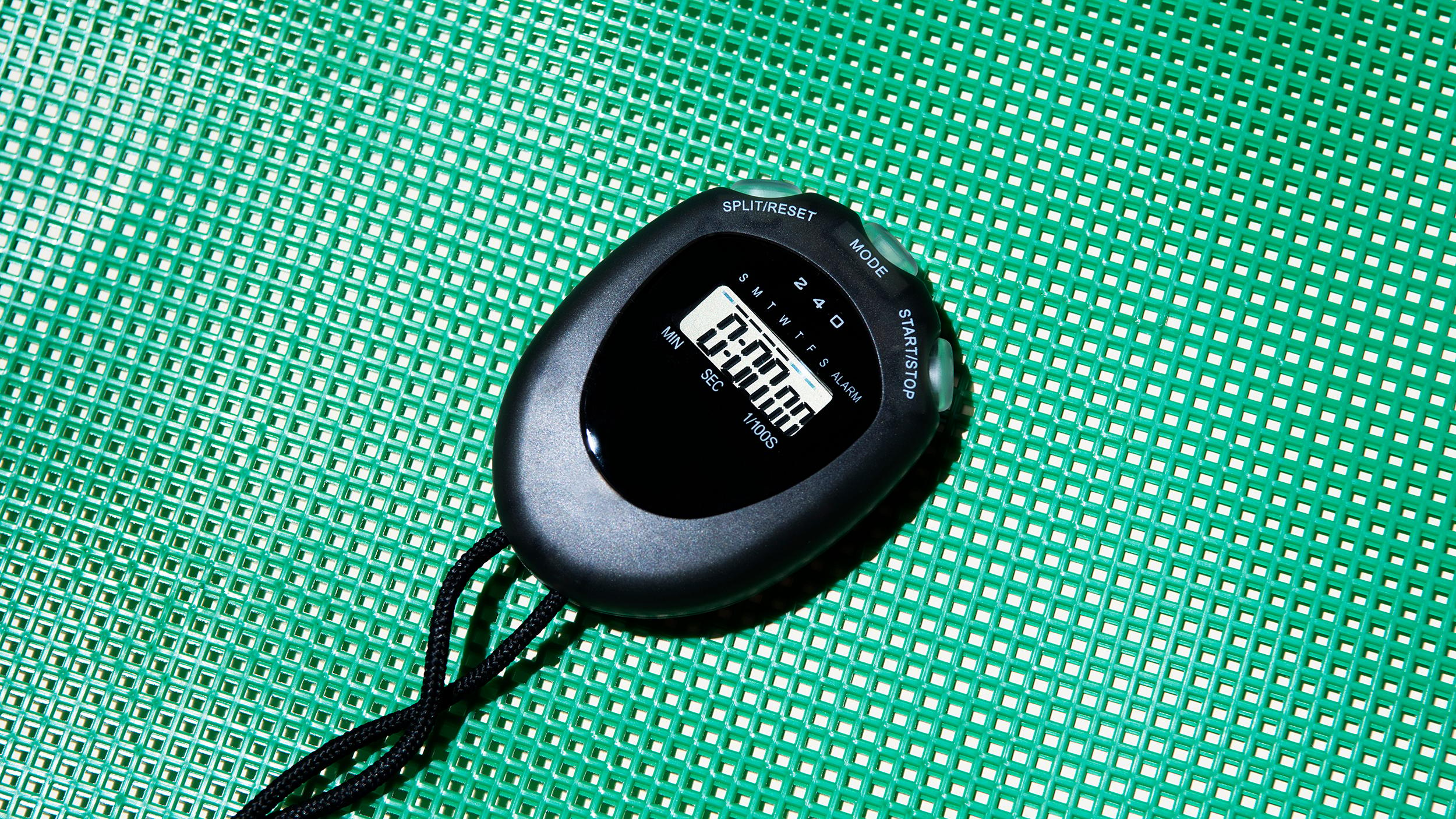
Frailty is more than just slowing down a little with age. It’s a syndrome recognized by medical professionals as a major risk factor for a sudden worsening in health—people who score high on measures of frailty are more likely to develop complications after routine surgeries and to decline swiftly after infections or falls. Signs of frailty include a slow walking speed and taking a while to perform what’s called a “timed up-and-go test,” where someone gets up from a chair, walks a few paces, then heads back to sit down. (If this takes more than about 13 seconds, that’s a possible marker of frailty).
Researchers believe that exercise can help reverse the condition. A new trial published in the journal PLOS ONE found that people who walked fast were more likely to improve their frailty scores than those who strolled at a leisurely pace, although both groups saw benefits.
Encouraging older people to take it slowly might sound like reasonable advice, says Margaret Danilovich, a physical therapist and instructor at Northwestern University and an author of the new paper. "People tend to assume, ‘Someone is frail. We shouldn't have them do too much,’” she says. But, she says, that’s a miscalculation, and older folks are capable of more than they might think.
In the current study, she and her colleagues set up exercise groups in 14 retirement homes. Research assistants assessed people’s frailty before and after the intervention and coached them during several months of weekly walking sessions in the retirement community hallways. Each group performed similar walking tasks—walking forward, backward, with walkers and without—but half of them walked casually, while the others were encouraged to walk much faster.
“We wanted to achieve a vigorous level of activity, more than 70% of the heart rate maximum,” says Danilovich. “There were standard scripts at certain timepoints throughout the walk.” If people slowed down, “the research assistant would give them verbal encouragement to walk faster.”
People who kept their pace up saw more improvements to their frailty scores, the team found. “Nearly 70% in the high-intensity walking group improved in at least one category, compared to 46% in the casual group,” says Danilovich.
However, more people dropped out of the high-intensity group than out of the casual group, points out Dr. Kenneth Rockwood, a professor of medicine at Dalhousie University in Canada (who was not involved with the study). “The differential dropout makes it hard to generalize” how much these results apply to typical older people, he wrote in an email. But any quality research in this field is welcome, he added. “Good on them for doing work to prevent frailty. We need a bunch more of that.” (The researchers found there were no baseline health differences between the groups, suggesting that it’s reasonable to infer that it wasn’t just people in worse shape who dropped out, leaving fitter participants behind.)
The results are particularly interesting because they suggest that high-intensity exercise can be safe for this population, says Dr. Sara Espinoza, a geriatrician at Cedars-Sinai Medical Center in Los Angeles (who was not involved in the research). There was only one fall during the study, suggesting that exercise might not be as dangerous among older adults as people tend to assume.
Espinoza cautions that implementing the findings might be difficult. “The application of these findings or the translation to real life is sometimes difficult, because unfortunately our healthcare system does not reimburse/pay for this type of exercise training,” she wrote in an email. “We can order PT [physical therapy], but it is generally not high-intensity exercise that is going to increase the heart rate.”
The researchers hope to extend their work to healthy older people who wear smart watches, to build an understanding of how to best prompt walkers to go faster. Then someday, perhaps, interventions encouraging high-intensity exercise to reverse frailty might be accessible to anyone who has one of these wrist-worn devices, and who heeds its alerts to pick up the pace.