View / Few took the Houthis seriously. A coalition is now needed to stop them. - Semafor
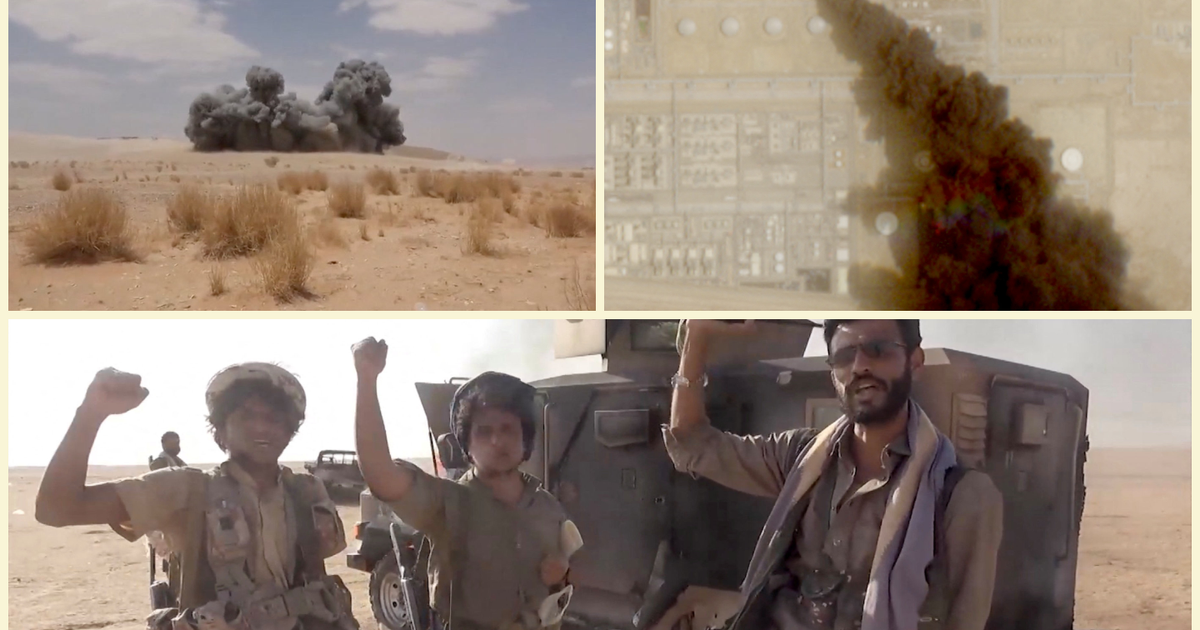
On September 15, Saudi Arabia issued alerts for Mecca, Jeddah, and Taif. They were soon lifted and no impact was reported. The threat came after the Houthis, the Iranian-backed militia controlling northern Yemen, swept down Yemen’s Red Sea coast.
They took Mokha, a port city near the coast’s southern end, and Mayun, an island in the Bab el-Mandeb strait, and then moved to the Hanish islands to the north. The Houthis now hold nearly the entire Yemeni side of one of the world’s most important shipping lanes and sit roughly 20 miles from the main American military base in Africa, in Djibouti.
When I served as the White House Middle East envoy, the Houthis were not my file, but they were never far from it. Few governments treated them as a serious actor. They were seen as a ragtag militia, a Saudi and Emirati problem, and a humanitarian story. It’s true that the group isn’t an impressive military, but they hold Yemen’s capital, the part of the country where most Yemenis live, and now nearly all of its Red Sea coast.
Saudi Arabia and the UAE recognized the danger early and fought the Houthis for years. That coalition frayed: the UAE drew down its forces in 2019, a UN-brokered truce largely halted the war in 2022, and Riyadh resumed direct talks with the Houthis.
The Houthis are a US-designated terror proxy of the Iranian regime. Their rule in Yemen has inflicted suffering on people through corruption, coercion, aid diversion, and war. Their latest offensive reportedly came with direct guidance from Tehran. According to Reuters, Tehran instructed the Houthis to escalate, promising them more money, weapons, and expert Iranian advisers.
The reason behind the timing is clear. For more than six months the US has been raising the cost to Iran of using the Strait of Hormuz as a weapon, and Iran has answered by putting another global energy chokepoint under threat. A drone strike that Riyadh attributes to an Iran-aligned group in Iraq also shut down the pipeline carrying Saudi oil across the kingdom to the Red Sea, bypassing Hormuz.
The Houthis have been hard to stop for reasons that have nothing to do with their quality as soldiers. They fight with cheap drones and missiles against interceptors that can cost a thousand times as much. From mountain strongholds, they have survived years of Saudi-led airstrikes and, more recently, American and British ones. Iranian weapons keep reaching them despite an air and sea blockade. Most of all, no campaign against them has been sustained. Each stopped before it was finished.
This time could be different. The Houthi advance gave their enemies a new set of exposed fixed targets. A militia holding a port city, an airfield, islands, and a long stretch of coastline can be found and hit. The Houthis wanted that ground because it brings their weapons closer to the ships they want to threaten, but holding it also puts them out in the open. This opportunity will not last long as they move to fortify these new coastal positions.
The countries with the most to gain from acting now were together in one room last week. United States Central Command (CENTCOM) confirmed that Admiral Brad Cooper hosted senior military leaders from eight nations in Germany to discuss regional security cooperation. According to reports, they represented Israel, Saudi Arabia, the UAE, Bahrain, Kuwait, Qatar, Jordan, and Egypt.
Six years ago, the Abraham Accords that US President Donald Trump created brought Israel into open partnership with the UAE and Bahrain, clearing the way for the Pentagon to move Israel under CENTCOM’s umbrella alongside its Arab neighbors. Military relationships that began with missile defense have grown into a room where Israel and seven Arab states, most of them not party to the accords, strategize against a shared threat. According to Axios, Cooper told the group that American forces are staying in the Middle East, and discussions are underway about extending to Saudi Arabia the intelligence, surveillance, and reconnaissance support that Israel already provides to the UAE.
Saudi Arabia says it intercepted a Houthi drone headed toward Mecca, and the Houthis deny it. Whatever the truth of the September 15 alerts, Tehran understands what a threat to Islam’s holiest city does to Sunni opinion while its Shia proxy attacks Saudi Arabia. Iran seeks regional dominance by setting Muslim against Muslim, country against country, and everyone against Israel. To some degree, its pressure is producing the opposite. Regional countries are increasingly coordinating against Iran and its proxies, building a habit of cooperation that will ultimately lead to normalization.
Taking the Houthis head-on requires sustained strikes on their new coastal positions, a joint maritime mission aimed at Iranian resupply, and a declared goal of removing the Houthis from the Red Sea coast, not managing them there.
For years the Houthis were dismissed as a nuisance. They now threaten one of the world’s most important oil routes while their patron in Tehran squeezes another. This is the moment for the Gulf states, the US, Israel, and their allies to take advantage of a ripe opportunity to act together. Waiting is how the Houthis got this far.
Jason D. Greenblatt served as White House Middle East Envoy in the first Trump administration. He is the author of In the Path of Abraham, the founder of Abraham Venture LLC, and publishes the Substack “How to Watch”