
[Vantage Point] Gov’t dismantling a grid monopoly is only half the job - Rappler
Already have Rappler+? Sign in to listen to groundbreaking journalism.
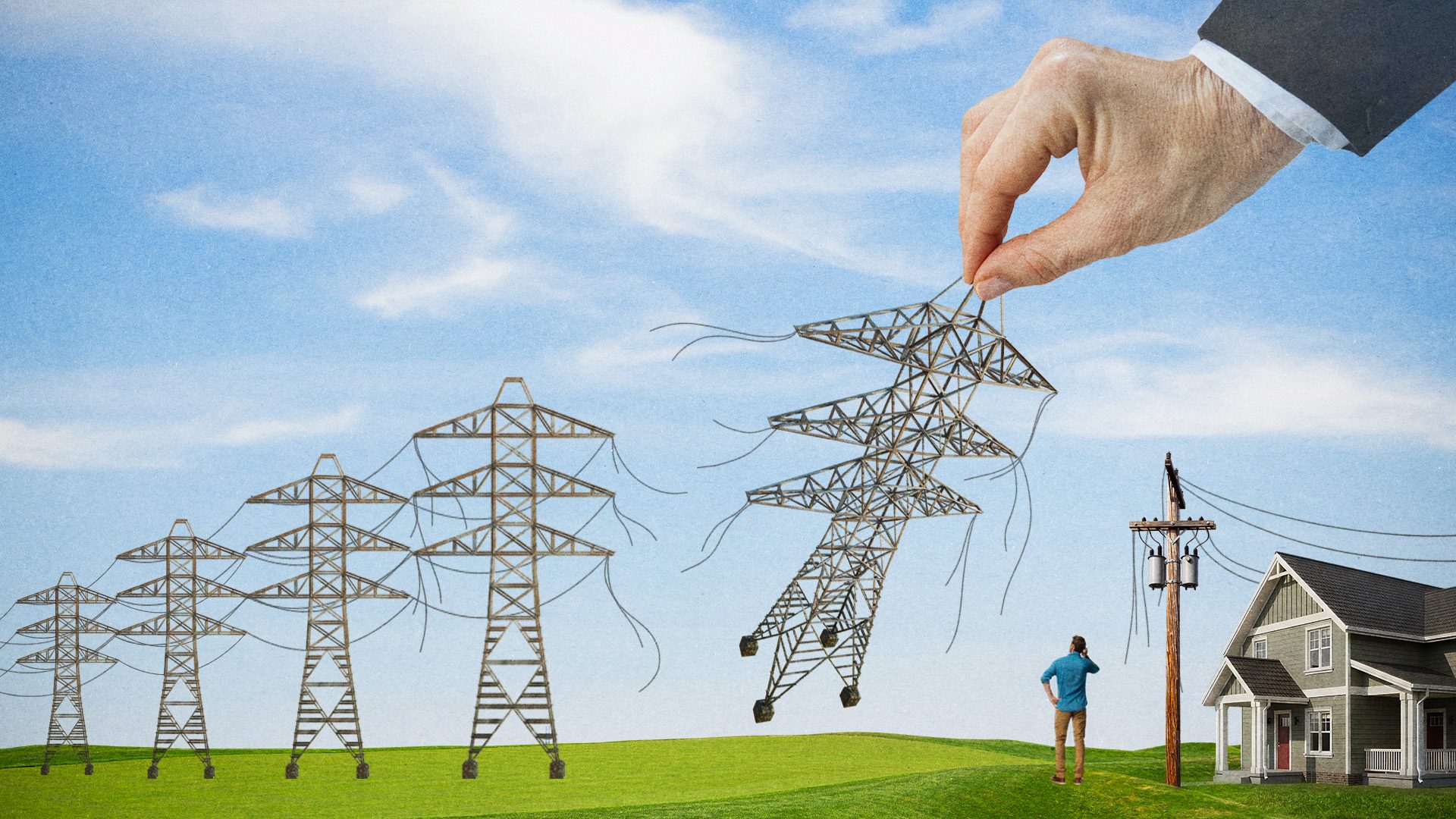
Dismantling the grid development monopoly is an overdue necessity to rescue stranded generation and break persistent transmission backlogs, but introducing alternative builders is not an automatic cure. Without rigorous engineering standards, transparent cost accounting, and genuine fixes for underlying right-of-way hurdles, replacing the builder merely shuffles administrative blame while leaving the grid vulnerable to prolonged disputes and consumer-borne costs.
A power plant can stand fully funded, mechanically commissioned, and ready to feed megawatts into the grid, yet remain completely stranded by a transmission line lagging months or years behind schedule.
For generation developers, every delayed circuit represents deferred revenue eroded by compounding debt service. For households and businesses, it means locked-in power that never arrives to exert competitive, downward pressure on soaring electricity tariffs. In the physics and economics of electricity, generation machinery is only as viable as the high-voltage corridor that carries its output to load centers.
This hard commercial reality underscores the government’s decision to dismantle the de facto monopoly on grid development by allowing qualified third parties—including generation companies and the National Transmission Corporation (TransCo)—to finance and construct designated transmission assets outside the sole auspices of the National Grid Corporation of the Philippines (NGCP).
Opening an alternate runway for capital expenditure is an understandable response to endemic project bottlenecks. Yet whether this policy pivot delivers energization at a fair cost depends, not on bold policy pronouncements, but on mundane operational execution: project selection, technical alignment, cost recovery mechanisms, and verifiable accountability.
The reform has moved swiftly through the administrative machinery. The Department of Energy (DOE) laid the groundwork in January 2026 by authorizing generation-led transmission construction, followed in February by a policy framework designating priority projects for TransCo. The Energy Regulatory Commission (ERC) quickly codified these avenues under Resolution No. 18, Series of 2026, putting implementation rules into effect on July 1 and initiating formal consultations on implementation pacts among NGCP, TransCo, and private proponents.
While the regulatory calendar has progressed on paper, the definitive test of the policy lies strictly in the field. Investors and end-users gain nothing from theoretical declarations of authority unless they shorten critical-path construction schedules and bring lines into service. Regulatory and executive actions must ultimately be judged by how much reliable transmission capacity is energized and what consumers are charged to put it there. (READ: Reliable power supply will support VisMin, PH’s economic momentum)
A clear legal foundation is non-negotiable. The Department of Justice (DOJ) issued an opinion validating the executive branch’s authority to introduce supplemental builders alongside the existing concession agreement.
However, that opinion came with a vital caveat: the DOJ had not reviewed the final language of three core implementing instruments. Because broad executive authority does not automatically insulate specific contractual mechanisms from judicial challenge, the final turnover agreements and inter-agency protocols must be crafted with watertight precision to prevent disruptive litigation down the road.
Equally vital is maintaining the boundary between construction and system operation. Authorizing an independent power producer or state vehicle to string conductors and erect steel towers does not delegate the intricate task of balancing the national grid. NGCP remains the designated system operator, responsible for system reliability, grid stability, and dispatch coordination.
Under the ERC’s guidelines covering approval, construction, technical turnover, and rate recovery, the interfaces between external builders and the grid operator will determine whether a newly built line is integrated cleanly or languishes in jurisdictional limbo.
NGCP’s own cautionary position warrants balanced assessment. The transmission concessionaire has affirmed the urgency of timely network expansion while evaluating the new rules against the terms of its franchise and concession agreement. The engineering rationale is indisputable: a high-voltage network cannot function as a patchwork of disparate components.
All new lines, whoever builds them, must strictly comply with uniform grid codes, technical protection schemes, and synchronized commissioning protocols. Rushing transmission construction without disciplined adherence to system-wide engineering standards risks severe vulnerabilities across the wider network.
Moreover, substituting the builder does not automatically eliminate the obstacles that delayed lines in the first place. Protracted right-of-way acquisitions, lengthy local government permitting, agrarian disputes, and court-issued expropriation delays hamper state agencies and private developers alike.
Interventions must therefore be preceded by an unsparing diagnosis of each stalled link. Regulators must articulate precisely what caused the delay, who holds the remedy, and why an alternate arrangement can break the impasse where the concessionaire could not. Otherwise, the state merely shuffles administrative responsibility while leaving stubborn structural obstructions unaddressed.
The economic ledger demands even stricter oversight. When a generator finances a transmission extension, it advances upfront private capital that must be recovered through predictable, lawful commercial terms.
While the ERC has pledged to restrict reimbursement strictly to prudent and reasonable project costs, that promise must be backed by radical transparency. Ratepayers deserve complete clarity on allowable capital costs, debt carrying charges, and how the assets are folded into regulated wheeling rates.
Regulators must also establish an airtight audit trail to guarantee that electricity consumers are never billed twice for identical physical assets or network improvements. Every peso recovered through retail electric bills must link directly to an identifiable, verified, and audited capital asset. (READ: [Vantage Point] System loss: The electricity consumers pay for but never receive)
Clear cost-allocation formulas must also govern lines initially built by a single generator that eventually serves subsequent power plants, thereby preventing windfalls and commercial disputes among network users.
The DOE’s commitment to publish priority project lists and mandate quarterly progress tracking from TransCo provides a welcome foundation for accountability. Making schedules, expenditures, and revisions publicly visible ensures that, when projects falter, the public can pinpoint whether the delay lies with private contractors, concessionaires, or bureaucratic inaction within the government itself.
Opening the grid to new builders is a sensible structural step, but broadening the construction pool elevates the standard of accountability across the board. NGCP must justify its execution record, the government must prove its interventions accelerate energization, and the ERC must safeguard the public against inflated costs. A policy framework earns its worth only when physical power flows reliably across the wire. – Rappler.com


