Uttarakhand’s spiritual solution to stem migration – Rudraksh farming - The Indian Express
For a state touted as Dev Bhoomi (land of the Gods), Uttarakhand is not alien to the significance of Rudraksh – the seed used to make prayer beads and is revered by Hindus and Buddhists.
Now, the state government has plans to channelise these very beads to stem a problem that it has been battling for decades: Migration, especially from the hill districts.
The Uttarakhand government has directed its Horticulture Department to draw up a formal cultivation policy for Rudraksh, as part of an effort to create new income sources in these districts.
The instruction came in a notification on August 31. Signed by Under Secretary Sandeep Sharma of the state’s Agriculture and Farmers Welfare department, and addressed to the Director of Horticulture and Food Processing, the letter instructed the officials to study a proposal “on cultivation methods, farm management, post-harvest processing, marketing and soil suitability”. It asked the department to “submit a clear proposal to the government as soon as possible.”
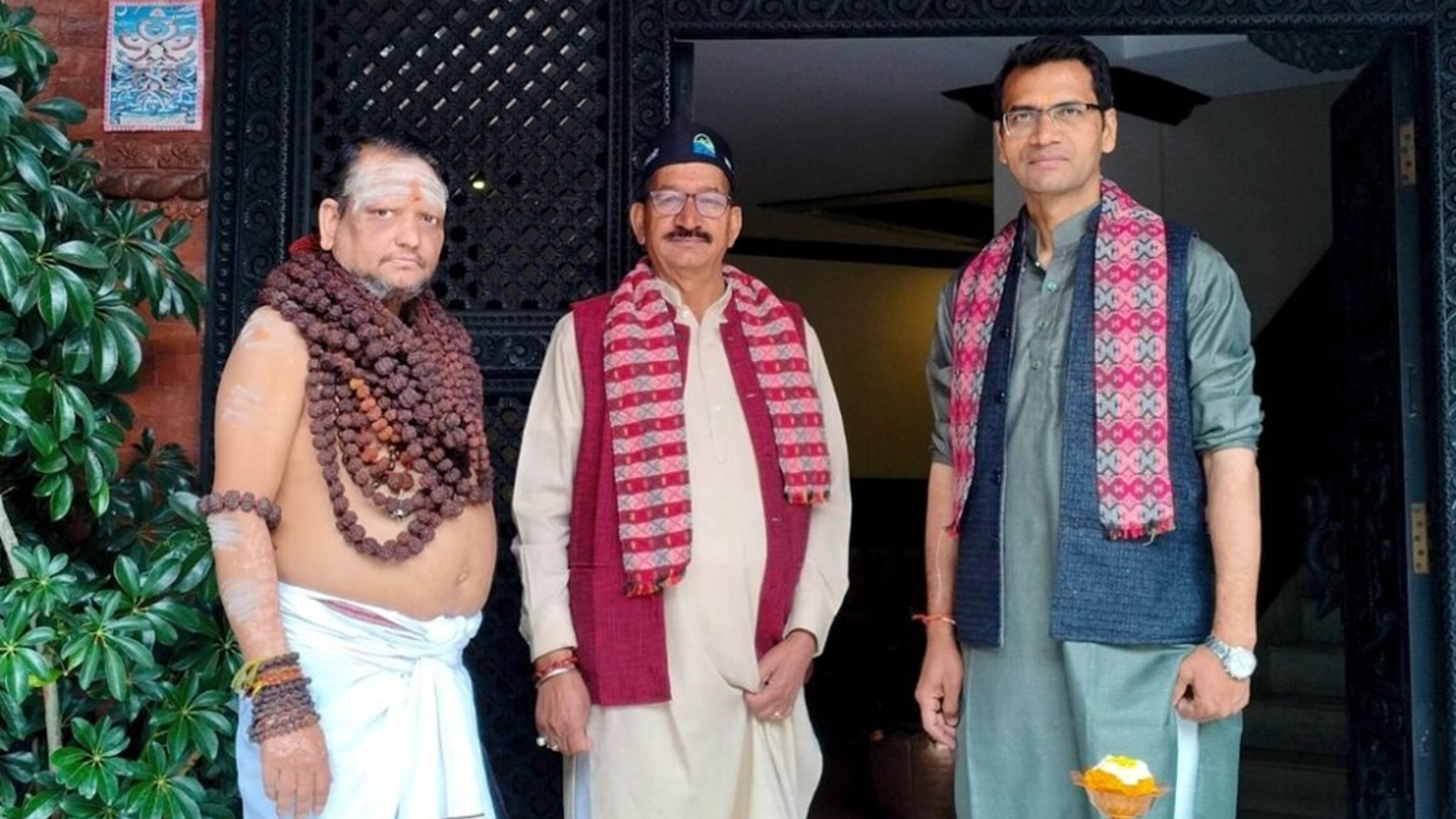
The letter follows a request from Tehri MLA Kishore Upadhyay to Chief Minister Pushkar Singh Dhami, and a four-member government delegation’s visit to Nepal in March to study Rudraksh cultivation there.
The delegation included Upadhyay, Rudraksh expert Prince Agrawal, and Ramesh Singh Pal, a senior agricultural scientist. The group’s findings are laid out in a 197-page technical report and an accompanying presentation, ‘Strategic Introduction of Rudraksha Cultivation in Uttarakhand’, presented to CM Dhami, in July.
Uttarakhand’s hill districts have long been losing residents to Dehradun, Delhi and other cities – a trend the state’s own migration commission has tracked and attributed, in part, to a lack of viable income from agriculture, crop damage from wildlife, and fragmented landholdings.
Speaking to The Indian Express, Pal said, “Our villages in Uttarakhand have become ghost villages. It’s happening because there is simply nothing there. The land is just lying empty.”
The expert team’s presentation to the government frames “the wildlife menace,” “fragmented, low-yield holdings” and “lack of cash-generating assets” as the core drivers of migration from the hills. It describes Rudraksh as a crop that addresses each of these problems: It is not eaten by wildlife, requires little maintenance once established, and has a large, and mostly unmet, domestic and export market.
Much of the case for the project rests on demand from China, which the presentation identifies as the world’s largest importer of Rudraksh. Citing customs data, the report states that China accounts for 63.7% of total recorded Rudraksh exports, followed by the United States at 19.3%.
A table in the presentation estimates China’s 2025 Rudraksha imports, sourced mainly from Nepal’s collector and raw-bead trade, at $100,800,000 — roughly five times India’s own import bill of $20,140,000, more than 95% of which, the presentation states, comes from Indonesia and Nepal.
Pal stated a specific example from the delegation’s trip to illustrate the scale of that market: “We went to Nepal and saw a 29-mukhi Rudraksh there ourselves.” Referring to the bead with 29 lobes or ridges – a rare variety, he said, “A single piece is for about Rs 1.5 crore. China imports more of this than India does.”
The presentation notes that large-scale commercial production of Rudraksh is currently dominated by Nepal and Indonesia, and argues that Uttarakhand, which shares similar soil and climate conditions with Nepal’s growing regions, has not yet captured any share of that trade.
“China is buying a lot of Rudraksh because it has both religious and medicinal uses there. There are different rituals and traditions in which Rudraksh is used, and people also wear it as a necklace, considering it sacred. They have their own traditions and monasteries where it is believed in and used,” said scientist Pal.
It also has medicinal value in Ayurveda. “Some people believe that using water in which Rudraksh has been soaked helps with skin ailments and other health problems,” said Pal.
Besides China, the bead is in demand in Singapore and Japan. “Followers believe it brings prosperity and well being,” said Singh.
The team visited Bhetedhar and Dingla in Nepal’s Bhojpur district from March 23 to 29 and collected soil samples for comparison against sites in Tehri Garhwal, Rishikesh, Haridwar’s Chilla forest range, and the Mansa Devi and Manokamna temple areas of Uttarakhand.
According to the presentation, Nepal’s Rudraksh belt sits between 600 and 2,000 metres in altitude, with average temperatures of 25-30°C and annual rainfall of 1,500-2,500mm. Uttarakhand’s proposed growing zone — 500 to 1,800 metres high with 22–35°C average temperature, and 1,000–2,200mm of rainfall — falls within a comparable range.
“The comparative soil analysis indicates that Uttarakhand soils are largely suitable for Rudraksh cultivation and comparable to Nepalese growing regions,” the presentation said.
Based on those findings, the presentation listed Pauri, Tehri, Rudraprayag, Chamoli, Almora and Bageshwar as “high potential” districts for plantation, and Nainital, Champawat, Pithoragarh and the hill areas of Dehradun as that of “moderate potential.”
Pal also raised concerns about problems that have affected earlier, less organised attempts to grow Rudraksh in the state. He said a similar-looking but different species, known as Bhadraksh, is often mistaken for or substituted for genuine Rudraksh.
“The two are entirely different species — same genus, but Bhadraksh grows in Rudraksh’s place in a lot of areas. In the early stage, the sapling looks exactly like a Rudraksh plant. It’s only later, after fruiting starts, two or four years in, that you can tell the difference,” he added.
Herein lies another problem that the report also acknowledges: Rudraksh trees do not begin fruiting for six to eight years, and take about 10 years to reach peak production stage.
The report estimates that a hill migrant working in a city typically saves Rs 10,000 to Rs 15,000 a month. By comparison, it states, a single mature Rudraksh tree can produce 1,000 to 2,000 beads a year, which, at a conservative wholesale price of Rs 10-20 per bead for the common five-faced variety, would generate Rs10,000 to Rs 40,000 annually per tree. A family managing 20 mature trees could earn Rs 2 lakh to Rs 8 lakh a year, according to the report.
To cover the years before the trees begin bearing fruit, the plan proposes using the Centre’s rural employment guarantee scheme to fund labour for digging pits, planting and fencing for the first three years. The Horticulture Department would supply saplings for free or at subsidised rates for the purpose, it adds.
A later phase calls for training women’s self-help groups in cleaning, grading and oiling harvested beads, and training young people in stringing prayer beads, silver-capping and packaging — work that, according to the report, pays significantly more than selling raw beads.
The report sets a target of 10,000 hectares under Rudraksh cultivation by 2047, with 10 million trees planted, 50,000 to 70,000 farmers involved, and up to 150,000 rural jobs created.
An Award-winning journalist covering the state of Uttarakhand, Vidheesha Kuntamalla... Read More