US ‘severely disappointed’ in lack of G20 consensus on overproduction
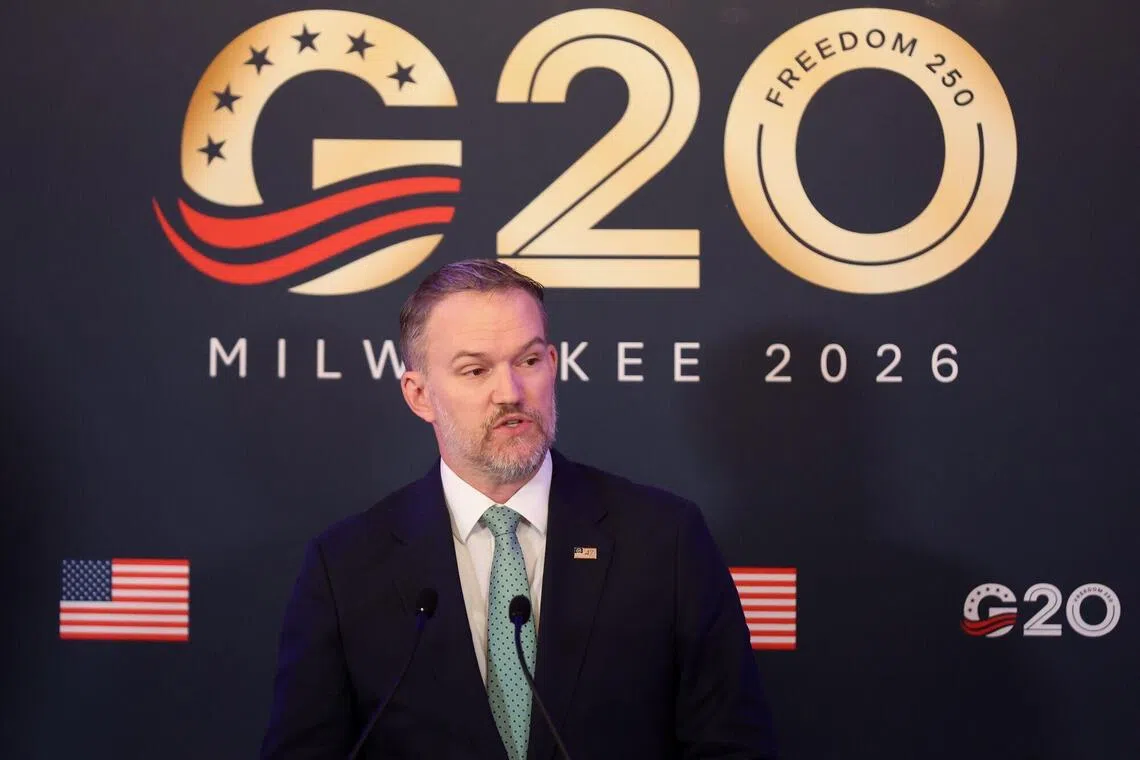
US trade representative Jamieson Greer speaks at a news conference during the G-20 trade ministerial in Milwaukee, Wisconsin, on Oct 1.
MILWAUKEE – A “handful” of G20 trade ministers rejected US calls to curb excess industrial capacity and “non-market” policies, the US Trade Representative’s office said on Oct 2, exposing divisions within the group of major economies.
The US G20 chair’s statement, issued a day after a trade meeting in Milwaukee ended, also revealed that only two countries – Mexico and Argentina – signed on to a US-led statement calling for more work and cooperation to eliminate goods produced with forced labour from supply chains.
The rejection follows the Trump administration’s imposition of tariffs of 10% or 12.5% on goods from 59 countries and the European Union over allegations that they fail to adequately enforce bans on forced labour.
The USTR statement did not name countries that objected to the excess capacity statement. But China had objected to a similar G20 statement denouncing forced labour and non-market economic policies that lead to excessive exports at a finance leaders’ meeting in Asheville, North Carolina, in September.
“The draft ministerial statement was supported by all but a handful of members, a few of whom firmly rejected creating this pathway toward cooperative action on excess capacity,” the statement said, adding that this “severely disappointed” the US G20 presidency.
China’s excess industrial capacity and industrial subsidies have been key themes of the US-led G20 ministerial meetings so far in 2026. Beijing has rejected claims that its industrial policies have created excess capacity, and accuses Western countries of using the issue to justify protectionist measures.
The US said that G20 trade ministers were able to reach consensus on denouncing the weaponisation of food trade with members agreeing “that trade in food and agricultural products should not be used as a tool for economic or political coercion”. REUTERS