US midterms: In Michigan, pocketbook pain collides with smears in a bitter battle for the Senate - The Straits Times
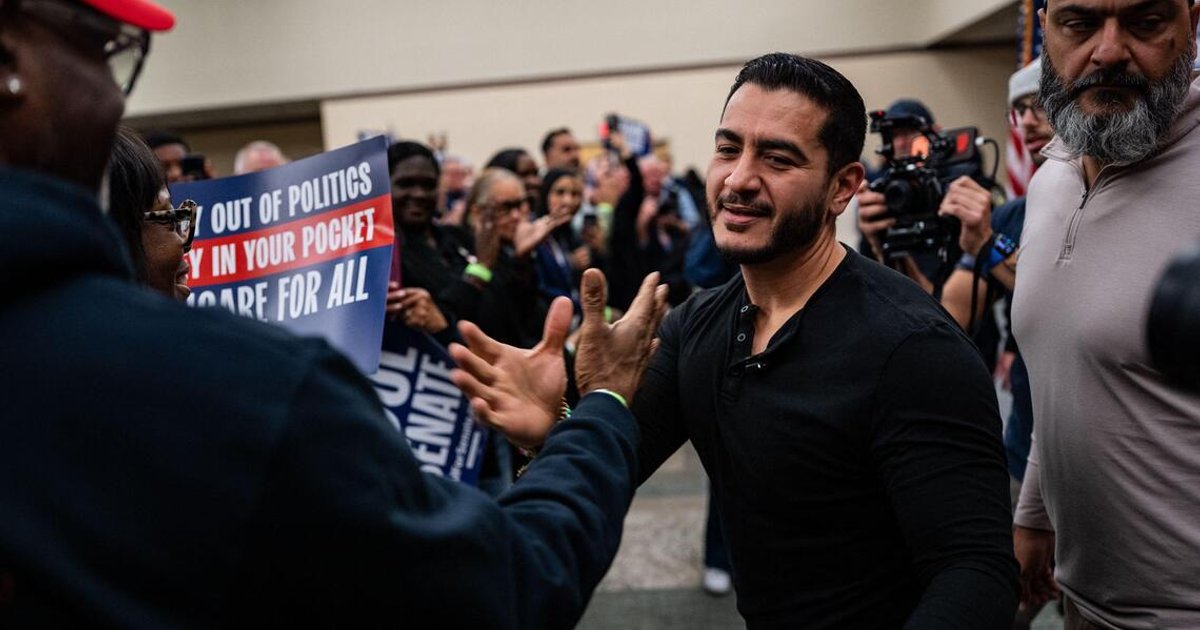
Michigan Democratic Senate candidate Abdul El-Sayed arriving at an event at Eastern Michigan University in Ypsilanti, Michigan, on Nov 2.
DETROIT, Michigan – Crystal Hill works 12-hour days delivering Amazon packages and driving Uber, but still cannot afford the medication that keeps her kidneys from failing.
“These prices are kicking my butt,” the 42-year-old Detroit resident said. “You can feel it in your pockets.”
Hill is among the undecided voters whose choices on Nov 3 could determine whether the Democrats or the Republicans will take leadership of Congress, as well as the limits of President Donald Trump’s power.
In Michigan, a manufacturing powerhouse bordering Canada, concerns over affordability are colliding with a bitter Senate campaign marked by personal attacks, accusations of socialism and appeals to religious prejudice.
More than four in 10 Americans say they have struggled to afford basic necessities, including petrol and medical care, in the past year, according to an October Pew Research Center poll.
Democrats hope that frustration will help them regain control of Congress, two years after Republicans won both Chambers. Polls show Democrats leading in several pivotal Senate contests, though some remain close.
All 435 seats in the US House of Representatives and 35 of the 100 US Senate seats will be contested on Nov 3. Democrats are widely favoured to retake the House, but their prospects of winning control of the Senate are less certain.
Michigan is among the states that could decide the outcome. Other battleground states include North Carolina, Texas, Ohio, Kansas, Iowa, Alaska and Maine.
“Michigan will decide the fate of the country,” US House Speaker Mike Johnson said at a rally outside Detroit on Oct 31 in support of Republican Senate candidate Mike Rogers.
“That’s why we are all here. Because the outcome of Michigan is going to be a bellwether for America.”
(Centre) Michigan Republican Senate candidate Mike Rogers, a former representative, greeting supporters during a campaign rally in Rochester Hills, Michigan, on Nov 2.
Michigan has repeatedly switched sides in recent presidential elections. Trump narrowly won Michigan in 2016, breaking a Democratic winning streak that began in 1992. Former president Joe Biden flipped it in 2020, before Trump reclaimed it in 2024.
In 2026, Democrat Abdul El-Sayed, a physician who has campaigned on making healthcare more affordable, faces Rogers, who has portrayed his opponent’s proposals as socialist and warned of a slide towards communism.
“They are knocking on doors trying to convince people that socialism is the right avenue for the United States of America,” Rogers said at the rally on Oct 31.
El-Sayed answering reporters’ questions after a rally outside of Detroit.
On the eve of the election, a final New York Times/Siena University poll showed El-Sayed leading Rogers by 11 percentage points, 53% to 42%.
The campaign took a stunning turn on Nov 1, just two days before the election.
Democrat Haley Stevens, who lost to El-Sayed in the primary and had been expected to campaign with him that day, instead endorsed Rogers at an impromptu news conference outside a black Pentecostal church in Detroit. Much of her staff resigned in protest, and Democratic leaders branded her a traitor.
Trump has also attacked El-Sayed, who is a Muslim, calling him “a jihadist” and mocking his name. El-Sayed has denounced the Muslim Brotherhood and said his faith would not dictate how he governs.
“Here’s the thing about my name and my faith,” El-Sayed said at a rally on the night of Nov 2. “They are not the reason you can’t afford your gas, not the reason you can’t afford your groceries, not the reason you can’t see a doctor. In fact, your doctor probably has my name and my faith.”
In Detroit, a majority-black city across the river from Canada, the economic stakes are visible at petrol pumps and on factory floors.
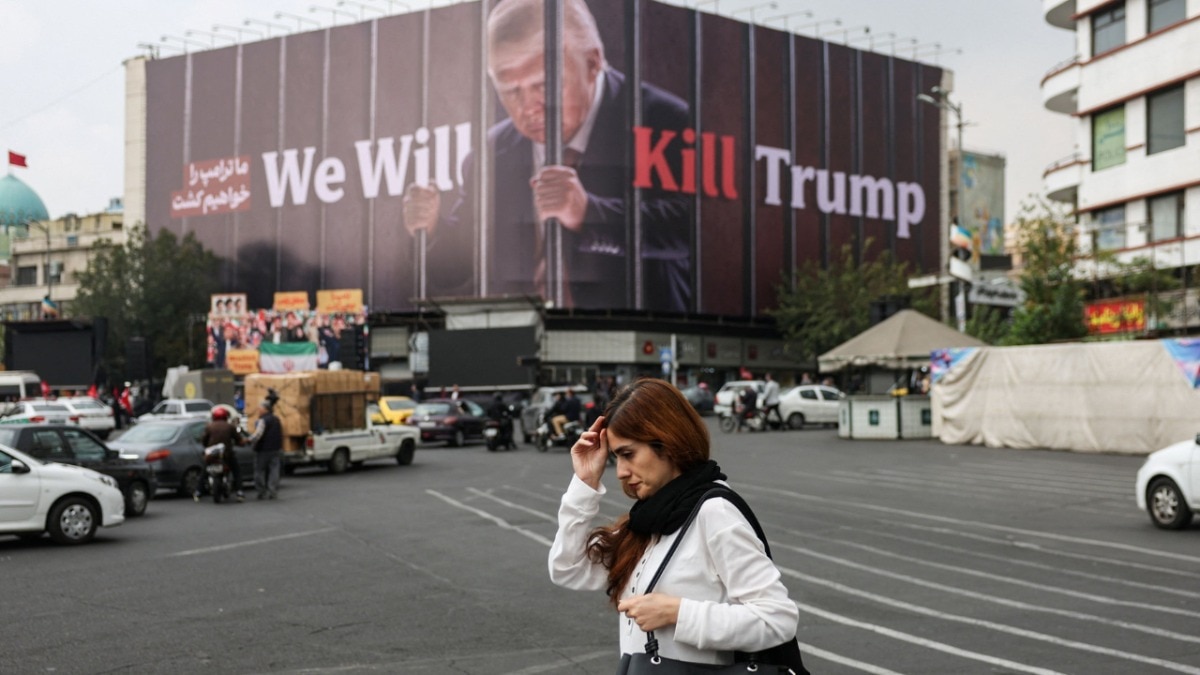
Trump’s war with Iran and tariffs on Canadian imports have added to concerns over fuel prices and manufacturing costs. Michigan faces the highest estimated tariff costs per household of any state, according to the National Taxpayers Union Foundation.
Sindus Segmen, a 59-year-old mother of three, never imagined she would have to rely on her children to make ends meet. But rising prices have strained her wallet. Owning a car feels out of reach.
“My children have to take care of me, and I should be able to take care of myself,” she said. “I don’t even own a car. I have to use my child’s car.”
Segmen, an Arab American and lifelong Democrat, voted for El-Sayed in Michigan’s Democratic Senate primary and plans to support him again on Nov 3.
“I’m going to give him a chance,” she said.
Outside a polling site in north-east Detroit on Oct 31, Terrance Lemmons handed out literature for The Black Slate, a group backing black candidates and their allies. Lemmons, a Detroit native in his 70s, said he was paying nearly US$5 a gallon for petrol and blamed Trump.
“The prices are going up. That’s Trump trying to hurt us.”
But economic frustration does not necessarily translate into support for El-Sayed. His progressive platform faces resistance in the closely divided state.
Lynn Wiggins, a political consultant at Solomon Consulting Group and a fourth-generation Detroiter, said: “This is not California, and this is not a progressive bastion. And individuals who represent that mode of thinking aren’t necessarily embraced by the communities they should be embraced by.”
While some voters distrust El-Sayed for his progressive politics, others are worried about his faith.
“I know syariah law is coming,” said Joy Echols Hobbs, a 52-year-old entrepreneur, as she left church on Nov 1. “I’m not against freedom of religion; what I am concerned with is radicalism.”