Ukraine: At least 26 killed in Russian strikes on aid center
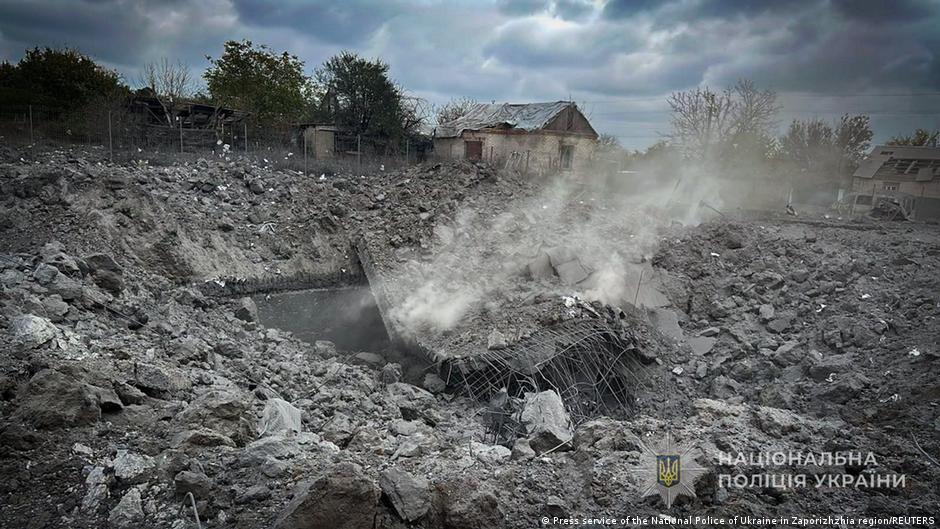
The local school in Komyshuvakha served as a humanitarian aid hubImage: Press service of the National Police of Ukraine in Zaporizhzhia region/REUTERSAdvertisementSkip next section What you need to knowWhat you need to know At least 26 killed in Russian strikes on aid center in Zaporizhzhia region Russia, Ukraine hit by cyberattacks after humanitarian truce ends in Russian-occupied Oleshky Zelenskyy offers to stop hitting Russian refineries if the US delivers Patriot missiles Here are the latest developments from Russia's war in Ukraine on Monday, November 2.
At least 26 people were killed and five more injured on Monday when the Russian air force launched repeated strikes on a school which was functioning as an aid distribution center in the southern Ukrainian region of Zaporizhzhia.
The multiple attacks, in which Russian planes reportedly launched more than 10 glide bombs, took place in the village of Komyshuvakha, about 35 kilometers (31 miles) east of the city of Zaporizhzhia and a dozen kilometers away from the frontline.
Ukrainian President Volodymyr Zelenskyy described the attacks as "utterly horrific" and accused Russia of being well aware of the humanitarian purpose of the site.
"After the first aerial bomb strike, there was a double-tap strike with nine more bombs, specifically targeting the shelter where people were taking cover," he wrote on social media.
"The Russians could not have been unaware that every week, local residents who had remained in Komyshuvakha received humanitarian aid at that very location."
Ukrainian emergency services said two members of a rescue crew were among the dead after falling victim to the so-called "double-tap" strike in which a location is targeted again with the aim of hitting first responders.
The attacks came less than 24 hours after a localized six-day humanitarian ceasefire in and around the town of Oleshky in the neighboring region of Kherson had expired.
"This is yet further proof that Russia does not want any kind of de-escalation or any real justice... With these killings, Russia has sent a completely opposite signal; Russia is counting on further killings."
The Zaporizhzhia region has been targeted repeatedly for months by heavy Russian airstrikes.
Ukraine's General Staff on Monday blasted Russia's actions during a six-day humanitarian ceasefire in Oleshky, saying the Kremlin had used the break in fighting to rearm its forces and rotate troops in the front-line area.
In a social media post on X, the General Staff wrote: "Defense Forces of Ukraine ensured that the ceasefire was observed and acted exclusively within the framework of the agreements reached," adding, "The enemy, by contrast, used the humanitarian pause to improve its positions."
Residents in the Kherson region were warned to be vigilant and told to pay attention to air raid sirens, noting that an intensification of attacks was to be expected after Russia used the brief pause to "strengthen its capabilities."
In Moscow, the Kremlin brushed off the critique, saying Ukraine, "could have used the ceasefire to re-group as well," calling such activity, "normal practice."
Ukraine energy provider DTEK on Monday said that emergency power cuts had been initiated in Kyiv and the surrounding region at the request of national grid operator Ukrenergo.
The outages follow Russian attacks in central Ukraine that left over 200,000 Ukrainians in the area without power over the weekend.
DTEK had previously announced that, "equipment in the region has been seriously damaged due to enemy attacks," adding that energy workers were trying to "restore power to critical infrastructure facilities."
The attacks follow the Kremlin's playbook of seeking to destroy Ukraine's energy infrastructure, especially in cold months, in an attempt to break the will of Ukraine's citizens defending themselves against Russia's invasion by "weaponizing winter."
Ukraine's military has said that about 170 people were evacuated from the Kherson region (news agencies cite numbers ranging from 167 to 180) before a six-day ceasefire in the Russian-occupied Ukrainian city of Oleshky expired at midnight (Moscow time, 2100 GMT) on Sunday.
No resumption of hostilities was immediately reported after what was the longest pause in fighting since Russian forces invaded in 2022.
Kherson's regional governor on Sunday urged residents remaining behind to avoid "red zones" where he said the threat of Russian strikes "remains high, and the threat to life is extremely high."
Kherson has been subjected to drones attacks, shelling, glide bombs and airdropped mines for nearly five years.
In all, nearly 800 people were reportedly evacuated from the region during the temporary ceasefire, with residents shuttled to Russian-annexed Crimea, then to the Russia town of Anapa, before being flown to Belarus and then Ukraine.
Among those evacuated were 22 children and 21 individuals requiring mobility assistance said Ukraine's army.
US First Lady Melania Trump and Pope Leo XIV — both of whom were reportedly involved in securing the pause in fighting — praised cooperation between the sides, voicing hope that such work might lay the groundwork for a broader peace.
Before Russia launched its illegal invasion on February 24, 2022, and took control of 70% of Kherson, the area was home to more than one million people. Now it is estimated that about 140,000 remain.
Russia's forces struck a military facility in Ukraine's Odesa region, the Russian Defense Ministry said on Telegram on Monday.
The statement added that a cargo vessel, which the ministry claimed was used for military purposes, was also hit 58 kilometers (36 miles) south of the Black Sea port city of Odesa.
Separately, news agency Reuters cited an official in Odesa as saying that four people had been injured in a Russian attack.
The United States is backing a quick resumption of Russian natural gas exports to Europe via pipelines crossing Ukraine as part of talks aimed at securing an energy ceasefire before winter, the Wall Street Journal reported on Sunday, citing US, European and Ukrainian officials.
The proposal involves selling Russian gas via a US intermediary to circumvent European sanctions, the report said, adding that it was mooted by US envoys Jared Kushner and Steve Witkoff during trips to Moscow and Kyiv in September.
DW could not immediately verify the report.
Russia's share in European gas supply has declined to about 11% now from 45% on the eve of Moscow's full-scale invasion of Ukraine in February 2022.
The European Union currently aims to completely phase out Russian gas imports by the end of 2027. And EU leaders have said they don't want to go back to relying on Russia for energy supplies.
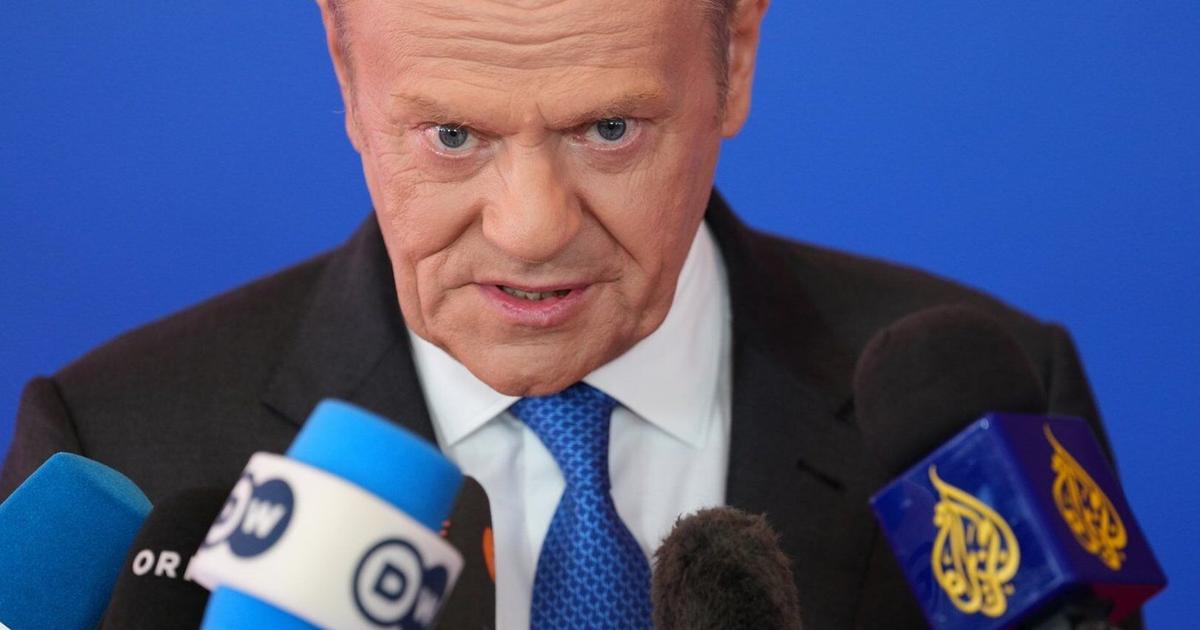
Ukrainian President Volodymyr Zelensky said that his country would stop hitting Russian oil refineries if Washington provided Kyiv with powerful Patriot interceptor missiles.
Speaking to US broadcaster Fox News, Zelenskyy said he had had "different and several" conversations with Trump and his team on the issue.
"We asked that we can't not respond after Russia's attack on our energy, after Russia is killing our people, attacks on our electricity, gas, refineries, on everything," he said.
"We said that if you want us not to attack Russia's refineries, they have not to attack our energy system. Another alternative, give us Patriot missiles, we will find money, not just aid," Zelenskyy added.
The Ukrainian leader said if Washington provided the missile systems for one month Kyiv would cease attacks on Russian refineries for the same period.
Asked if he was concerned that this would be seen as trying to "leverage" Trump, Zelenskyy said: "I don't have any concerns when I share the truth between partners."
Ukrainian authorities have been warning for weeks that their supplies of the Patriot interceptor missiles were dwindling.
Emergency alert apps in both Ukraine and Russia have been hacked, officials said.
Ukraine's air force said an air raid alert app was hacked late on Sunday, with fake alerts being sent to smartphones, warning people of nuclear and chemical threats.
SPRAVDI, Ukraine's Center for Strategic Communications, blamed Russia for the hack in a post on its X account.
Hours later, Moscow said the mobile app of the Russian Emergencies Ministry was hit by "a massive cyberattack."
"Attention! The mobile application of the Ministry of Emergencies of Russia has been subjected to a massive cyberattack, enabling attackers to send false information to the public," the Emergencies Ministry posted on Telegram.
It said authorities were working to fix the issue.
Hello and welcome to DW's coverage of the latest developments in Russia's war against Ukraine.
As a temporary ceasefire in Russian-occupied Ukrainian town Oleshky ended on Sunday night, Ukraine resumed attacks on Russian oil refineries.
Ukrainian President Volodymyr Zelenskyy said his country would stop targeting Russian refineries if Washington provided Kyiv with powerful Patriot interceptor missiles to defend against Russian missile and drone strikes.
Meanwhile, Ukraine's air force said it suspected the country's aid raid alert system had been hacked.
Russia's Emergencies Ministry, for its part, said that a "massive cyberattack" hit its application that is designed to warn people of incoming drone attacks and other threats.
Stay tuned for the latest news and analysis from the ongoing war.