Trump’s FDA nominee questioned on vaccines and abortion stance in Senate hearing
Want to bookmark your favourite articles and stories to read or reference later? Start your Independent Membership today.
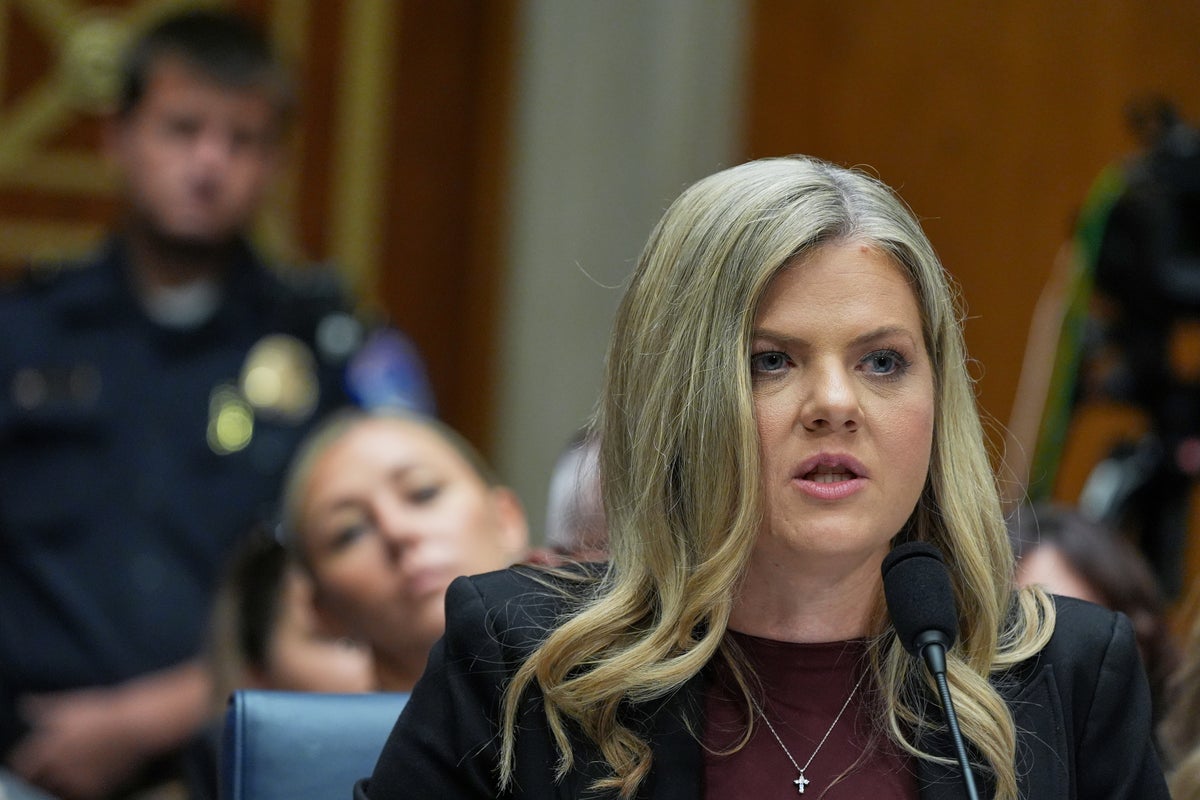
Appearing before lawmakers on Thursday, President Donald Trump’s nominee to head the Food and Drug Administration defended the safety of established immunizations, even as senators pressed her on White House attempts to alter routine childhood vaccination schedules.
Dr. Heidi Overton, a physician serving as an adviser in the White House, has helped shape several health policies for the administration. Among them was an executive order signed last month recommending that long-standing childhood vaccines be separated and spaced out over time.
Overton was present alongside Trump in the Oval Office when he made the false claim that the combined measles, mumps and rubella shot could prove "quite lethal."
Sen. Bill Cassidy, the physician from Louisiana who chairs the Senate Health Committee, urged Overton to refute that claim and publicly confirm the safety of FDA-cleared vaccines.
Overton told lawmakers that "Right now every vaccine that is on the market has been determined to be safe and effective," explicitly citing the MMR shot.
Cassidy has consistently sought pledges from health officials nominated by Trump to preserve established vaccine standards, including Health Secretary Robert F. Kennedy Jr., despite the administration continuing to advance measures that weaken public confidence in immunization.
"Kennedy gave me guarantees, and he did not keep them," the Louisiana Republican stated. "If the president asks you to do something that goes against those guarantees you give us today, what will you do?"
Responding to the panel, Overton stated she would "follow the statutory requirements" governing agency commissioners while offering Trump her honest advice.
As questioning continued, she stopped short of directly stating that Trump was mistaken regarding MMR vaccine safety.
"This committee needs to know whether you will be radically honest, whether you will use your authority to stand up for sound science and protect children’s health," Cassidy told her.
The chairman did not say if he planned to endorse her confirmation or set a date for a vote.
Should she win confirmation, Overton will take over several contentious agency initiatives, such as an ongoing evaluation of the country's primary abortion medication and updated regulations easing sales of flavored e-cigarettes.
These topics drew significant attention from both Democratic and Republican members of the committee.
The nominee also faced scrutiny regarding her previous comments on reproductive healthcare.
The FDA originally authorized the abortion medication mifepristone in 2000 and has reaffirmed its safety profile over the years while expanding distribution options, including mail delivery.
However, Kennedy directed the agency to conduct a fresh safety evaluation last year after pressure from anti-abortion organizations and conservative legislators.
During her tenure at the conservative America First Policy Institute, Overton authored a piece labeling the decision to permit mail-order mifepristone as "dangerous to women," characterizing the policy as facilitating "chemical abortion on demand."
Under questioning from Sen. Patty Murray of Washington, Overton avoided detailing her personal opinions on mifepristone, noting that the medication "has met the safety and efficacy determinations of the FDA." She added that she preferred not to "prejudge" the review currently underway at the agency.
"The FDA has said this is safe," Murray, a Democrat, countered. "We need someone in FDA to make sure this is done by science."
Republican members on the committee, led by Cassidy, recently released a report alleging that the small group of companies distributing mifepristone might be failing to follow guidelines concerning the oversight of prescribing physicians.
"If I’m confirmed as commissioner, I would be committed to making sure every company is following the law," Overton stated in response to Indiana Republican Sen. Jim Banks.
Her stance on abortion could make securing votes from moderate Republicans on the committee more challenging, specifically Sen. Susan Collins of Maine and Sen. Lisa Murkowski of Alaska.
Both senators have broken rank with their party to support abortion access, with Collins currently facing a competitive reelection battle where reproductive rights remain a defining topic.
During Thursday's hearing, however, Collins chose to press Overton on another matter: recent actions by the FDA approving new flavored electronic cigarettes.
In earlier presidential terms, including Trump's initial presidency, the agency restricted sweet-flavored vaping products over concerns about youth appeal.
Overton defended the decisions by explaining that FDA scientific staff endorsed the approval of several fruit-flavored devices after concluding they satisfied the regulatory test of being "appropriate for the protection of public health" by aiding adults in quitting smoking.
"They believed that standard was met because so many adult smokers are using flavors preferentially," Overton explained.
Securing the top position will require Overton to gain majority support from the 21 members of the health panel before advancing to a full Senate vote.
Directing the agency under the present administration demands navigating competing priorities, matching Trump's mandate to roll back regulatory burdens on products like e-cigarettes against Kennedy’s focus on re-examining vaccines, pharmaceuticals, and food ingredients.
Similar institutional tensions previously led to the resignation of former agency head Dr. Marty Makary in May. Makary's brief tenure was marked by internal leadership shifts, scientific disagreements, and widespread reports highlighting plummeting workplace morale and organizational turmoil. Since Trump assumed office, workforce reductions, buyouts, retirements, and resignations have trimmed the agency's total staff by roughly 20%.
Overton previously studied under Makary at Johns Hopkins University, earning a doctorate in clinical research after completing her medical degree at the University of New Mexico.
Much like her former mentor, Overton lacks prior experience leading a massive agency, a key requirement for overseeing 16,000 employees located across domestic and international offices.
Financial disclosures show Overton holds no equity in food or healthcare corporations—a notable departure from Makary and previous candidates for the position, many of whom were forced to sell off assets or sever financial links with entities overseen by the regulator.
Her filings listed between $50,000 and $100,000 in outstanding student debt.