Trump’s Fastest Political Skill: Changing Course - Newsweek
Donald Trump has spent much of his political life complaining about television. This weekend, he did something more efficient: he became television.
On Friday, Trump announced that CNN, MS NOW and Politico would be barred from the White House so their reporters were turned away the next morning. By Sunday, the White House had launched Trump TV, a 24-hour stream of presidential speeches, appearances and assorted Trumpiana advertised, with admirable economy, as “The Essentials Station.” Yet another incredibly Trumpian move by the one and only.
How on point. A fight with television becomes a television network and a communications problem becomes a communications product. The interval between grievance and branding? A swift 48 hours.
Buried inside it all is one of the most interesting facts about Trump as a political operator—he changes direction very, very quickly. Nimble should be his middle name.
Presidents are generally rewarded for consistency, or at least for manufacturing the appearance of it, like when they produce language that explains how the new policy is actually the old policy viewed from a slightly more sophisticated angle. But Trump has never shown much patience for this ceremony. His more distinctive talent is the pivot itself: fast, conspicuous and usually performed without the slightest visible embarrassment that there ever even was another position. He can go from prohibition to negotiation, from certainty to opportunity, from escalation to pause (or, rather, from pause to escalation) often before Washington has agreed on what to even call the reversal.
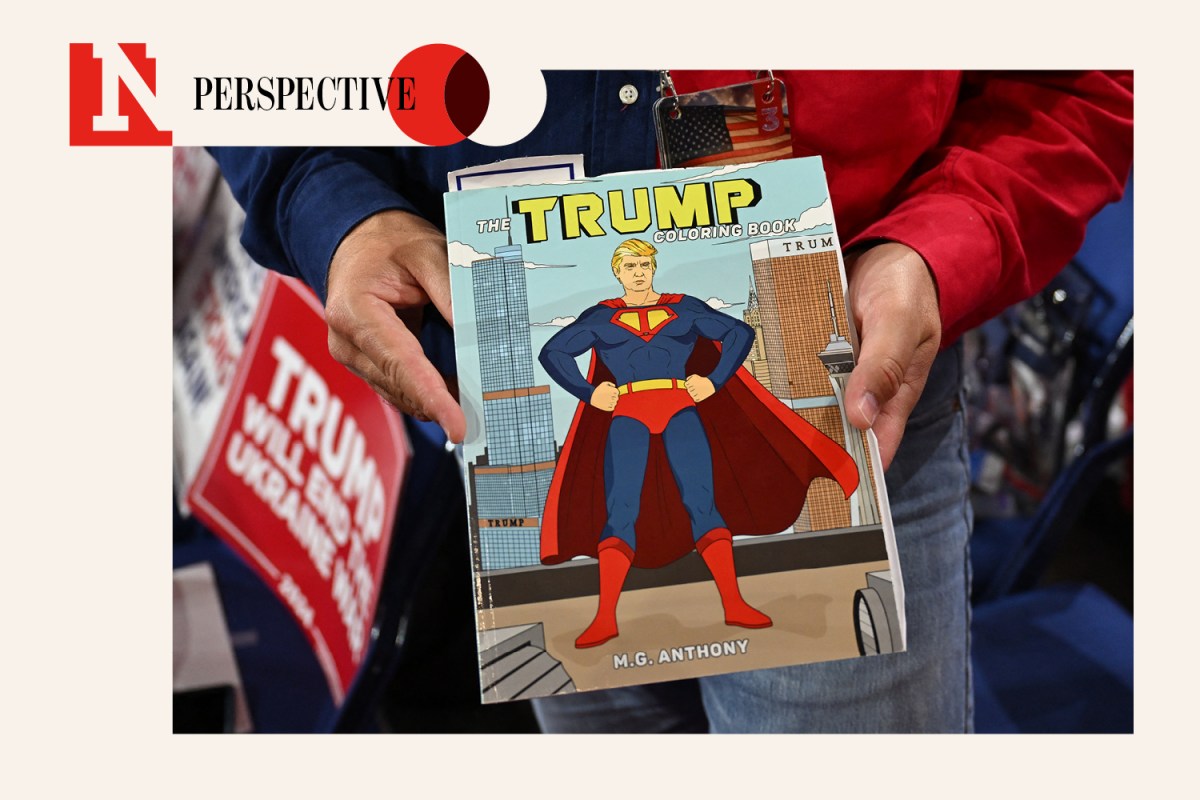
The supersonic pivot has defined SuperTrump’s (super?) presidency.
Shall we send a cape to the White House? Trump’s peculiar superpower goes beyond never getting boxed in—it’s his extraordinary instinct for behaving as if the box was his idea in the first place.
In 2020, Trump signed an executive order targeting transactions with TikTok’s Chinese owner, ByteDance, citing national-security concerns. Back in office in 2025, he went in another direction, repeatedly delaying enforcement of the federal divest-or-ban law while his administration pursued a resolution.
In conventional Washington, changing course invites several days of exquisitely painful questions about consistency and countless think pieces. Trump’s method compresses those days into minutes: yesterday’s hard line becomes today’s negotiating position, which becomes tomorrow’s deal. Easy peasy.
Tariffs provided an even larger demonstration. Trump announced sweeping reciprocal tariffs in April 2025, including a 10 percent baseline and higher country-specific rates. Days later, his administration paused many of the higher rates while negotiations proceeded. The confrontation with China escalated first; by May, Washington and Beijing had agreed to suspend substantial additional tariffs for 90 days. The political mechanics are awe-worthy: Trump’s change in direction is never a retreat, just a policy move.
We shan’t forget about the issue of the day—artificial intelligence, a technology apparently moving too slowly for Trump because it has kept the same name.
At the United Nations this week, Trump began pitching “super intelligence” as a replacement term for artificial intelligence, arguing that “artificial” makes the technology sound fake. Fair enough.
Silicon Valley spent decades inventing artificial intelligence and Trump required a weekend to rebrand it. SuperTrump is the era’s Speedy Gonzales.
Governing at this speed presents problems. Flexibility and volatility can look pretty similar from the passenger seat, especially when whiplash comes into play. Governments prize some degree of predictability because businesses, allies and citizens make decisions around what governments say they will do.
But the competing interpretation deserves its due. Trump often behaves as if policy commitments are opening bids. In his thinking, a position can establish leverage without becoming a permanent obligation. In that model, changing course quickly is less embarrassing than remaining trapped by yesterday’s announcement simply because everybody printed it.
And that’s where the superpower of the supersonic pivot is most apparent: flexibility looks impressive when the second position produces something the first could not. If rapid reversals instead leave markets, allies or federal agencies guessing which position will survive the week, agility starts acquiring another name.
Washington has traditionally punished politicians for changing their minds. Trump has spent years experimenting with a different proposition: change your mind fast enough, rename the change and put it on television, and by the time Washington calls it a U-turn, you are already somewhere else.