
Trump’s F-35 Bet Outsources War to Saudi Arabia as Oil Prices Soar - Newsweek
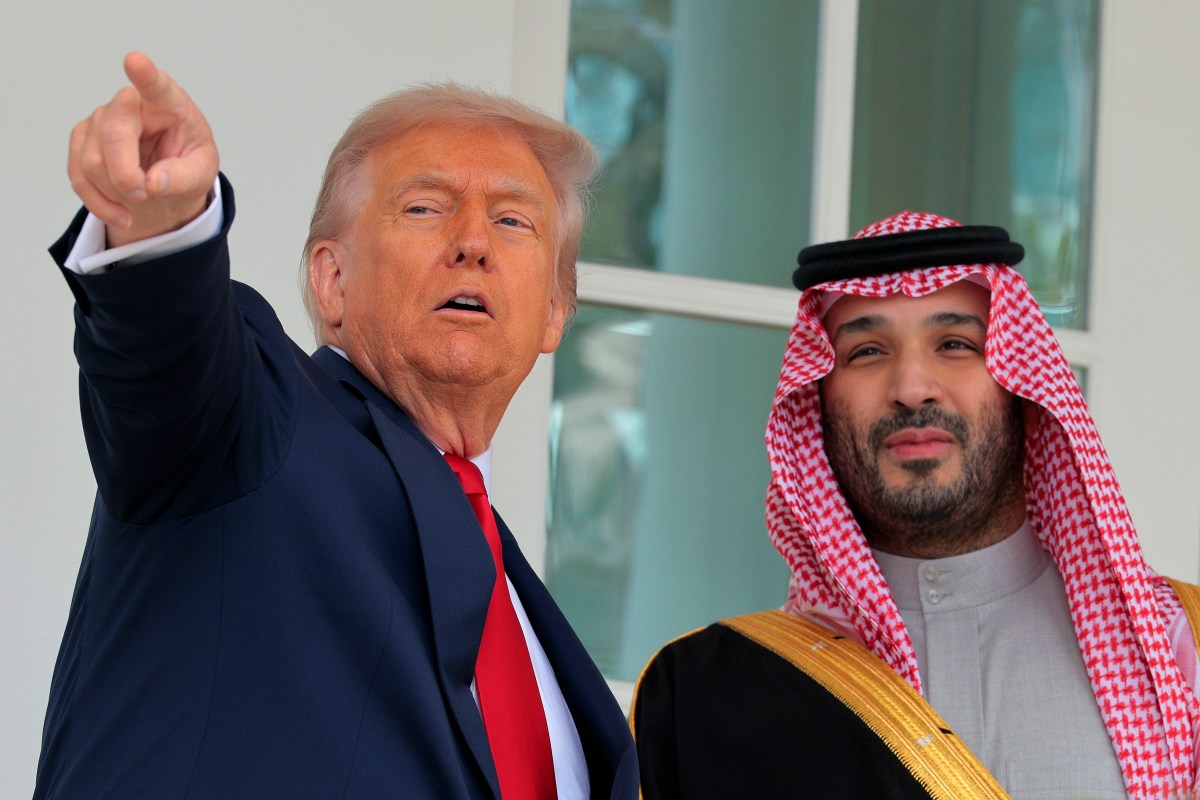
The White House's decision to greenlight the sale of advanced F-35 fighter jets to Saudi Arabia marks the latest example of President Donald Trump's efforts to shift the burden of Middle East deterrence to regional partners.
It's a risky bet. The deal is subject to congressional approval, and the warplanes are not expected to arrive for years, far too long a timeline to immediately rein in rising oil and gas prices impacted by the multi-front conflict between the U.S. and its partners in the Middle East on one side and the Axis of Resistance coalition led by Iran on the other.
Israeli officials have expressed criticism of any Saudi F-35 acquisition absent a normalization of diplomatic ties, fearing the move would dilute the Israel Defense Forces' aerial dominance in the region. Some U.S. lawmakers also warn the deal could expose cutting-edge U.S. military technology to other foreign powers, such as China, which maintains close ties with Saudi Arabia.
But the decision carries major implications for both Washington and Riyadh as they navigate a historic period of turbulence in the region that puts the Kingdom on the front lines in an escalating clash with neighboring Yemen's Iran-aligned Ansar Allah, also known as the Houthi movement.
"The U.S. administration's approval of the sale of F-35 fifth-generation stealth fighters to the Kingdom of Saudi Arabia represents a pivotal milestone that reshapes the concept of traditional security alliances," Saad Abdullah Al Hammad, a former Saudi diplomat, told Newsweek.
"This development comes at a sensitive juncture when Washington is scaling back direct offensive military support to Riyadh in the context of the war with the Houthis," Al Hammad said. "This reflects a fundamental shift in the American doctrine of 'outsourcing security' and reducing direct field engagement in favor of arming allies with advanced deterrence tools."
Saudi Arabia is one of the few Arab states to have avoided European colonization or protectorate status since the establishment of the Kingdom in 1932. But since World War II, its security as a leading oil producer and influential custodian of Islam's two holiest sites has been closely linked to robust ties with the U.S.
Much like Crown Prince Mohammed bin Salman seeks to wean off the Saudi economy's reliance on energy sales through his transformative Vision 2030 plan, he's also pursued a diversification of security relations, to include stronger cooperation with China and Russia and a recent mutual defense pact with Pakistan and Turkey.
Underlying this trend is a quest to put more potent tools in the hands of the Kingdom, a mission that aligns with Trump's efforts to offload the burden of Middle East deterrence and simultaneously boost U.S. defense sales.
"The policy of burden-sharing has emerged as a significant factor," Al Hammad said. "Washington has sought to fully transfer field responsibility to its key regional partner by granting military delegation, in exchange for ensuring a steady flow of massive defense contracts that invigorate the U.S. military-industrial complex."
"Similarly, regarding sovereign decision-making independence, Riyadh realized that absolute reliance on the U.S. security umbrella is subject to the fluctuations of successive administrations, which necessitated a decisive drive toward strategic independence and the diversification of military and diplomatic options," he added.
The F-35 would embody the Kingdom's initiative by granting the Royal Saudi Air Force modern stealth and strike capabilities, including lower-cost integrated systems, to tackle missile and drone platforms in the hands of not only Ansar Allah, but also fellow Axis of Resistance factions in Iraq, from which Riyadh has said a drone that damaged the crucial East-West pipeline last week originated.
The utility of the aircraft was underscored by the reported downing of an earlier U.S.-made Saudi warplane, an F-15, by an Ansar Allah anti-air system in Yemen earlier this week. The Saudi Defense Ministry has not confirmed nor commented on the alleged incident.
But not only are these fighters "considered a vital element in the equation to deter the Iranian axis," Al Hammad said, their introduction into the Saudi arsenal "shatters the traditional monopoly associated with preserving Israel's absolute military supremacy in the region, despite ongoing debates within U.S. legislative institutions and conditions protecting classified technology."
And while he said their effectiveness would be subject to Saudi Arabia's ability to integrate them into the military, he argued that "F-35 fighters grant the Royal Saudi Air Force an undisputed qualitative edge."
For Israel, the deal is viewed as a direct challenge.
The longtime U.S. ally signed its first deal to obtain F-35s back in 2010 and received its first jets in 2016. Since then, they have become a primary tool for Israeli airstrikes and interceptions against foes in Gaza, Lebanon, Syria, Yemen and, most recently, Iran.
While a number of U.S. allies around the world, particularly in Europe, have acquired F-35s, Israel has remained the only Middle Eastern nation to obtain the aircraft considered today to be a key element in the country's "qualitative military edge" in the region.
"QME is a very sensitive issue," former Israeli Ambassador to the U.S. Michael Oren told Newsweek. "How it's calculated is complex and it's always a source of long and heated discussions between Israel and the United States. It's reassessed almost annually."
Israeli Prime Minister Benjamin Netanyahu had previously expressed openness to the prospect of Saudi Arabia obtaining F-35s, but with the condition that the Kingdom would also establish diplomatic relations with Israel.
Much like the U.S.-Saudi nuclear cooperation agreement signed in July, the administration pressed forward—despite some initial backtracking from Trump on the nuclear agreement—without a normalization pledge, which Riyadh has said could only be pursued alongside a comprehensive roadmap toward Palestinian statehood.
Netanyahu's protest to Trump's initial announcement of the decision to sell F-35s to Saudi Arabia during his meeting with Crown Prince Mohammed in November was followed by another objection in July, when Trump indicated a willingness to allow NATO ally Turkey to acquire the fighters after meeting with President Recep Tayyip Erdogan.
Turkey was previously banned from the F-35 program over Ankara's purchase of Russian S-400 surface-to-air missile systems in 2017. Since then, tensions between Israel and Turkey have mounted considerably, with Erdogan and Netanyahu frequently exchanging harsh rhetoric.
The two issues also intersect in the mutual defense pact signed between Saudi Arabia and Turkey, as well as nuclear-armed Pakistan, in August. While neither Pakistani nor Turkish intervention has yet to manifest in support of Saudi Arabia as it contends with strikes from Iranian allies, the move was seen—much like Riyadh's F-35 acquisition—as a message to Iran and Israel alike.
"There are many concerns raised by the sale," Oren said. "It has to do with the technology of the actual airplane, who else has the access to the technology, and always the case with very arm sales at least, we have to ask ourselves who's going to be in charge of that government five years from now."
"It's always the question we raise, and it's not a new question, it goes back a long time," he added. "We've seen the Saudis turn in one direction over the say four or five years, but they can turn in another direction."
The other message that the F-35 sale sends may prove even more consequential. While the move advances Trump's burden-shifting agenda, Oren warned the White House's effort to transfer regional security responsibilities to partners could make compromise a more likely path than confrontation for Saudi Arabia in its dealings with Iran and its Axis of Resistance allies.
Ansar Allah, for its part, has already signaled its readiness to engage in full-scale conflict. A source within Ansar Allah recently told Newsweek that the group was "not only prepared to thwart any escalation or invasion, but, by the grace of God and with reliance upon Him, we are ready and prepared to achieve progress and decisive victory on any front that contemplates action against us."
Some observers, such as former U.S. State Department official Annelle Sheline, see negotiations as a preferred solution to bearing the risks of escalation.
"In the event that Saudi Arabia convinced the U.S. to lead a multinational coalition to conduct a ground offensive in Yemen, it would quickly face similar dynamics as Iraq and especially Afghanistan, where the terrain allows for insurgency to operate, while the foreign occupier will eventually give up and leave," Sheline, who today serves as a research fellow at the Quincy Institute for Responsible Statecraft's Middle East program, recently told Newsweek.
"A much quicker way to resolve the conflict would be for Saudi Arabia to lift the blockade on Yemeni territory and withdraw their support for the PLC," she added, referencing Yemen's internationally recognized Presidential Leadership Council that rivals Ansar Allah's claims to legitimacy.
And time is of the essence for Trump, who faces an anticipated new surge in U.S. fuel prices, already inflated over the war with Iran, following the strike on the East-West pipeline, just weeks ahead of the mid-term elections in November.
Refined products are especially vulnerable to conflict, not just in the Persian Gulf crisis, but also the Russia-Ukraine war.
"One of the biggest challenges global energy markets face today goes beyond the disruption of oil shipments via the Strait of Hormuz, it is the large number of refineries that have been bombed or damaged as part of the Iran war and the Russia-Ukraine war (multiple refineries are offline in Russia due to Ukrainian drone attacks on major refining centers)," Amy Myers Jaffe, director of the Global Energy, Climate, and Sustainability Lab at New York University’s School of Professional Studies, told Newsweek.
"Whereas there have been periods of time where waves of cargoes manage to exit the Strait of Hormuz, in the case of damaged refineries in Bahrain, UAE, Saudi Arabia, and Iran and Russia, there is no possibility that those refined products will be restored rapidly," she said. "That is already impacting U.S. consumer prices for diesel fuel and is not likely to be resolved any time soon."
With Riyadh poised to spearhead the coming response, Al Hammad, the former Saudi diplomat, said that, even with F-35s on the way, the Kingdom preferred de-escalatory measures over launching a full-scale war across its southern border.
"Riyadh's conviction remains firm that deterrence strategies, crisis containment, and pushing toward concluded diplomatic settlements are the most rational and sustainable options," Al Hammad said.
"Concurrently, Riyadh's engagement in major developmental transformation projects and future visions like Saudi Vision 2030 requires a stable, investment-attractive regional environment—an equation entirely antithetical to the one produced by open-ended ground wars."
Newsweek’s reporters and editors used Martyn, our AI assistant, to produce this story. Learn more about Martyn here. Contact Newsweek editors on this story: Jason Lemon and Gray R. Thomas
