
Trump’s Diesel Export Plan Dismissed by His Own Officials - Newsweek
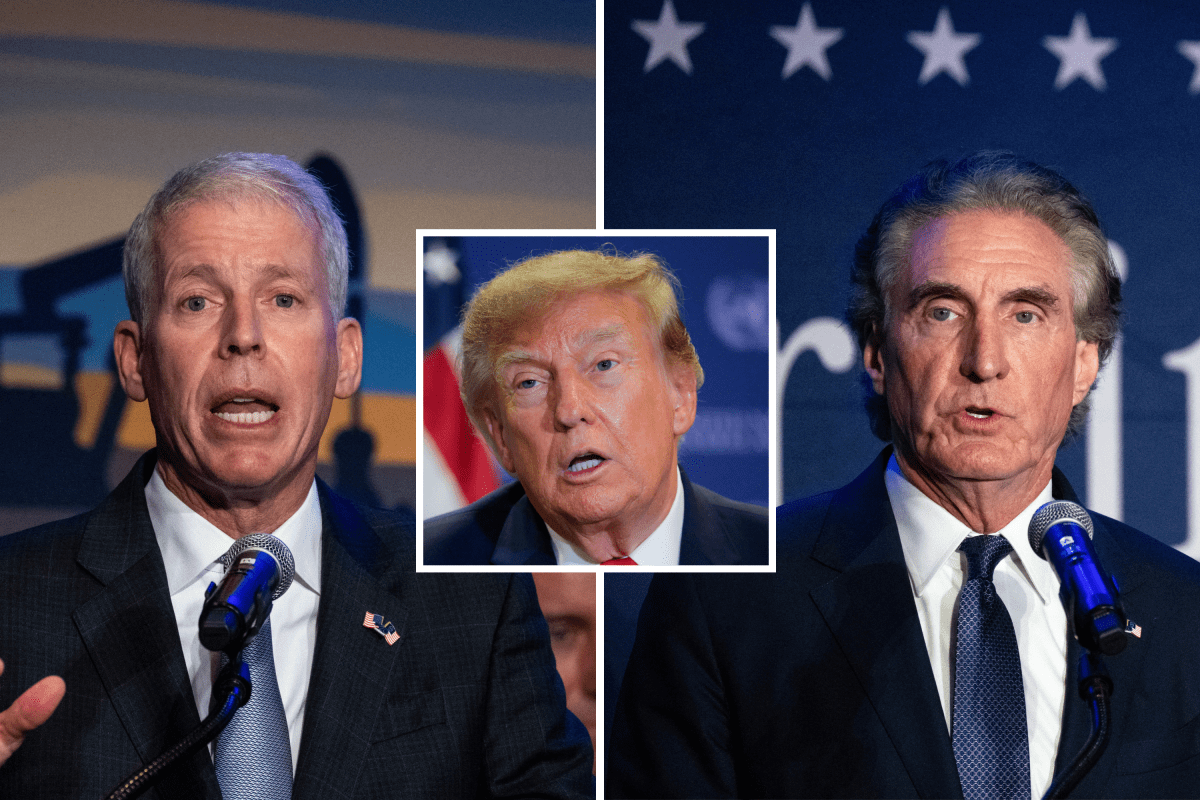
Donald Trump is now backing calls for an embargo on diesel exports to bring down costs for American drivers—a plan his own officials have rejected as an ineffective and dangerous response to record prices.
Diesel prices have risen to all-time highs on the back of Iran war-related supply disruptions and other geopolitical pressures—the nationwide average climbing to $6.52 on Wednesday from $3.69 a year ago, per AAA. Amid warnings from businesses across the country and fears for farmers in particular, a number of Republican lawmakers have urged a pause on diesel exports, arguing that this could boost domestic supply and ease rising costs.
On Tuesday, Trump echoed these arguments for curbing exports, telling reporters on the sidelines of the United Nations (U.N.) General Assembly: "I've called for that too. I've said let's not send out the diesel."
On Wednesday, following Trump’s announcement, Energy Secretary Chris Wright was quoted by Reuters as saying that the “blunt tool of banning diesel exports definitely doesn't work."
Wright has in the past raised concerns that the move would leave refineries with nowhere to ship their excess supply and ultimately weaken the country's energy security. And Interior Secretary Doug Burgum told CNBC last week that he was "not at all confident" such a plan would "actually lower the price" of diesel, and warned this could end up costing Americans if other nations retaliated.
Newsweek has contacted the two departments via email for comment and is awaiting responses.
According to the Watson School of International and Public Affairs at Brown University, American households have now spent close to $52 billion on additional diesel costs since the launch of the Iran war. And rising prices for both diesel and gasoline have presented another political hurdle for Trump’s party as it seeks to retain control of Congress come November.
But the president has now said that his administration is considering a ban on exports to help curb these pressures, telling reporters on Tuesday that he believed—like a growing number of GOP lawmakers—that the U.S. should "not send out the diesel."
"I've called for it within my people. I've been talking about it," he added.
Treasury Secretary Scott Bessent said that Trump’s team was examining "whether it’s feasible in terms of the overall refining capacity, and whether a full or partial ban would work."
Trump said a decision on the embargo would come "fast, one way or the other."
This marks a major departure from the administration’s previous comments and stance on the issue of export restrictions.
A day before Trump’s remarks, a White House official told Politico that the administration was "not considering an export ban or export restrictions at this time."
"The United States is the world’s top oil and natural gas producer. We are also the largest natural gas exporter and a top oil exporter," the energy secretary posted to X in March. "To be clear, the Trump administration has no plan to implement restrictions on oil and gas exports."
In May, Wright said that the White House had "absolutely" ruled out any ban on diesel exports, arguing that such a move would run counter to Trump’s entire energy agenda.
"We’re going to be a growing energy exporter to the world. We can’t be a major energy exporter to the world if we decide sometimes to stop exporting our energy," he told CNBC. "And it wouldn’t benefit prices in the United States."
Wright has offered a more equivocal response on the question of export bans in recent weeks, telling CBS News in early September that the administration was considering "all options of how you can move prices that are favorable for American consumers," but that the priority was ensuring "maximum production."
At an event hosted by the Daily Caller last week, however, Wright said that cutting diesel exports would reduce the incentives for domestic production, weakening U.S. supplies even more in the long term.
"We need to do everything we can to grow supply," he said. "And if you start putting barriers on flows, pretty quickly you will reduce the production and you'll have less supply. We need more supply, not less supply."
And Wright has continued to express skepticism following Trump's announcement.
"We are working with the industry, sort of, for a more cooperative effort to increase the supply of diesel in the United States and stop the upward price pressure,” Wright said, as quoted by Reuters White House reporter Jarrett Renshaw. “But that can be done in a simpler, voluntary, cooperative fashion, without using blunt instruments that would reduce refining throughput."
Burgum, meanwhile, has argued that an export embargo would be both ineffective and counterproductive. In remarks quoted by Reuters, the interior secretary said his department would "consider an export ban if we thought that actually might lower prices, but that's not the case."
And, in his interview with CNBC, Burgum said the move "could actually hurt Americans" if there was "retribution" from countries who cut off their exports to the U.S. as a result.
The U.S. exports hundreds of millions of barrels of diesel every year, according to data from the Energy Information Administration. And monthly rates have soared since late February, with the nearly 50 million barrels exported in May representing an all-time high in records going back to 2009.
Rising global prices have made exporting excess supply a profitable endeavor for U.S. refiners, and the industry has been pushing back against the prospect of a ban on foreign shipments as the idea has gained momentum on Capitol Hill.
"Export bans do not create more fuel for Americans," the American Fuel & Petrochemical Manufacturers, a trade association, wrote in a recent fact sheet. "They reduce U.S. fuel production, put upward pressure on prices, weaken energy security and hand market share to foreign competitors."
Industry experts have likewise warned that an embargo could backfire, albeit after some temporary relief for American drivers and businesses.
"It could initially help prices in the U.S., but refiners will cut refinery runs, which will ultimately lead to less gasoline, less jet fuel, less anything else that comes out of the refinery including diesel," Robert Yawger, an energy futures strategist at Mizuho Financial Group, told Newsweek.
Bob McNally, president of the D.C.-based consultancy Rapidan Energy Group, said that depending on the way a ban is implemented, prices "will fall for a number of weeks in the U.S. Gulf Coast and lower Midwest," though the effects would be less clear for the coasts.
In line with the arguments from Wright and Burgum, McNally told Newsweek that "Nixon-era refined product restrictions will reduce investment in the U.S. oil refining sector" and ultimately raise prices "for consumers everywhere."
Want access to the latest insights on politics and economics? Sign up here to follow the money with Hugh Cameron and Newsweek’s Accountable Newsletter each week, from the fiscal debates dominating Washington to the real-world impact on your wallet.
Update 9/23/26 10:18 a.m. ET: This article was updated with additional information.

