Trump Warns of Rigged US Elections as GOP Braces for Midterm Hammering - Newsweek
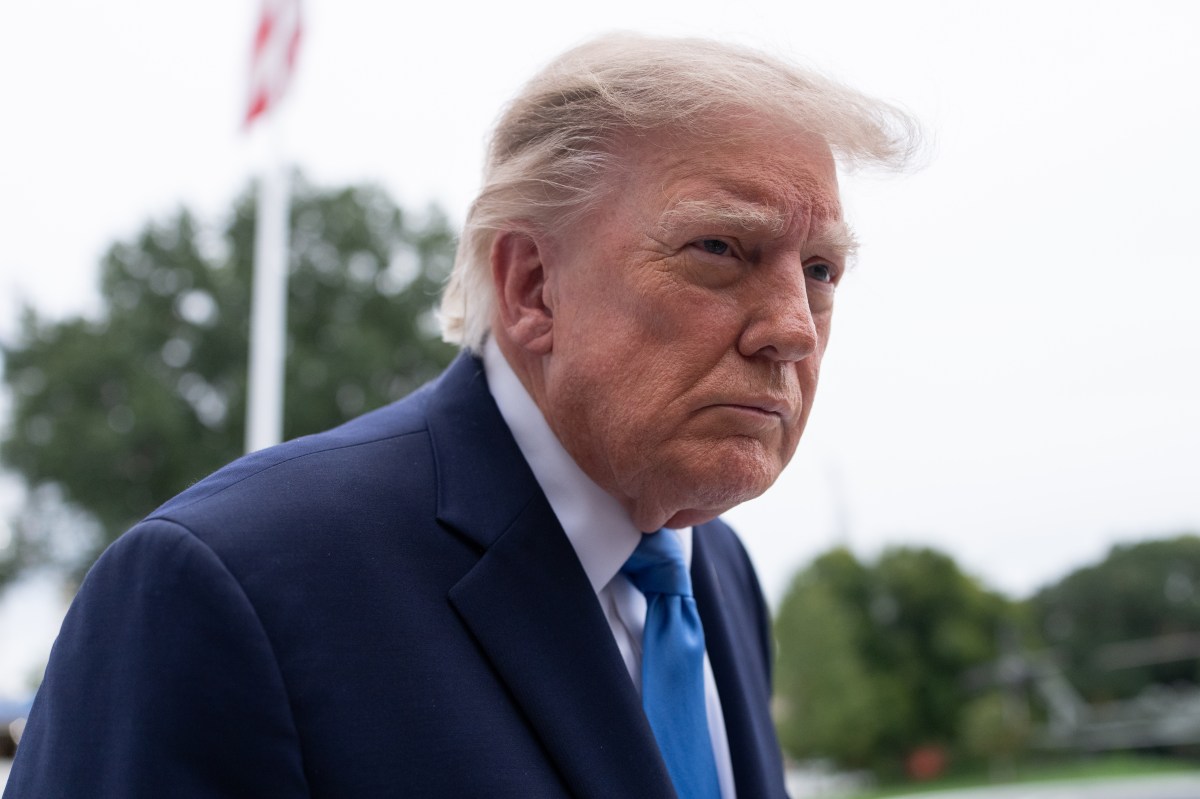
President Donald Trump has alleged without evidence that vote rigging is undermining the integrity of U.S. elections, only weeks out from what polling suggests will be a tough midterm contest for Republicans.
On Sunday, Trump wrote on Truth Social that American elections were "corrupt," citing the time it takes some cities and states to tally votes compared to other nations.
"125 Million People voted today in the first round of Brazil's Presidential Election. The results came out shortly after the vote closed, on the SAME DAY! In Detroit, Philadelphia, California, and numerous other U.S. Cities and States, the results, with much smaller numbers, will often take weeks to Rig, I mean, calculate. Voting in America is CORRUPT!!!" the president wrote.
Trump did not provide evidence that delayed vote counting in any of the cities or states he named was caused by fraud or manipulation.
The comparison with Brazil does not account for major differences between the two countries’ election systems. Brazil uses a nationally standardized electronic voting system overseen by its electoral courts, with each voting machine calculating its polling station’s total after voting ends and producing a results report before the data is transmitted for inclusion in the national tally. U.S. elections, by contrast, are administered through thousands of state and local systems under rules that vary between and within states, including different procedures and deadlines for mail ballots, provisional ballots, signature verification, canvassing and certification. As a result, complete counts can take longer in some U.S. jurisdictions, particularly where eligible mail ballots may arrive after Election Day. The difference in reporting speed is not evidence of fraud.
Newsweek has contacted the White House for comment via email outside regular working hours.
Trump's remarks—one of many instances in which he has alleged election fraud in the U.S.—come as both parties battle for who will control Congress in the final two years of his presidency. On November 3, voters will head to the polls to decide all 435 House seats and 35 Senate contests. Republicans currently hold narrow margins in both the House and Senate, and recent polling indicates that Democrats are set to flip a number of seats next month.
Election simulations from RacetotheWH—which combine voting patterns, polling and other indicators—give Democrats an 87 percent chance of retaking the House as of Monday, with 234 projected seats to the GOP's 201.
While the Senate is more competitive, Democrats are projected to win 53 seats to Republicans' 47, with a 73 percent chance of securing a majority. In April, RacetotheWH gave Republicans the edge in the upper chamber.
A number of races have shifted toward Democrats in recent weeks across other election modelers, including the Cook Political Report and Sabato's Crystal Ball. Many contests remain tight, with the Democratic lead within polls' respective margins of error, though the broader trends point to heavy Republican losses.
Early voting is now underway in several states, as Americans express frustration with the administration and Trump's second-term agenda. The president's approval rating is hovering near record lows, and surveys continue to show widespread concern over the direction of the economy and country under his watch.
Throughout his political career, Trump has repeatedly and explicitly cast doubt on the integrity of U.S. elections while calling voting "rigged" and "corrupt."
“This is nothing new,” said Jason Cabel Roe, a veteran GOP strategist and the founder of the consulting firm Roe Strategic.
“He’s obsessed with the 2020 election results and continues to complain about the process, which certainly had some flaws, but talking about it right now is not particularly helpful,” he told Newsweek. “Candidates are trying to talk to voters about affordability, gas and grocery prices, and health care.”
Trump continues to claim that the 2020 presidential election was stolen. However, election-security officials said there was no evidence that voting systems deleted, lost or changed votes, while Trump’s own Justice Department did not find fraud on a scale that could have changed the outcome. Many lawsuits challenging the result were dismissed, withdrawn or rejected, including cases in which courts considered the substance of the claims.
Trump has also questioned the integrity of elections before they have taken place. In 2016, ahead of his victory over former Secretary of State Hillary Clinton, he told rallygoers in Ohio he was "afraid the election's gonna be rigged."
His latest remarks on vote counting in the U.S. concern lengthy tallies, which are often attributed to the fact that many cities and states focus on counting all ballots rather than declaring a result on election night. California, which Trump cited, has more than 23 million registered voters and relies heavily on mail ballots. State law allows ballots postmarked by Election Day to be counted if they arrive within seven days, while officials must also process provisional ballots, verify signatures and give some voters time to resolve signature issues.
It is typical for opposition parties to make gains during midterm elections. In what was viewed widely as a blue wave, Democrats picked up 41 seats in the House during Trump's first presidency, though Republicans ultimately held—and expanded—their majority in the Senate.
In 2026, the president and his party appear determined to prevent major losses by drawing on a number of novel proposals and strategies.
The GOP held its first-ever midterm convention last month in Texas, with Trump appearing as the headline speaker. The president is also traveling to several battleground states to rally alongside GOP candidates. Over the weekend, he appeared in Ohio, where Republican incumbent Jon Husted faces a tough Senate race.
"The president will be out in full-force this October stumping for many of our battleground candidates and touting his historic achievements in their states," Natalie Baldassarre, the national press secretary for the Republican National Committee (RNC), told Newsweek last week.
During the RNC event, Trump also vowed to send every American adult a $5,000 "Trump dividend" if the GOP wins both chambers, doubling down on this promise in a video message released over the weekend.
"If Republicans win the House of Representatives and the Senate in the 2026 Midterm Elections, I'm going to give all Adult Citizens in the United States of America, $5,000. Thank you for your attention to this matter, and I look forward to signing those checks!" Trump wrote on X.
Beyond its legality and the odds of Republicans retaining both majorities, experts and lawmakers—including GOP members of Congress—have expressed doubt over the feasibility and merits of this proposal.
"Trump is happily making a proposal that would cost in excess of $1 trillion without giving any indication how this would be funded," Desmond Lachman, a former deputy director at the International Monetary Fund (IMF), told Newsweek in September. "Congress would certainly need to approve such a spending increase."
Contact Newsweek editors on this story: John Fitzpatrick and Shakeema Edwards.
Update, 10/05/2026, 11:02 a.m. ET: This article was updated with additional information.