Trump Signs Sweeping Russia Sanctions Bill Into Law: What to Know - Tempo.co English
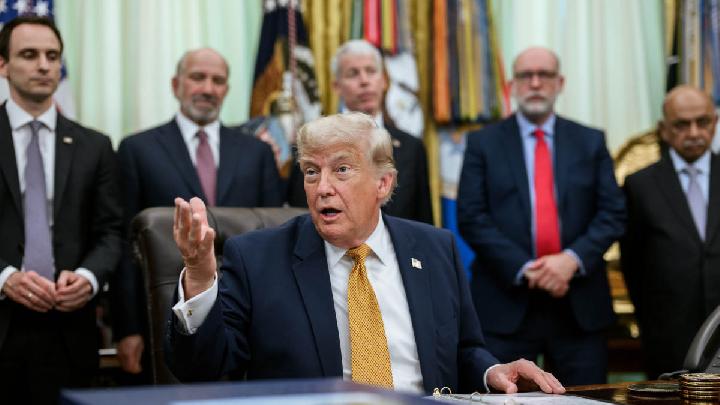
TEMPO.CO, Jakarta - U.S. President Donald Trump on Friday signed into law a sweeping package of new sanctions against Russia aimed at pressuring Moscow to end its war against Ukraine.
According to DW, the law, named the Lindsey O. Graham Sanctioning Russia and Iran Act, passed Congress with large bipartisan majorities. The Senate approved it 86-11, while the House of Representatives passed it 262-159.
The legislation also gives Trump new authority to impose tariffs on countries that continue buying Russian energy or help Moscow evade sanctions.
Here is what to know about the new law, as reported by DW and The Guardian.
The legislation imposes new sanctions on Russian political and military officials as well as foreign networks that help supply Russia's war effort or evade existing sanctions.
It also targets key parts of the Russian economy, including banks, and Russia's so-called “shadow fleet” of tankers that transport Russian energy despite existing sanctions on its energy exports.
The measures are intended to increase pressure on Moscow by targeting its oil and natural gas revenues and the countries that continue to buy Russian energy.
The law allows Trump to impose tariffs of up to 100% on the five largest importers of Russian oil or natural gas.
However, the tariffs are not automatically imposed on every country that buys Russian energy. The law gives Trump broad discretion over whether and how to use the tariff provisions.
It also allows the president to impose sanctions on the five countries that do the most to help Russia circumvent energy sanctions.
The legislation gives Trump further discretion over whether certain sanctions provisions can be waived and which countries could face tariffs.
The new measures could further strain U.S. trade relations with China and India, both of which are significant buyers of Russian oil.
Their continued purchases of Russian energy mean they could potentially be affected if Trump uses the new tariff authority.
The law, however, does not automatically impose a 100% tariff on China, India or other Russian energy buyers.
The package also establishes a framework to maintain sanctions on Iran until 2031.
The Russia sanctions and Iran provisions are included in the same legislation named after Graham, the Republican senator who played a leading role in advancing the bill.
Graham was a staunch supporter of Ukraine and had just returned from Ukraine when he unexpectedly died in July.
Although the bill passed with bipartisan majorities, some Democrats criticized the legislation for giving Trump excessive authority to impose tariffs.
The concern centers on the president's broad discretion over which countries could face tariffs and what tariff rates could be imposed.
According to The Guardian, Trump has already imposed tariffs on multiple countries, despite a U.S. Supreme Court ruling prohibiting him from doing so under the 1977 International Emergency Economic Powers Act.
Ukrainian President Volodymyr Zelenskyy thanked Trump and the senators and House members who supported the legislation.
Zelenskyy also recalled Graham's position on maintaining pressure on Russia. “When Lindsey Graham was here in Ukraine, he would always talk about how important it was not to ease pressure on Russia, to strengthen sanctions and seek a path to peace,” he wrote on X, as cited by DW.
“The best way to honor Lindsey's memory will be to implement the provisions of this law fully and swiftly. And the best reward for everyone helping us put pressure on Russia to end its war will be peace,” Zelenskyy added.
Before Trump signed the legislation, Kremlin spokesman Dmitry Peskov warned that additional U.S. sanctions would hinder efforts to achieve a peaceful resolution in Ukraine.