Trump says rates should be ‘1% or less’ after Fed hike
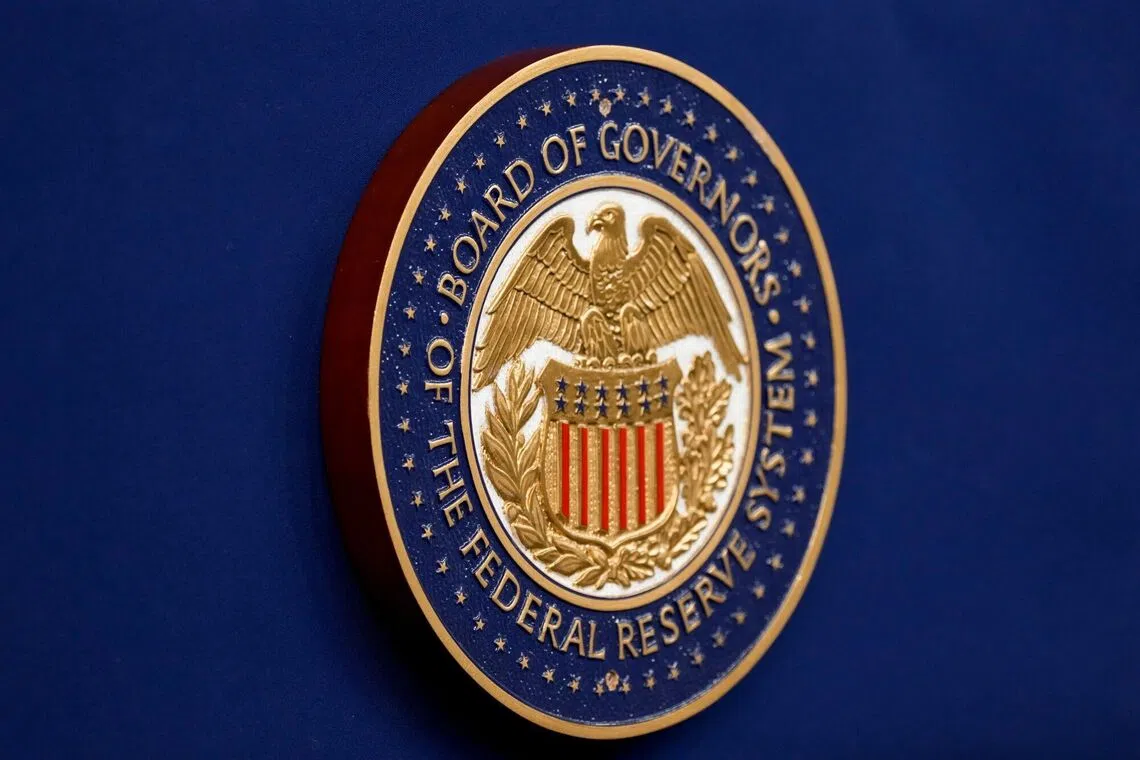
Driving rates down to US President Donald Trump’s desired level would require the central bank to make a significant reduction.
US President Donald Trump demanded an interest-rate cut after the Federal Reserve raised rates by a quarter percentage point, defying his repeated calls for lower borrowing costs.
In a social media post on Sept 16, Trump said that US rates “should be 1 per cent, or less” because “Our Country is BOOMING with new Investment” and has “the Best Credit in the World”.
“LOWER THE INTEREST RATES FOR THE UNITED STATES OF AMERICA, AND FAST!” he posted.
The Federal Open Market Committee voted unanimously to increase the benchmark federal funds rate to a range of 3.75 per cent to 4 per cent, a move that threatens to strain Trump’s relationship with his hand-picked Fed chairman, Kevin Warsh.
While the president’s message did not mention Warsh by name, his outburst turns up pressure on the Fed chief, whom he encouraged during a swearing-in ceremony earlier this year to be “totally independent”.Driving rates down to Trump’s desired level would require the central bank to make a significant reduction, a move that typically only accompanies a severe economic crisis.
Trump continued to argue that interest rates have put the US at a competitive disadvantage to other world economies, tying it to the nation’s trade deficit by saying, “We are ‘carrying’ almost every country in the World, and that cannot go on any longer.”
In the past, the president has threatened to cut off trade with partners that have a trade surplus, unless the Fed lowered rates. It is unclear how following through on that threat would lead to lower borrowing costs for Americans.
The Sept 16 rate hike, the first since 2023, came as policymakers lost confidence inflation would cool on its own. The Fed was expected to lift interest rates after recent data showed US consumer prices rising higher than expected in August. Higher energy prices from the US war with Iran – a conflict now in its seventh month – as well as Trump’s tariff policies, have clouded the picture for the Fed’s inflation targets.
Officials in their post-meeting statement characterised inflation as elevated but also described the economy in positive terms, with strong productivity growth and capital investment as well as job gains that were keeping pace with the workforce.
In his press conference, Warsh pointed to geopolitical risks as contributing to inflation. “There is no hiding from hot spots around the world, and our judgment about what is the most likely, or least likely, of the geopolitical situation has changed,” he said.
Warsh has vowed to protect the Fed’s independence even as he faced mounting pressure from a president frustrated by a soured midterm political climate for his Republican Party. Voters give Trump poor marks on the war in Iran and the economy, with high prices for healthcare, housing, energy and groceries a top issue for November’s election. Lower borrowing costs could help Trump and Republican lawmakers argue that an economic boost is on the way and help limit the electoral damage.
Trump dealt harshly with Warsh’s predecessor, former chair Jerome Powell, regularly lambasting him for not moving more aggressively to reduce rates. The US leader has also pressured the central bank in other ways, including trying to fire Governor Lisa Cook, a move that has been blocked so far by the Supreme Court. BLOOMBERG