Trump Adviser Dismisses ‘Silly’ Economic Polls, Points to Cheaper Burger - Newsweek
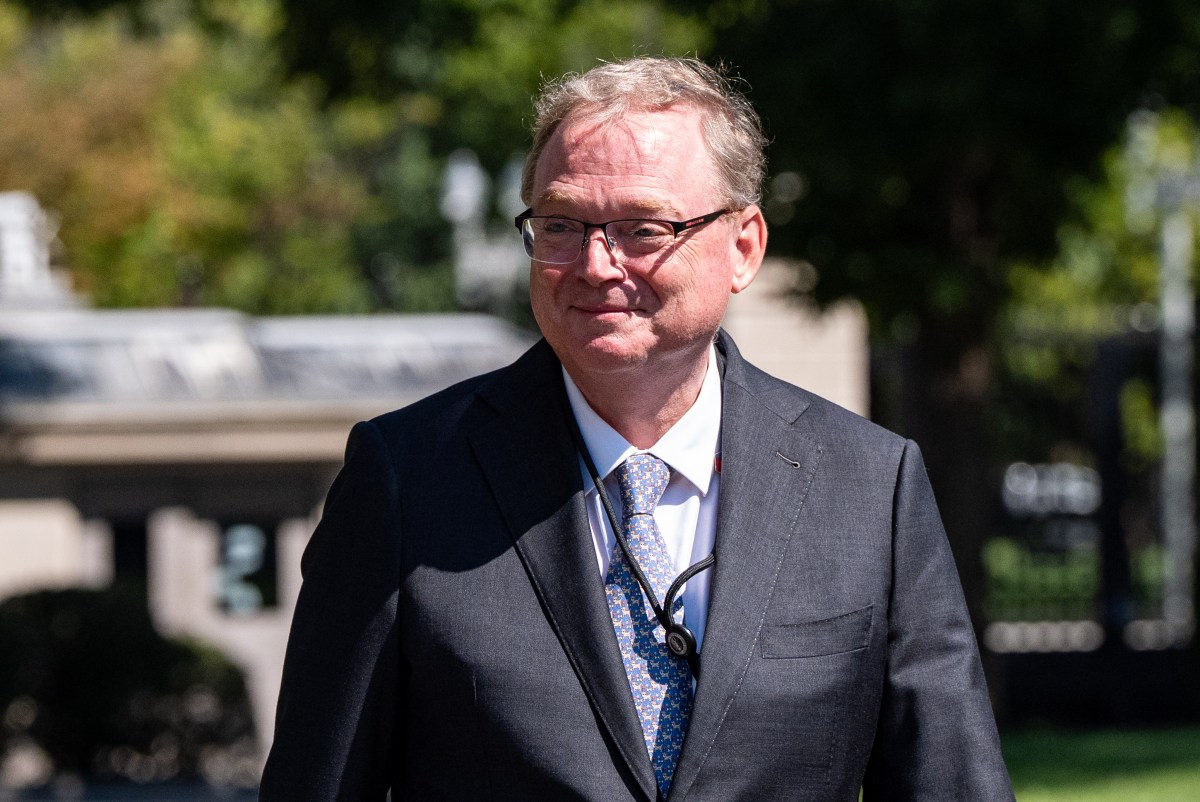
White House economic adviser Kevin Hassett has dismissed the significance of polls showing waning faith in President Donald Trump’s economic agenda, arguing that grocery-store realities support his perception of the U.S. economy as "really strong."
Since the launch of the Iran war on February 28, polls have continued to show growing economic pessimism among American consumers. One released Sunday by NBC News found that a 55 percent majority believe Trump’s policies have "hurt economic conditions," while only 26 percent believe these have helped. This compares to 48 percent and 35 percent, respectively, when the question was last asked in March.
This follows a Fox News poll, conducted September 11 to 14, which revealed that only 23 percent of the country now consider the economy in an excellent or good condition, with the remainder viewing it as "only fair" or "poor." Questioned about this during an interview with Fox News on Sunday, Hassett said that these "silly polls" were undermining the impression of Trump’s "really strong economy"—progress in which he said can now be seen at the grocery store.
"I just noticed as an example that the hamburger for my barbecue yesterday was down $2 from a couple of weeks ago," he said. "And so I'm seeing prices move in the right direction."
Newsweek contacted the White House via email on Monday regarding the latest NBC News poll and is awaiting a response.
"It's a really strong economy," Hassett said on Sunday. "And, rather than talk about the strong economy, people want to talk about these silly polls."
Hassett cited a recent update from the Federal Reserve System, which raised third-quarter economic growth projections from 4.4 percent to 5.1 percent, and "low inflation" and a recent "blockbuster jobs report" as evidence of this.
Last month’s Employment Situation Summary from the Bureau of Labor Statistics (BLS) showed that the economy added 162,000 jobs last month, nearly triple the amount that was forecast by analysts.
"August turned the heat back up on the job market. Payrolls grew by 162,000, easily beating expectations, and July's reported job losses were revised into gains," Glassdoor’s Chief Economist Daniel Zhao wrote in a note following the reading.
The latest inflation report from the Department of Labor, however, revealed that inflation remained elevated in August, with consumer prices having risen 3.4 percent over the past 12 months.
To Hassett’s point, the cost of beef, which has for months led the food category in terms of increases, dropped by 0.6 percent from July, though the beef and veal index remains 5.9 percent higher than last August. A pound of ground beef, Labor Department data show, currently costs $6.92 on average, up from $6.32 a year ago.
Cattle prices weakened from their high spring levels during the month, according to analysis by the Department of Labor, and the report was released following Trump’s announcement that the U.S. would be relaxing tariffs on 300,000 metric tons of foreign beef to ease domestic supply pressures.
Economic issues remain forefront in Americans’ minds heading into November, according to the NBC News poll of 1,000 registered voters. Inflation and the cost of living was ranked as the top issue, securing 28 percent of first choice votes, followed by "government corruption," "threats to democracy" and "jobs and the economy."
And frustration with the administration’s approach to these issues has been charted across a number of polls in recent weeks.
A CBS News/YouGov survey fielded September 8 to 11 showed that, among 2,460 American adults, the president’s economic approval stood at 34 percent, with 66 percent disapproval. On inflation, Trump received 27 percent approval and 73 percent disapproval, while only 33 percent considered the U.S. economy "very" or "fairly good," with 63 percent rating it poorly.
Of the 896 registered voters polled for a Reuters/Ipsos survey released last week, 31 percent approved and 65 percent disapproved of Trump’s handling of the economy.
According to Hassett, however, "polls over and over again harm impressions about the economy because they poll way too many Democrats." He pointed to the University of Michigan's survey of consumer sentiment—currently hovering near all-time lows—as an example with partisan responses rather than honest appraisals of the economy.
"Democrats in the Michigan survey are saying that we've got the worst economy since the Great Depression because they hate President Trump," he said.
In response, Joanne Hsu, who directs the university's consumer sentiment surveys, told Newsweek that these are based on "a random sample of consumers from across the country and all walks of life." She pointed to recent declines in sentiment among Trump's own voting base and independents as evidence against Hassett's assertion that weaker survey results were due to "too many Democrats" being polled.
"It is now well below its historical average and is currently about 15 percent lower than January 2025," Hsu said of Republican consumer confidence. "Independents, too, are feeling much worse about the economy than they did at the start of 2025."
Update, 9/21/26 11:52 a.m. ET: this article was updated with a response from Joanne Hsu of the University of Michigan.