Trump Admin Sued Over Birthright Citizenship Executive Order - Newsweek
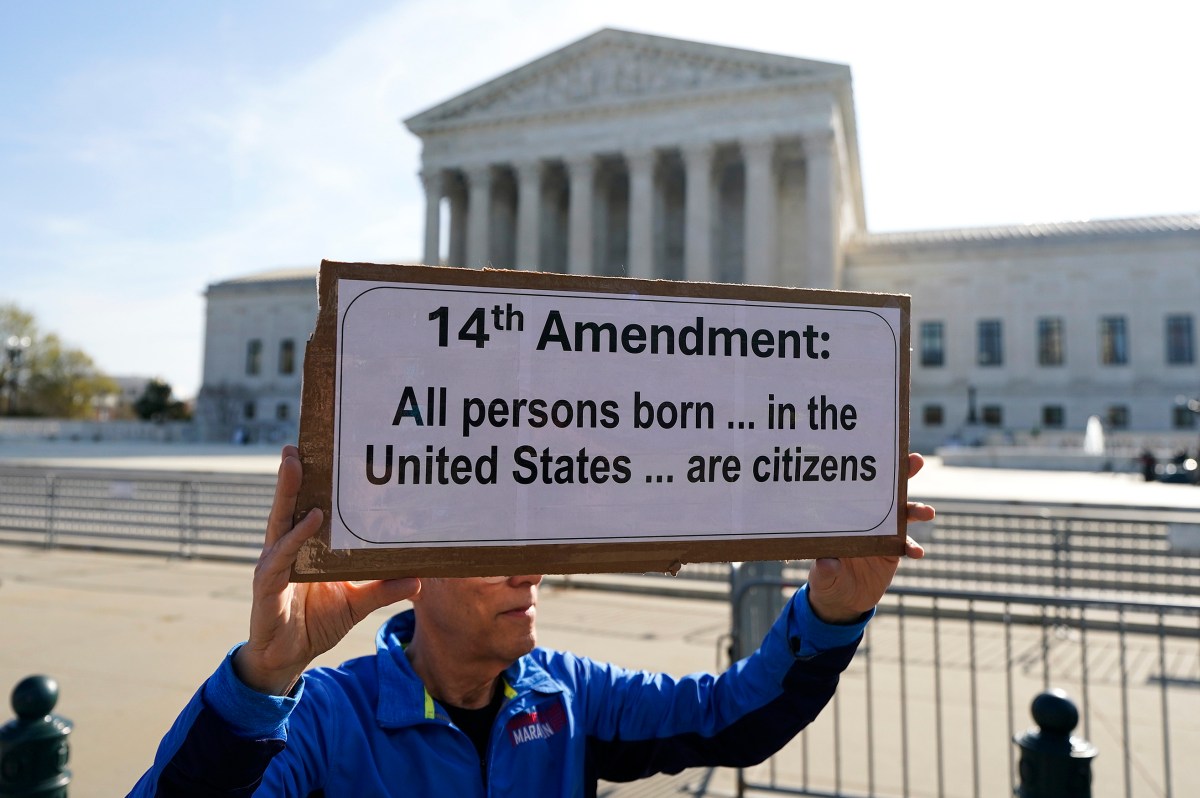
The Trump administration is facing a new nationwide class-action lawsuit challenging an executive order that seeks to deny birthright citizenship to some children born in the United States, including those born through certain commercial surrogacy arrangements and to some foreign government and international organization employees.
The lawsuit, filed Monday, September 28, in the U.S. District Court for the District of Columbia, argues that the order violates the Fourteenth Amendment and federal law by creating new exceptions to the longstanding principle that nearly everyone born on U.S. soil is an American citizen.
The complaint was brought by three families who said they are affected by Trump's August 6 executive order, which directs federal agencies not to recognize the citizenship of certain U.S.-born people when neither parent is an American citizen. The plaintiffs are seeking to represent a nationwide class and have asked a federal judge to block enforcement of the order.
The Trump order applies to several circumstances, according to the complaint, including when either parent is considered an "alien enemy," when either is a foreign government employee, when a parent engages in a commercial transaction to "purchase or access birthright citizenship," or when a parent engages in fraud to obtain citizenship. It also covers people born in a U.S. territory or territorial waters where Congress has not conferred citizenship by statute.
“The Constitution is clear, and the Supreme Court has been clear: Birthright citizenship is the law of the land,” Cody Wofsy, deputy director of the ACLU’s Immigrants’ Rights Project and lead counsel, said in a statement shared with Newsweek. “The Trump administration’s newest attack on this fundamental American principle is just as cruel and illegal as its previous executive order, and it will meet the same fate in court.”
Newsweek has contacted the Department of Homeland Security (DHS) for comment.
The lawsuit comes amid a string of moves by the Trump administration to restrict birthright citizenship, even after the U.S. Supreme Court ruled in June that children born on U.S. soil are entitled to American citizenship under the Fourteenth Amendment.
One plaintiff, identified under the pseudonym "Clara," is a French citizen who has lived in the United States for more than a decade and resides in Washington, D.C.
She gave birth to her son, identified as "Nathan," in Washington in August, after the executive order was issued. Neither Clara nor her husband is an American citizen, and both are in the United States on G-4 visas and work for international organizations that possess international-organization immunity, according to the filing.
Another plaintiff, identified as "Edward," is an Australian citizen who lives in Australia with his wife. The couple has an older daughter who was born through surrogacy in the United States in 2021 and is a U.S. citizen, the complaint says.
They are expecting a second child through surrogacy in the United States in October. The filing says the couple entered into a commercial transaction with a surrogate in the U.S. to give birth, potentially placing their expected child within a category targeted by the new executive order.
The third plaintiff, "Patricia," is a Western European citizen living in the United States with her husband. The couple, who both hold G-4 visas and work for international organizations, are expecting a child around April 2027. Neither is a U.S. citizen, per the filings.
The proposed class would include certain U.S.-born people, their parents, and expectant parents when neither parent is an American citizen and at least one is covered by the executive order.
The plaintiffs are represented by attorneys from the ACLU's Immigrants' Rights Project, NAACP Legal Defense and Educational Fund, Asian Law Caucus, Democracy Defenders Fund, and several ACLU affiliates.
The lawsuit says the order's effects could extend beyond citizenship status. Children treated as noncitizens could be denied U.S. passports and Social Security numbers and potentially face immigration enforcement, including arrest, detention and deportation.
The lawsuit cites a Department of Homeland Security interim rule stating that children stripped of citizenship under the executive order may be "subject to removal from the United States."
The DHS rule broadens regulations covering children of foreign diplomats to include certain "foreign government employees," including embassy and consulate workers, people employed by foreign governments in an official capacity, and employees of international organizations with immunity. U.S.-born children covered by the rule would not be recognized as citizens at birth unless at least one parent is a U.S. citizen. Instead, they could register for lawful permanent residence and, if approved, be considered permanent residents from birth.
Separate guidance from the State Department says that when neither parent of a minor passport applicant is a U.S. citizen, each parent must submit an attestation under penalty of perjury to help determine whether the executive order applies. Misrepresentations could expose parents to legal liability, including potential federal prosecution.
Social Security Administration guidance cited in the lawsuit says a U.S. birth certificate would no longer be sufficient proof of citizenship for people covered by the order. The agency could require additional evidence and delay issuing a Social Security number while determining whether a parent falls within one of the order's categories.
The plaintiffs say the policy could restrict affected children's access to government programs, banking, and employment and could leave some legally or effectively stateless if their parents' countries do not recognize them as citizens.
The lawsuit marks another major legal battle over the Trump administration's efforts to restrict birthright citizenship.
Trump issued an executive order on January 20, 2025, seeking to deny U.S. citizenship to certain children born in the United States when their mother was unlawfully present or lawfully but temporarily in the country and their father was neither a U.S. citizen nor a lawful permanent resident.
The order was challenged in court and ultimately reached the Supreme Court in Trump v. Barbara. On June 30, the Court ruled that the targeted children were entitled to citizenship at birth under the Fourteenth Amendment and that the federal citizenship statute did not allow the administration to create the additional exceptions.
The ruling drew on the Supreme Court's 1898 decision in United States v. Wong Kim Ark, which established the general rule that people born in U.S. territory are citizens at birth, subject to historically recognized exceptions.
Trump issued two more executive orders on August 6 seeking to restrict citizenship in other circumstances, including for children whose parents fall within specified categories and in cases involving so-called birth tourism.
Unlike the first order, the new executive order does not specify an effective date or identify a temporal limit on its citizenship restrictions, according to the lawsuit.
The plaintiffs argue the Constitution does not give a president authority to redefine citizenship and that the new categories go beyond the narrow historical exceptions recognized by the Supreme Court.
"The Citizenship Clause of the Fourteenth Amendment provides that '[a]ll persons born or naturalized in the United States, and subject to the jurisdiction thereof, are citizens of the United States,'" the complaint says.
The lawsuit alleges that the order violates both the Fourteenth Amendment and the federal statute providing citizenship to people born in the United States and subject to its jurisdiction.
It also accuses federal agencies of violating the Administrative Procedure Act, arguing that the DHS interim rule and other implementation guidance amounted to legislative rules issued without the required notice-and-comment process.
The plaintiffs are asking the court to declare the order unlawful, block its enforcement against the proposed class, and set aside the DHS rule and other implementation measures.
The new case follows an attempt by civil rights groups to challenge Trump’s August orders through the earlier birthright citizenship litigation in New Hampshire.
Lawyers asked U.S. District Judge Joseph Laplante to clarify that his existing injunction also protected children covered by the new measures. At a September 22 hearing, however, Laplante questioned whether the challenge belonged in the existing case because the new orders applied to a different class.
“I view the Barbara case as essentially over,” he said, suggesting the new measures appeared to require a separate lawsuit. The hearing did not determine whether the new orders were constitutional.
Contact Newsweek editors on this story: Matthew Cannon and Geoffrey Rowland.