Tourism stimulus likely to be postponed until April - Bangkok Post
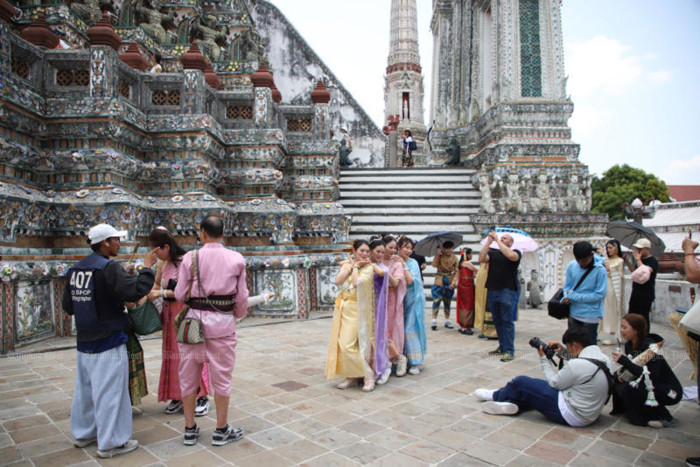
Tourists in traditional Thai costumes rented from shops pose for photos at Wat Arun, or the Temple of Dawn, in Bangkok on April 27. (Photo: Varuth Hirunyatheb) The government’s planned “Thai Tiew Thai Plus” domestic tourism stimulus scheme is likely to be postponed until April next year, amid concerns that staging a promotion during the high season starting in October would have limited economic benefits.
The move followed discussions among cabinet members and representatives of relevant ministries. Most agreed on the need for tourism stimulus but expressed concerns over the programme’s timing, Tourism and Sports Minister Surasak Phancharoenworakul said on Wednesday.
They argued that injecting additional government spending during the high season from late this year through early next year would be unnecessary, as tourist demand is already strong and hotels are normally operating at full or near-full occupancy.
The tourism minister said spending public funds during a period when travellers were already making trips would not generate the maximum economic impact and could result in inefficient use of the allocated budget.
Under the proposal, the government would subsidise accommodation costs by 1,500 baht per night for up to five nights. Participants would also receive 50:50 co-payment digital vouchers worth 1,500 baht per day for major tourist destinations and 2,000 baht per day for secondary cities.
The scheme was expected to generate about 20 billion baht in economic activity.
Mr Surasak said the scheme’s details and overall budget had received preliminary approval, with the funding already set aside.
The original plan was for people to travel under the scheme from November to February 2027, with a blackout period from Dec 15 to Jan 15 to avoid the New Year holiday period. However, there were concerns that the month-long gap could lead to criticism that the stimulus measures lacked continuity, said the minister.
Following discussions with other ministers, most favoured consolidating the scheme into a single programme after the New Year holiday to maximise its economic impact, he added.
“The budget has already been set aside, at about 4 billion baht, to support 1 million entitlements. The funding comes from the same allocation as the first tranche of the 400-billion-baht borrowing decree, which is available for use,” Mr Surasak said.
In the October-December quarter, efforts to stimulate consumer spending could be supported by the Thai Chuay Thai Plus (Thais Help Thai Plus) scheme, which the government is thinking about extending beyond Sept 30.
Mr Surasak said the new tourism stimulus could then be introduced during the low season, which coincides with the school holidays, giving families greater opportunities to travel together in Thailand.
He cited a recent survey of private-sector operators which found that some, particularly hotel businesses, agreed that launching the scheme during the high season would provide little additional benefit because rooms were already full and many tourists had planned their trips well in advance.
However, opinions among business operators remained divided, with some arguing that other businesses might still have vacant rooms or additional capacity to accommodate tourists.
The ministry plans to hold further discussions with the private sector before reaching a final decision, said Mr Surasak.