
Toronto’s skyline has changed drastically in just a few years. Use our interactive to see the buildings transforming the view - Toronto Star
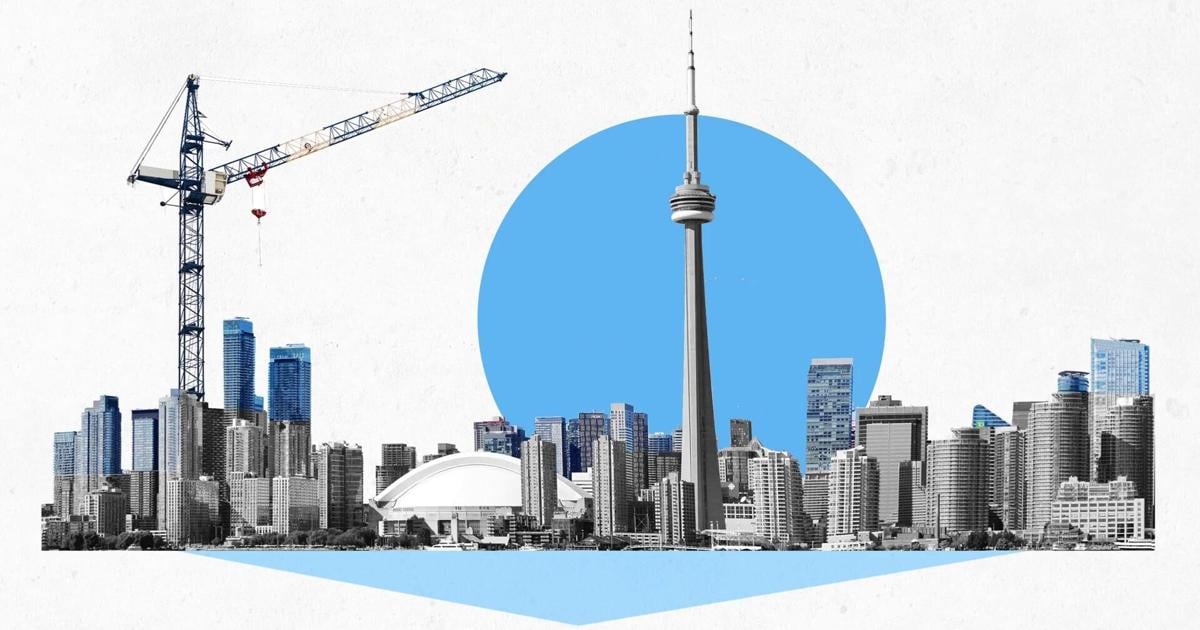
Each spring I look forward to a Toronto skyline reveal. At least that’s how I think of my first trip of the season over to the Toronto Islands. Halfway out into the harbour, I turn around and look at the skyline to see what’s new. There’s always something new.
Over the years it has filled in more. It is thicker, wider and deeper. Just a few decades ago the skyline — buildings that define the panoramic idea of a city by reaching higher than the trees — was a tight cluster of skyscrapers around King and Bay streets with the CN Tower standing alone, off to the side. Today that skyline cluster runs nearly continuously from the Don River in the east to Liberty Village in the west. The CN Tower has been consumed.
Bathurst St. Spadina Ave. York St. Yonge St. Jarvis St. Parliament St. Toronto's skyline in 2026, annotated
Before the CN Tower and mid-century bank towers went up, Toronto’s skyline was largely comprised of low, soot-coated buildings thanks to years of coal burning, punctuated by the Royal York Hotel, the original 1931 Commerce Court Tower (for a few decades called the tallest in the British Commonwealth) and church steeples. It had an oppressive, suffocating air about it. Churches and striving to define ourselves in the far corner of a colonial empire: a skyline says a lot about a place.
Skylines are really of a moment, never fixed in time, though sometimes one particular image lasts longer than others. The classic Toronto skyline of the 1980s into the 1990s, the one with the aloof CN Tower, endured for a while, a reflection of local economy. A long recession plus deindustrialization after free-trade agreements, meant things were stagnant.
An unfinished CN Tower is seen under construction in this 1973 file image. The tower was completed on April 2, 1975, and opened to the public the following year. Dick Loek/Toronto Star
Growing up in Windsor, Ont., during the same period, we gazed across the river to Detroit, Mich., whose skyline remained largely static for decades, where the occasional new building remained “the new building” for years. “New” in Toronto can last just months.
Since the late 1990s, when the residential building boom started, Toronto’s “constant” has been never-ending change. It makes the skyline feel alive and growing, an entity of its own only tempered by the recent market slowdown. If the SkyDome roof is open — when discussing Toronto’s skyline, the now-dubbed Rogers Centre deserves to go by its original name — knowing it’s filled with people, especially during exciting Blue Jays days, gives an extra jolt of liveliness to it all.
Skyline creation is alchemy, not master-planned. The city and municipal zoning rules don’t decide an individual building’s architecture but focuses on details around footprint size, height and technical requirements like where garbage trucks go. Zoning also decides where a skyline is, and isn’t. The rest is up to other variables.
Mostly the economy, price and availability of building materials, along with current technological practices influence how things are built. That skylines have any visual cohesion, however, is a cultural influence and testament to the power of style and fashion. A bit like tree rings, the age of a city can be read in its skyline. Early in Toronto’s condo boom there was a lot of brick, which transitioned to mainly glass towers, and of late more variety again, brick or otherwise.
The Toronto skyline as seen from the ferry on a clear September Morning in 2004. DAVID COOPER/Toronto Star
Toronto is filled with postmodern buildings from the late 1970s to the early 1990s, a product of a previous building boom. Colourful and referencing past styles, most are lower buildings — like police headquarters or Metro Hall — but the polished red granite of Scotiabank Plaza is the most prominent skyline example of that era’s blingy, showy style.
The new, 106-storey “SkyTower” at 1 Yonge St., part of the Pinnacle development, has a tapered style reflective of newer supertall towers I saw when visiting Hong Kong, like the International Commerce Centre, or others in mainland China. Architects follow fashion trends just as clothing designers do, and right now Asia leads.
A Skyline changes as one’s perspective changes too. The traditional Toronto view is from the water, often used as background for local newscasters. It looks different when viewed from the land though. Everyone has their own, individual skyline view from wherever they gaze upon it, as if remixed just for them.
Looking at it from the Yonge Street corridor is to be part of the skyline itself. With a few breaks, Toronto's north-south skyline stretches all the way into Thornhill. When viewed from oblique angles in places like Mimico and New Toronto along Etobicoke’s waterfront, midtown skyscrapers seem like they’re part of the waterfront cluster, an optical illusion that makes them appear closer than they are.
Then there’s the independent skylines, the clusters that have sprung up all around Toronto and the GTA, like in Mimico itself, or the various “city centres” in Scarborough, Vaughan and Mississauga. A first-time visitor could be forgiven for thinking any of these were the main skyline.
Like the city itself, Toronto’s skyline isn’t boring. Each new angle or season reveals more. There’s always something to see.
To join the conversation set a first and last name in your user profile.
To join the conversation set a first and last name in your user profile.
Your account has been registered, and you are now logged in.
Submitting this form below will send a message to your email with a link to change your password.
An email message containing instructions on how to reset your password has been sent to the email address listed on your account.
Your gift purchase was successful! Your purchase was successful, and you are now logged in.

