‘They must own it’: COSATU takes aim at AfriForum and Solidarity over AGOA - IOL
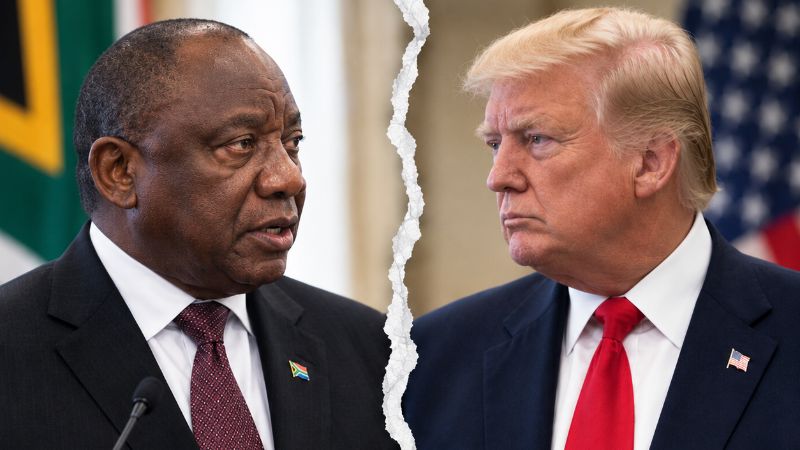
COSATU has warned that thousands of South African jobs could be at risk following the United States’ move to remove the country from AGOA, urging Pretoria and Washington to urgently repair their strained relations.
The Congress of South African Trade Unions (COSATU) has blamed lobby groups AfriForum and Solidarity for contributing to strained relations between South Africa and the United States, blaming their lobbying efforts for playing a role in Washington’s move to remove the country from the African Growth and Opportunity Act (AGOA).
This follows US President Donald Trump’s notification to Congress of his intention to terminate South Africa’s participation in the trade programme from January 1, 2027.
The announcement, made on Monday, represents a major setback for Pretoria’s efforts to retain preferential access to the US market amid growing tensions between the two countries.
US Trade Representative Jamieson Greer said the decision followed an annual review of sub-Saharan African countries’ eligibility for AGOA.
Greer said Trump had determined that South Africa and Rwanda were engaging in practices inconsistent with the programme’s eligibility requirements, including barriers to US trade and investment, as well as practices considered threats to US national security and foreign policy interests.
COSATU said it had noted the US government’s decision to remove South Africa from AGOA, which provides eligible African countries with preferential access to the US market.
“AGOA has provided lower tariff access to various African exports to the US market, currently the world’s largest economy. It has played an important role in boosting South African and many other African countries’ exports to the US,” said Cosatu parliamentary co-ordinator Matthew Parks.
Parks said the programme had also helped nurture intra-African trade, pointing to South African vehicle exports to the US that include components manufactured in neighbouring countries.
He added that AGOA had benefited the US through the supply of African goods, including critical minerals, while helping to create an estimated 200,000 direct jobs in the US.
“The US, like all other nations, has the right to determine which goods can enter its market and at what tariff level. Other African countries have previously been removed from AGOA, and some were later reinstated,” he said.
However, Parks said COSATU was deeply concerned about the impact South Africa’s exit from AGOA would have on thousands of agricultural and manufacturing jobs.
“We have already seen many jobs lost at factories and companies in Cape Town, Atlantis, Malmesbury and Tulbagh, amongst others. We have seen the devastation it threatens to these workers and farmers’ abilities to take care of their families,” he said.
Parks called on the South African government to use the period before the proposed termination takes effect to negotiate solutions that would protect the country’s economy and jobs.
“Given South Africa’s already dangerously high 43.8% unemployment rate and weak economic growth, it is important that South Africa’s government utilise the next 60 days before this exit comes into effect, to negotiate a favourable set of solutions to avert this potential blow to the South African economy and jobs,” he said.
He said the engagements should be based on facts and mutual respect, including recognition of South Africa as a constitutional democracy and a sovereign member of the international community.
Parks said negotiations over South Africa’s continued membership of AGOA and efforts to reset bilateral relations with the US should prioritise the interests of South Africans and respect the country’s transformation journey.
He also called on the departments of Trade, Industry and Competition; Employment and Labour; National Treasury; and Agriculture to urgently introduce support measures for workers, businesses, industries and communities at risk.
“This must include subsidies and incentives, tax rebates and holidays, and support from the Unemployment Insurance Fund’s Temporary Employment Relief Scheme,” he said.
“We cannot afford to abandon a single worker, business, industry or community.”
Parks added that efforts to diversify South Africa’s export markets, including in Canada, Brazil, Europe, Asia and across the African continent, should be accelerated with support from government and the private sector.
Parks also criticised lobby groups AfriForum and Solidarity, accusing them of contributing to strained relations between South Africa and the US through their lobbying efforts.
“It is long overdue that AfriForum, Solidarity and other proponents of the white persecution myths, appreciate the very real damage that their endless lobbying of and antics in the US have done to bilateral relations,” he said.
He argued that South Africa’s removal from AGOA was, in part, a result of their efforts to undermine the country’s international standing.
“They must now explain to white farmers from the vineyards of the Cape to the citrus farms in Limpopo; to White, Coloured, Indian and African workers from the clothing factories in Cape Town to the motor manufacturing plants in the Eastern Cape, Gauteng and KwaZulu-Natal why their livelihoods will now be lost.
“This is AfriForum, Solidarity et al’s legacy. They must own it,” he said.
Parks said COSATU would continue working with government and industry to ensure support measures were introduced. The federation would also engage with the US labour movement to protect workers’ jobs.
“South Africa is a resilient nation. It has overcome some of humanity's darkest moments. We will navigate these turbulent times too,” he said.
Meanwhile, Minister of Trade, Industry and Competition Parks Tau said the US decision to move towards excluding South Africa from AGOA did not define the broader relationship between the two countries.
However, he warned that finding a solution would depend on both parties’ willingness to engage.
Tau described the US as an important trade and investment partner and said South Africa remained committed to pursuing a mutually beneficial relationship.
“This decision does not define the broader relationship between South Africa and the United States, however a solution depends on the willingness of both Parties to find solutions,” he said.
He said the government would support affected sectors, protect South Africa’s national interests and continue pursuing trade, investment and shared economic opportunities with the US.
“South Africa remains committed to a balanced and mutually beneficial partnership with the US that enables preferential trade that supports beneficiation of critical minerals at source and promotes investment,” he said.
Tau added that South Africa would continue to uphold its constitutional responsibilities, transformation objectives and international obligations while pursuing practical solutions to expand trade and investment.