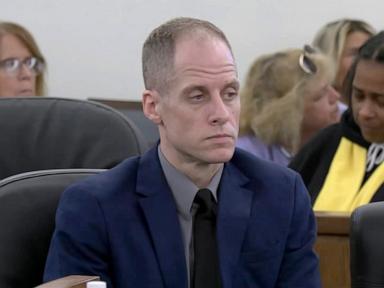
“The ‘murder gene’ is not scientifically proven; the four deadly combinations that lead to murder are…” - 스포츠경향

This article was translated by an AI tool. Feedback Here.
Pyo Chang-won, Director of the Pyo Chang-won Crime Science Research Institute, poses for photos before an interview at the Kyunghyang Shinmun in Jung-gu, Seoul, on September 17, 2026. Photo by Jeong Hyo-jin
Pyo Chang-won (60), Director of the Pyo Chang-won Crime Science Research Institute, starts his day by running along the Tancheon riverside trail near his home in Yongin, Gyeonggi Province. He opens the front door at 6 a.m., runs for 40 minutes, then walks up to the 16th floor of his apartment. He believes that daily habitsespecially how one begins the dayare most important for managing fitness and stress and for living out the rest of life as planned.
These days he is so busy with crime research, broadcasting, lectures, and writing that 24 hours are not enough. His wife, Lee Seung-a, who has taken on the role of his manager, coordinates his schedule and also serves as the head of the Pyo Chang-won Crime Science Research Institute. He says, “I am extremely happy with my life now that I have returned to being a free person.” Elected in April 2016 in the 20th National Assembly election (Yongin-si District Jeong), he began life as a politician, but in October 2019 he declared he would not run in the next general election and left politics as soon as the 20th Assembly ended. The interview with Pyo took place on the 17th at the Kyunghyang Shinmun.
- When did you develop the running habit?
“It has been two months. Before that I went to the gym and tried various exercises, but perhaps because of age, I stopped sleeping in. So I went outside the moment I opened my eyes and ran, and it felt good. The early morning air is nice, too. I run 2.5㎞ every day.”
- Your wife seems to shoulder a lot because of your busy schedule.
“After we held a family meeting and I decided not to serve in the National Assembly any longer, my wife completed the Korea Creative Content Agency training required to register for the popular culture and arts planning business. That way she can legally operate an agency and do management work. Whether it is requests to appear on broadcasts or anything else, my wife receives and manages them by phone or email. When I return home after running, the day’s schedule my wife has prepared is waiting for me. I just move according to it. Hahaha…”
- The roles at the Pyo Chang-won Crime Science Research Institute are clearly divided between the two of you, I hear.
“Originally I served as the representative and my wife was not involved at all. I left the Korean National Police University in 2012 and, with no clear way to make a living, set up the institute, but it did not run well with only forensic science and profiling. My wife learned dummy (human body mannequin) and special makeup techniques and incorporated them into the institute. Gradually she took over management, while I took charge of content such as forensic science including profiling, and I eventually handed over the role of representative to her.”
In multiple interviews after deciding to retire from politics, Pyo cited the ‘Cho Kuk affair’ as one decisive reason for his choice to stop doing politics. As a questioning lawmaker during Cho Kuk’s confirmation hearing for justice minister in September 2019, he said it deeply pained him to be criticized for “whataboutism” by many young people angry about unfairness, because he was seen as protecting “his own side.” The photo shows justice minister nominee Cho Kuk greeting Democratic Party lawmaker Pyo Chang-won at the National Assembly Legislation and Judiciary Committee confirmation hearing on the morning of September 6, 2019. / Yonhap News
Did I watch the hearings? Trauma would flare up, so I try not to emotionally identifyHowever, one side defending unconditionally and the other attacking remains unchangedA brief but intense political experience made me more mature
In 2012, he publicly criticized the National Intelligence Service opinion-rigging case on his blog. Opposition supporters cheered, while ruling-party supporters flocked to the National Police Agency website and other places to petition for his dismissal. He did not take the post down. That same year, just before being appointed a full professor at the Korean National Police University, he resigned. Though calling himself a conservative, he drew ardent support from progressives by strongly criticizing the Lee Myung-bak administration through the media. Political recruitment offers poured in, but he said he would not enter politics. He later apologized for reversing that position and joined the New Politics Alliance for Democracy in December 2015. Four months later, he pinned on a lawmaker’s badge.
- Recently, confirmation hearings were held for ministerial nominees. There was considerable controversy around nominees including the justice minister. Do you usually keep up with political news?
“If I focus on that, my trauma flares up, so I try not to learn about it in depth if I can help it. I also try not to engage emotionally. Still, one must know what is going on in the world, so I just keep up with what the controversies are and what clashes are happening. However, it seems unchanged that one side tries to defend unconditionally while the other side tries to attack unconditionally.” (After deciding to retire from politics, Pyo has cited the ‘Cho Kuk affair’ as one decisive reason for quitting. As a questioning lawmaker during the September 2019 confirmation hearing for justice minister nominee Cho Kuk, he has said it was especially painful to be criticized for “whataboutism” by young people angry about unfairness because of “protecting our own side.”)
- How is Pyo Chang-won different before and after experiencing politics?
“I think I have changed. No matter how much we curse and criticize it, politics makes laws and sets the nation’s direction. While at the National Assembly, I witnessed the words and deeds of each politician and watched in detail every day how hey built factions, so for me it was an enormous period of learning. It was also a time spent trapped in endless anguish and conflict, and we led the impeachment of Park Geun-hye after a fierce struggle. I believe these intense experiences compressed into a very short period made me more mature.”
- Some say politics is where human desire for power is most concentrated. Does political experience help you research crime and analyze cases?
“Very much so. Ultimately, crime is also a matter of how to control human urges, impulses, or desires. There is what we call a threshold (Threshold·a threshold), and whether an impulse crosses that threshold is crucial; in fact, all of us face such situations constantly. Whether to lie or not, or even while driving, whether to run a red light in a situation that seems like it will not be caught. The place most frequently and in the most extreme form exposed to such situations is politics. Personnel solicitations and all kinds of petitions, the issue of whom to have drinks with, and relationships with oversight targetsall moments sit on the boundary of crossing that threshold.”
- It cannot be easy to block temptations coming from all directions.
“I built walls to a degree that might have looked like a cleanliness obsession. If any place, whether an oversight target or not, sent a holiday gift, I attached an official letter and returned it. I wrote that I would report it as a violation of the Kim Young-ran Act. Once, after making a mobile reservation for an overseas family trip, we went to the airport. Suddenly, a staffer at the ticket counter contacted someone, and a high-ranking airline official rushed over. They changed my family’s seats to better ones, prioritized our baggage, and guided us to the VIP lounge. I felt that was not right, so afterward I sent official letters to all airlines asking them to remove me from VIP lists.”
- Do other lawmakers do that as well?
“They did not (laughs). For politicians, temptation is everyday life. The issue is whether it is an illegal situation or a matter of ethics·morality, and in the latter case they do not care at all. Under the pretext of politics, when they pursue only absolute values like election and taking power, there is a pervasive notion that whatever happens under that is fine as long as it is not a serious illegality and does not get exposed. As a result, unlike ordinary people, their sensitivity to ethics·morality is quite low. Had I continued in politics, I think I, too, would have eventually become like that.”
Pyo currently appears regularly on the MBC every1 crime analysis program ‘Hidden Eye’ and frequently appears as an expert on various current-affairs programs such as SBS ‘I Want to Know That’ and ‘The Story of That Day When Tails Bite Tails’. / Broadcast video capture
- Technology that helps prevent crime is advancing day by day. Even so, why do gruesome murders keep occurring?
“Because they are not crimes carried out by rational reason and judgment. If you think you will get caught because there are CCTVs everywhere and because advanced tools like digital forensics and the police’s improved investigative capacity exist, you should not commit the crime. That is rational judgment. In fact, many crimes have decreased for that reason. Because of CCTV, you are not anxious even if you leave your laptop in a caf and go to the restroom. But crimes driven by impulsive desire or aberrant personality are not influenced by such things. The fortunate thing is that serial murder has become almost impossible. In the past, someone like Jang Yun-gi or Kim So-young, who actually committed serial killings, could have committed more murders.”
- Is there a separate ‘murder gene’ or ‘murder factor’?
“A murder gene has not been scientifically proven. My conclusion, rather, is a combination of four elements. It is what we call a deadly cocktaila lethal combination. Its components are, first, aberrant personality; second, social stress; third, a trigger; and fourth, choice. To begin with, Jang Yun-gi or Yoo Young-chul, the elite-university medical student who lured his girlfriend to the rooftop of a building in the middle of Gangnam and killed her, and the lawyer at a famous law firm who brutally beat his ex-wife to death in front of their young son are not ordinary people. We cannot know what inborn temperament they had. But in infancy or childhood, there could have been issues like abuse or abnormal parenting environments. However, even among those who grew up in worse environmentssuch as being abandoned by parentsthe vast majority do not harm others. So you cannot regard that one factor as the sole determinant.”
After pausing to catch his breath, he continued.
“As a person with such aberrant personality or psychopathology grows up, they face constant comparisons by parents with others, or stresses such as ostracism, school violence, betrayal, rejection, or failure to advance in school or find a job. As complaints and resentment accumulate, a triggering factor occurs that lights the fusethis could be a casual look someone throws, or a bill that arrives, or a police summons. Then comes the fourth and final stage: choice. Some people choose self-harm or suicide, and some choose murder or arson. Then there are factors that influence that choice as well. The videos or posts they keep watching, or a criminal whom they idolize as a role modelmany such things have an impact.”
- Aside from crimes mediated by the online sphere, what crime types have stood out recently?
“Relationship crimes such as stalking, dating violence, and family violence. Outwardly they look fine, but inside they are filled with inferiority and anxiety; they depend on, obsess over, and try to possess someone with whom they have formed a relationship. When the other person recognizes the problem an notifies them of a breakup, they cannot contain their anger and commit horrific crimes.”
- Why do you think relationship crimes are increasing?
“In the past we lived connected, open lives. There were many siblings; at school we ran around, fought, and made up with friends; and children were not deprived of opportunities to make mistakes. We could solve problems among peers. But looking at how parents in today’s Korea treat and raise their children, they strip away opportunities to make mistakes. They do not tolerate mistakes. They manage academic credentials in advance through private education and manage their time as well. Children need to be rejected, feel lonely, apologize, and be scolded by adults to build ‘relationship muscles’ so that later, when grown, they can accept breakups or setbacks. But because parents control everything from an early age, there is no room for relationship muscles to form. That is why such crimes have increased.”
Pyo Chang-won, Director of the Pyo Chang-won Crime Science Research Institute, poses for photos before an interview at the Kyunghyang Shinmun in Jung-gu, Seoul, on September 17, 2026. Photo by Jeong Hyo-jin
Pyo said, “The core identity of the latter half of my life is ‘novelist,’” adding, “From age 65 I will live as a full-time novelist.” He has already published two full-length novels: in 2024, <Castrato: The Castrated>, and this past May, <Garbage Island: The Damaged>.
- How did you come to write full-length novels?
“As a child I got into trouble and was often beaten by my father, a former Marine Corps noncommissioned officer, and by my older brother. I would frequently get into group fights with friends. I even once took money from my mother’s purse. I think I deserved the beatings (laughs). I studied well despite poverty out of defiance. Because people kept saying I was wrong, I asked many questions even during class. My only escape was reading. I loved reading and imagining. I was especially captivated by Arthur Conan Doyle’s <Sherlock Holmes> series and wanted to write that kind of work. At the same time, I wanted to be a detective like Holmes who catches criminals with logic and deduction. The latter was fulfilled through criminal investigation and profiling after graduating from the Korean National Police University, and the former is blooming late (laughs).”
He said he still thinks of himself “as a child,” because his childlike heart and curiosity remain. What kind of life does he ultimately aim for? His answer was this.
“When I was in the police, I was called an organizational misfit. I think that really is me. I am delighted when friends reach out, but I hardly meet anyone. I have no desire to follow groupthink. I think I am someone who constantly wrestles with right and wrong and decides for myself at every moment, and I want to continue living that way. Between what is right and what is beneficial, I choose what is right, and I want a life in which I fulfill my responsibility to my family. In other words, a life where my family’s happiness and the value of justice that I hold are in balancethat is the life I have pursued so far and the life I will continue to pursue.”