The more you use AI, the more you support Trump - Newsweek
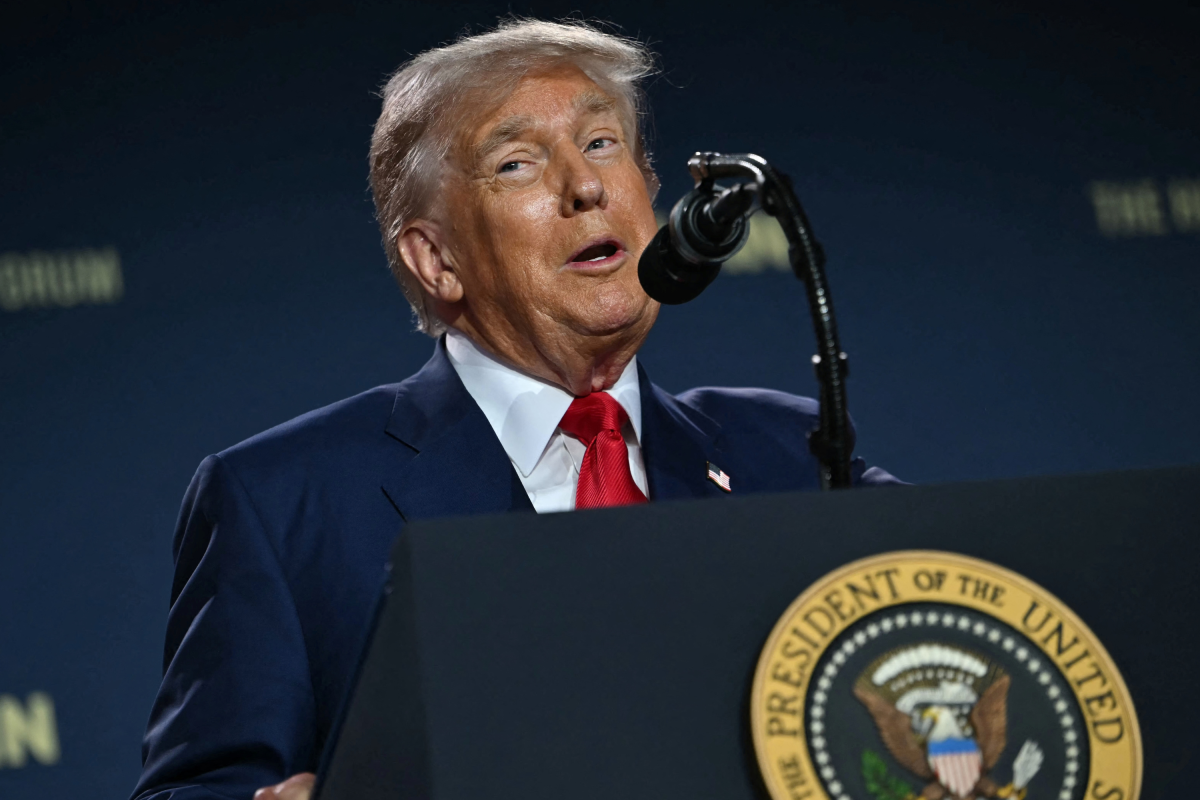
Americans who use artificial intelligence (AI) tools every day are the only group using the rapidly developing technology to give President Donald Trump a net positive approval rating, a new Rainey Center poll has found.
It comes as debate intensifies over how, or whether, AI should be regulated, with Trump recently voicing opposition to additional AI restrictions.
The data offers a fresh glimpse into the political attitudes of one of the fastest-growing technology user groups in the United States.
AI has quickly moved from a niche technology to a mainstream tool used by millions of Americans.
As policymakers, tech executives and candidates increasingly clash over regulation, understanding how AI users view political leaders could become an important indicator of future political coalitions.
A newly released survey from the Rainey Center has identified a striking divide in public opinion toward Trump based on how frequently Americans use artificial intelligence tools.
According to crosstab data from the poll, daily AI users are Trump's strongest constituency on the approval question and the only usage group where approval exceeds disapproval.
Among respondents who said they use AI tools every day, 54 percent approved of Trump's performance while 45 percent disapproved, giving him a net approval rating of plus 9 points.
Support dropped sharply among less frequent users. Weekly AI users approved of Trump by 32 percent to 67 percent, a net rating of minus 35.
Monthly users were even more negative, with 24 percent approval and 74 percent disapproval, producing a net score of minus 50.
Respondents who said they rarely use AI tools gave Trump a 43 percent approval rating and 54 percent disapproval rating, while those who never use AI tools recorded a 45 percent approval rating and 54 percent disapproval rating.
The Rainey Center survey found that 52 percent of voters use AI tools at least monthly, illustrating how quickly the technology has entered everyday life.
The findings come from the Rainey Center's September Policy Survey, conducted between September 10 and September 14, 2026, among 1,004 registered voters using an online panel.
The poll was weighted by age, gender, race, education, 2024 vote recall and region.
It carries a margin of error of plus or minus 4.9 percentage points for the full sample.
From a traditional electoral perspective, the result is surprising because Trump's strongest support is often associated with older voters and Americans less engaged with emerging technologies.
Instead, the survey suggests the president performs best among the people interacting most frequently with AI systems.
The new data therefore hints at the emergence of a distinct voter segment shaped not by age, geography or education alone, but by technological behavior.
While most groups in the survey rated Trump negatively, heavy AI users stood apart from the rest of the electorate.
That does not necessarily mean AI use causes support for Trump. AI adoption may overlap with other factors, including occupation, income, political ideology or attitudes toward innovation.
Still, the scale of the gap makes the finding notable.
The release lands during a period of growing discussion about AI regulation.
Prominent technology leaders and policy advocates have increasingly called for stronger safeguards around artificial intelligence, including transparency requirements, safety standards and oversight of advanced systems.
Former Anthropic researcher Jacob Coxon, who resigned this month, added urgency to that debate by warning that people developing advanced AI believe it “could kill us all by the end of the decade.”
Evan Hubinger, the company’s alignment science lead, publicly backed the concern and said he believed there was a greater than 10 percent chance that advanced AI could cause human extinction within the next decade, while stressing that his concern was about future superintelligence rather than current models.
Trump, by contrast, has argued against additional AI regulation, framing restrictions as a potential obstacle to innovation and American competitiveness.
That context may help explain why the heaviest users of AI tools view the issue differently from much of the public.
The same Rainey Center survey found broad support for some forms of AI oversight, including federal regulation and AI watermarking requirements.
Sixty-one percent of respondents said AI should be regulated primarily at the federal level, while 78 percent supported watermarking requirements for AI-generated content.
Yet people who use AI every day may perceive the risks and benefits of the technology differently from those who engage with it less often, potentially creating a political divide over how aggressively government should intervene.
White House spokesman Davis Ingle has repeatedly argued that Trump’s 2024 election victory is a more meaningful measure of public support, saying that the administration’s economic agenda is still taking effect.
“The ultimate poll was November 5th, 2024, when nearly 80 million Americans overwhelmingly elected President Trump to deliver on his popular and commonsense agenda,” Ingle told Newsweek in emailed comments he has used multiple times.
He added: “No other President in history has accomplished more for the American people than President Trump, who is working tirelessly to create jobs, cool inflation, increase housing affordability, and more. The President has already made historic progress not only in America but around the world, and this is just the beginning as his agenda continues taking effect.”
Newsweek’s reporters and editors used Martyn, our AI assistant, to produce this story. Learn more about Martyn here.
Contact Newsweek editors on this story: Sam Stevenson and Cristina Diciu.