
The Moral Message of Kiai Hasan
THERE ARE moments when advice doesn’t come as carefully crafted words. It unfolds like a reprimand in a family room: straightforward, slightly humorous, yet resonating long after.
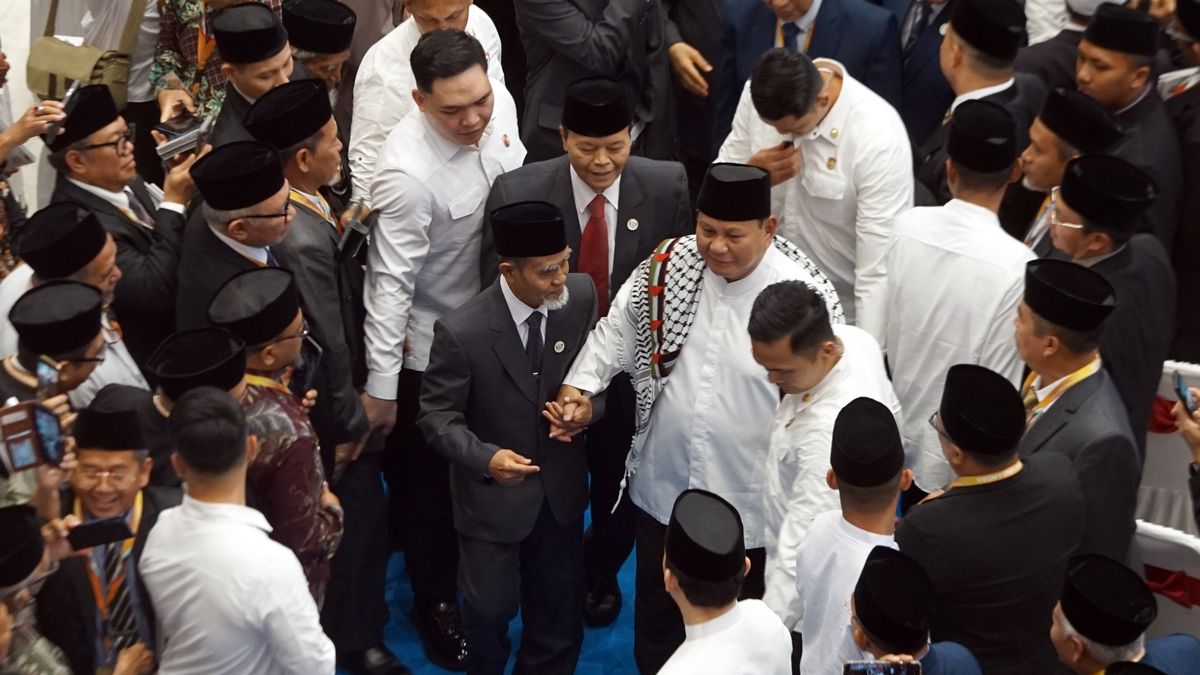
This was how KH Hasan Abdullah Sahal spoke at the 100th Anniversary Thanksgiving Reception of Pondok Modern Darussalam Gontor, in the presence of President Prabowo Subianto and the extended Gontor family.
He talked about people seeking what they do not have: diplomas, names, money, positions, even status.
Then he made a more unsettling statement: if a kiai’s food, clothes, vehicle, and home are more luxurious than what the students enjoy, he welcomes protest, criticism, even demonstrations.
The words sound simple. Yet, in a country where leadership is often guarded by protocols, praise, titles, and followers, willingness to be scrutinized is a moral event.
A leader is not diminishing himself when opening the door to criticism. Rather, he is returning leadership to the source of its authority: exemplary conduct.
“Seeking face” is an intriguing phrase. We seek face because we want to be seen. We want to appear in the view of those in power, be mentioned in important conversations, be photographed beside influential figures, or be placed in seats perceived as decisive.
In a world full of stages, the face is no longer just a part of the body. It becomes social capital.
But one can become so busy seeking face that he loses his real face.
Face, in a moral sense, is honor. It is related to feelings of shame, responsibility, and the ability to stand before others without hiding lies.
Thus, the paradox of “seeking face” is more than a joke. It touches an age-old disease of power: the obsession with recognition without first building merit.
Degrees are then chased not to expand knowledge but to embellish nameplates.
Positions are sought not to increase service but to broaden influence. Closeness to rulers is flaunted as if it were an achievement. Honor no longer grows from diligent work but is borrowed from others’ light.
Here education confronts pretense. Education requires time, patience, failure, and discipline. It does not offer immediate grandeur.
In contrast, image culture promises shortcuts: to appear successful before truly becoming a successful person.
When Kiai Hasan says Gontor continues to choose education, that choice essentially represents a fundamental cultural stance.
Education rejects shortcuts. It denies the notion that humans can be shaped merely through certificates, positions, and appearances. Humans must undergo processes that aren’t always camera-ready.
The statement about food, clothing, vehicles, and homes brings the advice into a more concrete realm.
Morality is easy to pronounce when still grand words. It becomes difficult when examined at the dining table, the wardrobe, the garage, and the doorstep.
Kiai Hasan offers a tangible measure. If a leader’s life is more luxurious than that of those he leads, something deserves questioning.
Not because leaders should flaunt poverty or consider comfort a sin. The issue is distance: how much is the comfort above built on the hardship of those below.
Physical distance can become moral distance. A leader who no longer knows the daily realities of his people will struggle to understand their concerns.
Someone always moving with an entourage might slowly forget the feeling of waiting. A person living behind tall fences can lose the ability to hear the voices outside.
Thus, simplicity is not a mere ornament of piety. It is a way to keep the moral senses alive.
By living not far from others, a leader maintains the ability to empathize. He understands that decisions seemingly small from above may be a heavy burden for those living them.

