The CEO who wanted a trust fund and got a laptop - IOL
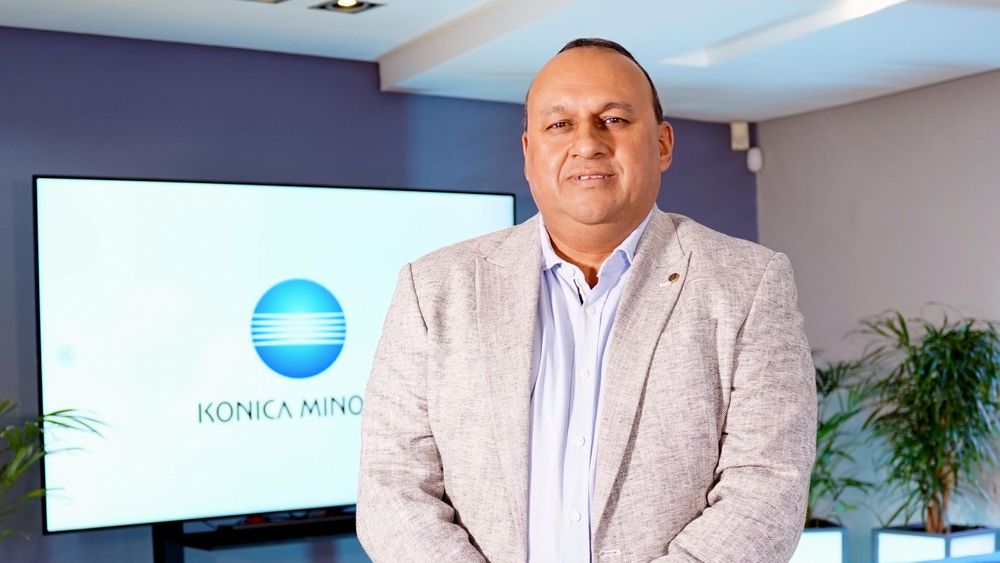
Konica Minolta South Africa CEO Marc Pillay.
If Marc Pillay had been born into a rich family with a large trust fund, he says he would probably spend his life travelling the world.
Instead, the Konica Minolta South Africa CEO travels with his laptop.
Pillay admits he struggles to switch off. His work mode is “always on”, and while he knows maintaining a healthy balance is important, putting that into practice is harder.
“Even when I travel, I travel with my laptop. It’s not because I want to micromanage anyone; I just like to know that whatever needs to happen is happening and that I can be available if something requires my attention.”
Technology has made it easier to remain connected. Pillay can work while his family is sleeping or take a call while away rather than wait until he is back at the office.
“For me, balance doesn’t necessarily mean being completely disconnected. Sometimes it simply means being contactable, because there are situations where things need an answer.”
But Pillay has also learnt that not everyone works the way he does. Someone once told him: “Don’t expect people to be like you,” a lesson he had to learn through experience.
“You can’t expect people to think like you, have the same work ethic as you or approach things in exactly the same way.”
Some people are happy to switch off their emails on a Friday afternoon and only look at them again on Monday. Pillay isn’t. If a customer or dealer contacts him over a weekend, he may not respond immediately, but he will make sure he gets back to them.
“The important lesson for me has been understanding that people are different and that doesn’t necessarily make one approach right and another wrong. You have to understand how people work, what motivates them and what you can reasonably expect from them.”
Pillay is not much of a fiction reader, but one business book has stayed with him for years – former General Electric boss Jack Welch’s "very good" From the Gut. In particular, he has carried Welch’s 70/20/10 principle into the way he thinks about employees.
The 70%, Pillay says, are people who arrive, do their jobs and deliver what is expected of them. Then there is the 20% Welch described as “driftwood”, who Pillay says need to be addressed because declining productivity and negativity can affect the business.
The remaining 10% are the people Pillay believes a company cannot afford to lose. “You have to retain them, make sure they enjoy working for the company, that they feel part of the business and that they feel appreciated.”
Despite the influence Welch’s book had on him, Pillay thinks one of the most overrated pieces of business advice is the idea that someone else’s formula can simply be transplanted into your company.
“You have to walk in somebody’s shoes in a business to really understand how to run it.”
For Pillay, leaders need to know their own business, people, market and industry, while taking from outside advice only what is useful. “You can’t simply read a book and apply everything in it as though it was written specifically for your business.”
Pillay also doesn’t tend to reverse a decision once he has made it. Instead, he puts the work in before making the call, considering the possible outcomes and consequences before committing to a course of action.
“That doesn’t mean you ignore evidence if circumstances change, but I believe the quality of the decision comes from the thinking you put into it before you make it.”
That is not always easy when some of the biggest issues facing the business are outside his control.
International events and uncertainty about how and when they will affect the business are occupying much of his attention. The company is also dealing with delays at a port, which means stock is arriving late and customer orders are not always being fulfilled in the month they should be.
“We have to focus on the things we can control and be the best we can be and navigate through it that way.”
There is also a side of Pillay that he says many of the people he works with may not see, although he doesn't think it would surprise them to know. “I’m actually quite a normal, relaxed person. I love motorsport, I love fast cars, and I love football.”
And Pillay has considerably more children in his orbit than might be expected. He has two children of his own and nine godchildren, some of whom are now scattered around the world.
“We were parents to some of these children before we had our own, so I’ve ended up with quite a few kids all over the world – at the moment, some in Japan and South Africa, as well as my daughter overseas.”
It has earned him another unofficial job title. “I’m often seen as the go-to uncle, and I quite like that.”
And then there is the travelling – and the business he would build – if that imaginary trust fund had materialised.
Pillay describes life as a blank book, with the places you see and people you meet becoming its pages. “So, if I was born into a rich family, with a large trust fund, I would probably just travel the world.”
Pillay wasn’t. Instead, he says he would likely be running his own venture, drawn to the flexibility and control it brings over how he spends his time. So, for now, he gets the travel – and the laptop comes along too.
Pillay also doesn’t tend to reverse a decision once he has made it. Instead, he puts the work in before making the call, considering the possible outcomes and consequences before committing to a course of action.
“That doesn’t mean you ignore evidence if circumstances change, but I believe the quality of the decision comes from the thinking you put into it before you make it.”
That is not always easy when some of the biggest issues facing the business are outside his control.
International events and uncertainty about how and when they will affect the business are occupying much of his attention. The company is also dealing with delays at a port, which means stock is arriving late and customer orders are not always being fulfilled in the month they should be.
“We have to focus on the things we can control and be the best we can be and navigate through it that way.”
There is also a side of Pillay that he says many of the people he works with may not see. “I’m actually quite a normal, relaxed person. I love motorsport, I love fast cars, and I love football.”
And Pillay has considerably more children in his orbit than might be expected. He has two children of his own and nine godchildren, some of whom are now scattered around the world.
“We were parents to some of these children before we had our own, so I’ve ended up with quite a few kids all over the world – at the moment, some in Japan and South Africa, as well as my daughter overseas.”
It has earned him another unofficial job title. “I’m often seen as the go-to uncle, and I quite like that.”
And then there is the travelling – and the business he would build – if that imaginary trust fund had materialised.
Pillay describes life as a blank book, with the places you see and people you meet becoming its pages. “So, if I was born into a rich family, with a large trust fund, I would probably just travel the world.”
Pillay wasn’t. Instead, he says he would likely be running his own venture, drawn to the flexibility and control it brings over how he spends his time. So, for now, he gets the travel – and the laptop comes along too.