The Africa we build together: A Heritage Month reflection - IOL
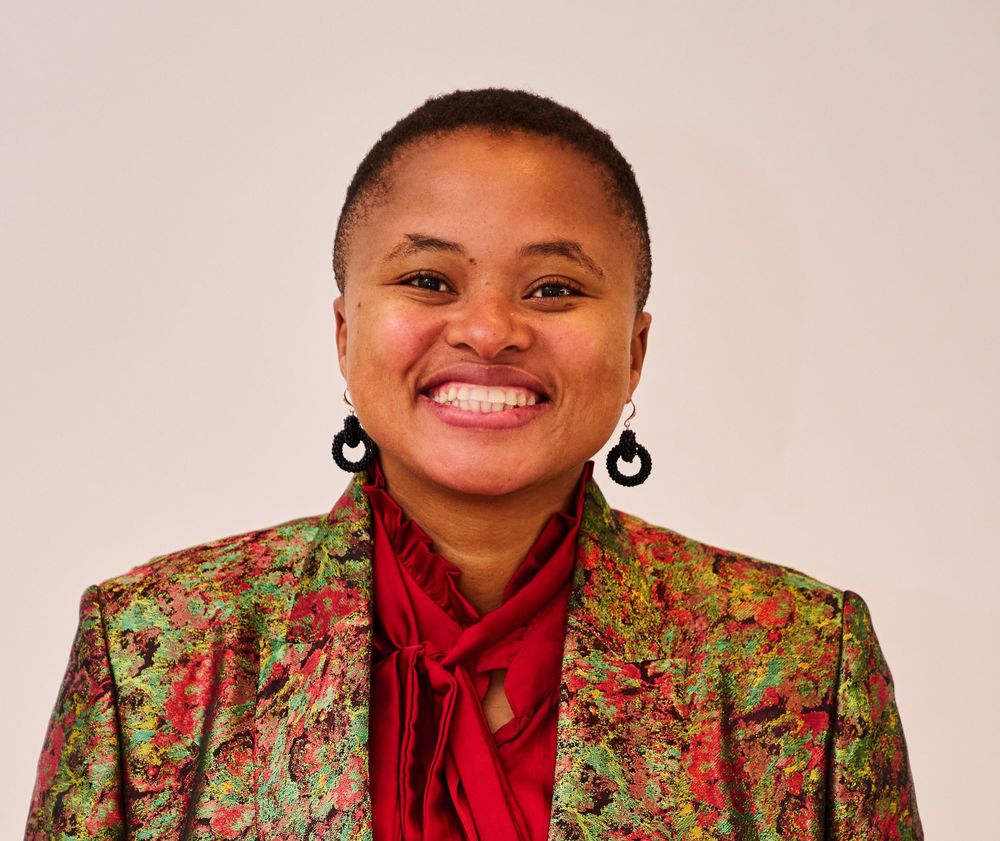
Judy Sikuza is CEO of The Mandela Rhodes Foundation.
Heritage Month invites us to reflect on who we are, where we come from and what we choose to pass on to future generations.
In South Africa, those conversations often focus on history, identity, language, culture and belonging. Yet on a continent as interconnected as ours, heritage is about more than what we inherit. It is also about what we build together.
At The Mandela Rhodes Foundation (MRF), this belief sits at the heart of our mission. For over two decades, we have invested in young leaders from 38 African countries, bringing them together to grow alongside one another. We were founded on the conviction that leadership and dignity matter, that Africa's future depends upon people able to work across differences in pursuit of our common good.
Conversations about xenophobia and social division have reminded us why our work is so important. Nelson Mandela's vision was never confined by borders, it was rooted in the understanding that our destinies are intertwined and that leadership is about service to others.
At a time when public discourse can reduce Africa to divisions and differences, the lived experience from these graduates, tell a different story. One of discovering common cause, forming bonds and leaving with a sense of who they are and what it means to belong to Africa.
One of the most striking reflections we hear from scholars is that many of them felt most African while part of the Mandela Rhodes community.
Since the first Mandela Rhodes cohort in 2005, over 54% of scholars have come from countries outside South Africa. The community we have built is intentionally and demonstrably Pan-African.
At the MRF, Pan-Africanism is something we are invited to practise constantly.
“I have always known that I am African. What I had not fully understood was what it means to be South African in Africa. The MRF unsettled that distinction for me. Coming together with young people from across the continent meant that South Africa could no longer exist in my mind only as the place I come from. It became a country that I had to encounter through other people's eyes.
“It taught me that sometimes the most important thing we can do as young African leaders is to have our certainty interrupted. My understanding of African identity has become less about finding the things that make us the same and more about learning how to remain connected across difference.
“South Africa's place in Africa is not something we inherit unquestioningly. It is something we have to keep earning.”
Nada Ben Jemaa, a current scholar from Tunisia, reflected on the community’s response during recent xenophobic tensions.
“South African scholars were often the first to reach out, checking in and offering support. What emerged was a network of care and solidarity that held us together – a refusal to let anyone navigate that fear alone.
“South Africa is a country whose history was shaped by ordinary people organising to protect and care for one another. Watching members of our community step into that same tradition reminded us that community is defined by the choices people make, when others need them most.
“That’s why I remain hopeful about this continent’s future. Its people, again and again, will choose one another when it matters most.”
They are voices of a generation that will inherit the future of this continent. It suggests that the value of Pan-African engagement isn’t simply that it broadens our horizons, but challenges our assumptions.
At its core, xenophobia demands us to see difference as a threat. Yet our scholars teach us that difference can equally be a source of learning, friendship, creativity and leadership. The very thing that division fears can be the thing from which growth emerges.
Africa faces substantial challenges. Unemployment, inequality, climate vulnerability, democratic fragility, educational disparities and questions of economic inclusion affect countries across the continent. That reality calls for leadership that is ethical, collaborative and human and for a generation capable of imagining an Africa defined not by suspicion and fragmentation, but by cooperation and mutual respect.
This is why the work of the MRF is so important. Every scholarship awarded is a step toward a stronger future. Every dialogue across difference strengthens understanding. Every opportunity to encounter another perspective expands the possibility of leadership rooted in empathy, humility and service.
When people ask what the MRF stands for, our answer is clear: Opportunity, dignity and ethical leadership. We believe young Africans, wherever they come from, deserve the chance to develop their intellectual and leadership potential. We believe in a vision of Africa where opportunities are created, not despite our diversity, but because of it.
Heritage Month offers an opportunity to remember that South Africa's story has never existed in isolation. Our past was shaped by solidarity, across borders. Our future will be shaped by the choices we make about belonging, opportunity and collective leadership.
The MRF remains proud of its Pan-African mandate and is committed to welcoming and supporting young leaders, while creating spaces where difference is encountered with curiosity and leadership is anchored in dignity.
The Africa we inherit matters. But the Africa we build together matters even more.