The 50 Most Anticipated Books of Fall 2026 - Time Magazine
Welcome the season of raked leaves, pumpkin spice, college football, and literary awards, as publishers roll out their leading contenders, a cornucopia of fiction and nonfiction to satisfy the tastes of readers everywhere. Readers, it’s time to tuck into an armchair and enjoy the bounty.
This autumn’s novels tilt toward serious topics and bold innovation, such as Marlon James’s searing queer epic; R.F. Kuang’s witty take on the “study abroad” plot; Min Jin Lee’s layered narrative of Korean aspiration; futuristic dystopias from Emily St. John Mandel and Hernan Diaz; and tales of academia from Julie Orringer and Chad Harbach. There are excellent genre offerings as well: the conclusion to V.E. Schwab’s Villain series; Bonnie Garmus’s publishing satire; demons stalking Yale in Leigh Bardugo’s horror yarn; and T. Geronimo Johnson’s speculative police procedural set in a reality-adjacent South.
Truth is often more surprising and revelatory than fiction, attested by the season’s nonfiction, which includes Ari Emanuel’s Hollywood tell-all; a hockey memoir from New Yorker journalist Nick Paumgarten; Michael Lewis’s political exposé; Mona Chalabi’s illustrated study of inequality, Ojibwe author David Truer’s confessional lament; and the late Gloria Steinem’s reflections on a life of feminist advocacy.
Here are the 50 must-read books coming out this fall.
A desert encased in snow, Antarctica comes to life in Chloe Benjamin’s brainy thriller. Reeling from a divorce and the loss of a child, Lauren Salter travels to the remote continent’s McMurdo Station, where she works as a dishwasher while hoping to jump-start her career as a biologist. When an eerie luminescence appears in the ice, she’s eager to discern its meaning. Her ex-husband, Eli, an obsessive physicist, arrives to investigate, and perhaps to re-engineer time itself. Will they find a means to rescue their son and grow younger, like “pollen pulled back into a bud?"
Is context everything? Perhaps, argues Angela Duckworth, author of the best-selling Grit. Her prescriptive new work defines context or situations as the circumstances we navigate, “not just the actual spaces but also the company” we keep, “not just the objects within sight and reach but also the cultural norms” that mold our lives. Duckworth showcases the wisdom of historical figures such as Sun Tzu and Winston Churchill and contemporary artists like Taylor Swift and Wynton Marsalis (with a cameo by Toad and Frog) to make the case that we can improve our lives by improving our surroundings. Peppered with charts and exercises, Situated is a self-empowerment toolkit with intellectual heft.
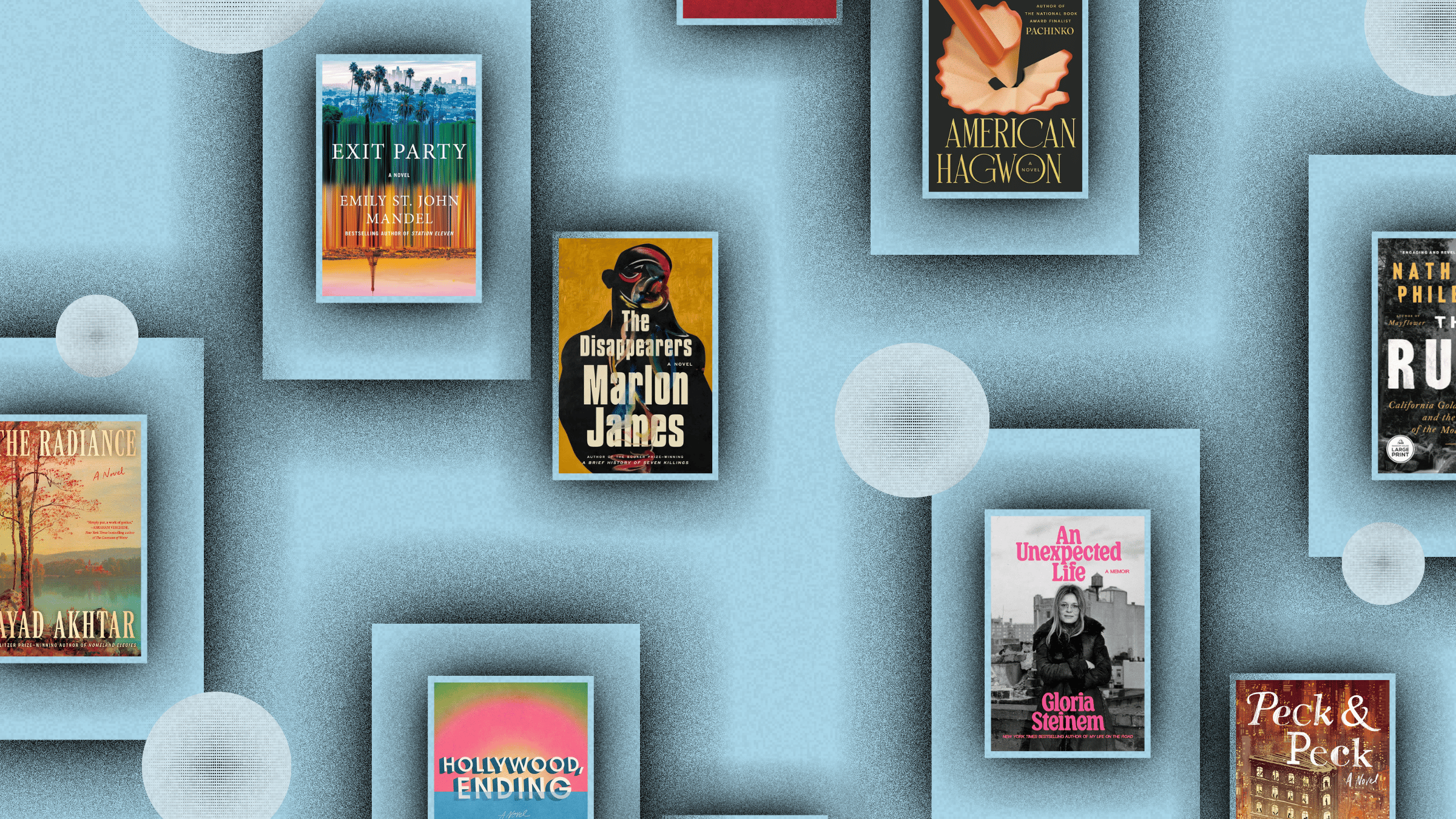
Booker prize-winning author Marlon James returns to his native Jamaica in a decades-long saga that probes the legacy of a horrific hate crime. Kingston, 1988: a group of gay Black men secretly rehearses a play set in a prison. They throw shade at one another, testing the limits of friendship and flirtation while questioning whether they can break free of their homophobic, classist society. After tragedy strikes, some disperse to London and Miami while others remain, each grappling with justice denied. Come for the reggae and Nirvana soundtracks, stay for a literary feat rendered in James’s singular voice.
The author of The Berry Pickers and winner of the 2024 Carnegie Medal, Amanda Peters toggles back and forth in time to weave a tapestry of Native resilience and ritual. For generations, Mi’kmaw women have given birth beneath a gnarled tree. In 1964, Aliet Paul’s mother dies while “pushing her into the world”; her Kiju, or grandmother, raises her in a Nova Scotia community where racial tensions simmer and secrets snap like bear traps. After her grandmother passes, Aliet, now grown, must untangle the enigma of her origi
No scholar has had a better year than MacArthur “genius grant” winner Emily Wilson, whose translation of The Odyssey launched a thousand debates and inspired director Christopher Nolan’s film adaptation. Now she distills her erudition into a breezy, book-length tutorial on Greek and Latin literature, teasing out the influence of classical titans—Homer, Catullus, Aeschylus, et alia—on authors as varied as Shakespeare, George Eliot, and Anne Carson. From “Slut-Shaming Helen of Troy” to “Chill Out with the Stoics,” Wilson resurrects antiquity while pondering the intricacies of the translator’s craft.
Oligarchs are on the move, literally, in Emma Cline’s dazzling novel about an elderly American mogul’s appointment with death. Accompanied by his loyal assistant, David crisscrosses Europe, first to London, where he dines with his expatriate daughter, then to France for a reunion with a past love, and eventually on to Zurich, where assisted suicide is legal. He jots notes, flooded with memories and regrets, rendered in Cline’s terse, precise prose: “there was always this song in the background, this melody, and you’d start to hear it more clearly when the end was near.”
Mark Twain’s trope of innocents abroad takes a winsome turn as prolific novelist R.F. Kuang recounts the misadventures of Lily Chen, a Yale student who enrolls in a summer language program in Taiwan, hoping to absorb a heritage that both eludes and excites her. She pores over perplexing grammar, samples delicious cuisines, bickers with her roommate, and compares her looks to the Taiwanese ideal: “The standard was prepubescent celestial fairy: pale porcelain skin and shiny black hair; no boobs.” After her grandfather’s death, Lily confronts familial riddles even more intimidating to her than meanings for individual Chinese characters.
Priya Parker opens her new book with a confession: “I became a conflict negotiator not because I am fearless, but because I hate conflict.” In her new book, she repurposes conflict as “normal and natural and necessary” when directed toward positive goals. Parker roams among subtopics: common triggers, forcing mechanisms, and problems of misdiagnosis. She sprinkles anecdotes among her prescriptions and dispenses wisdom to individuals and businesses alike: “don’t throw the baby of insight out with the bathwater of gossip.” Perhaps the value of conflict boils down to a simple question: Which fights are worth it?
Natalie Gallagher, the cheeky narrator in Sarah Anderson’s debut, works a menial job until an impacted tooth drives her mad with pain. The expensive oral surgery steers her to The Company, which offers a robust salary in exchange for services as a “Gestational Carrier” to desperate couples. As her bank account swells, she luxuriates in exercise and yoga: “All at once the edges of my life were sanded away.” Yet there’s a high price ahead: each pregnancy stretches not only her body but also her heart. Anderson’s novel is an allegory on the commodification of motherhood and identity, reminiscent of works by Margaret Atwood.
Kate Atkinson’s new novel blends the twists of her detective fiction with a passion for history. At the end of World War II, journalist Harry Flynn heads home to London from Singapore, landing a job with the Festival of Britain, designed to perk up the country’s lagging spirits. Amid rich meals, booze, and sex, Harry finds himself embroiled in the disappearance of a French woman whose “Gallic disdain” had briefly enchanted him. As the last to see her, he’s the prime suspect. Atkinson weaves genre conventions into deeper themes, flickers of desire in a broken world.
College is often hellish—think stressful exams, messy roommates, and romantic breakups—but it’s literally hell for Alex as she wrangles demons across Yale’s leafy campus in this finale to Leigh Bardugo’s Ninth House horror trilogy, which is equal parts Harry Potter and Buffy the Vampire Slayer. The streets of New Haven have become a war zone: Alex confronts supernatural foes, the corrupt leaders of Lethe House, and a growing unease with her beloved mentor, Darlington. With a flair for Gothic creepiness, Bardugo lampoons the storied Ivy League university’s secret societies, taking Skull and Bones to the next level.
When Allison Sweet Grant, a writer and nurse practitioner, feels a lump in her breast, she plunges into a vortex of treatment and despair. Barely 40, with three young children, she confronts a darkened world and even altered language. The word lump “used to be a comfort. Hide-and-seek beneath a giggling pile of blankets. Mom’s mashed potatoes. Sugar in your tea.“ Grant recounts the ordeal of chemotherapy and a fear of mortality in impressionistic poems and observations, armed with a droll wit and an urgent need to get it all down on the page.
Los Angeles, 2031: in the aftermath of the nation’s collapse, a young woman and her roommate skirt checkpoints and encampments to attend a party where they stumble onto a cosmic mystery. Characters rotate in and out of doors and rooms, doppelgangers from an adjacent timeline and an alternative United States. Once Ari slips across the thin membrane between realities, she discovers parallel lives with vastly different outcomes. Emily St. John Mandel’s puzzle box of a novel delivers dystopian suspense and a meditation on our fragile democracy, capped by a sage warning: “the avoidance of patterns can save your life.”
A Mexican woman encounters a ghost while on a trip to Belfast. A massive demonstration taps the power of women from cities and hinterlands. A journal about Latin American workers in an Alaskan village beams a light into the future. A young couple may or may not have an amorous adventure: “We aren’t in love, they didn’t murmur while falling asleep.” In seven dense, genre-blending stories translated by Christina MacSweeney, the Pulitzer laureate bends the form to fierce political themes.
An English novelist, “Naomi Alderman,” installs a camera in her recently deceased mother’s garden and captures a badger-like creature with a trunk, affectionately dubbed a mimmoth. The Furby-like species—previously unknown, with the longest DNA sequence ever observed—carries mystical powers across the globe: some societies experience spikes in health after contact while others face a plunge in birth rates. Are the mimmoths good or bad for humanity? Alderman spins an engrossing tale that is ultimately about the fog of grief, an M. Night Shyamalan film in book form.
One of Hollywood’s most accomplished and feared agents narrates his own high-stakes story in a high-decibel register. Raised near Chicago, Ari Emanuel was diagnosed with dyslexia and gravitated to show business, starting in CAA’s mailroom and rising to the head of William Morris Endeavor. His autobiography spills the tea—signings and firings, triumphant mergers and nasty breakups, tactical victories and crushing mistakes—all while he painfully juggled a personal life in the limelight. His memoir is reminiscent of such Tinsel Town classics as Neal Gabler’s An Empire of Their Own and Julia Phillips’s You’ll Never Eat Lunch in This Town Again.
“In the future, everyone will be famous for fifteen minutes,” Andy Warhol quipped to TIME some 60 years ago. His insight pervades John Green’s glamour-besotted new novel, which showcases a Warhol biopic and two Hollywood newcomers, Kai and Juniper, whose red-carpet aspirations unspool beneath the glare of paparazzi, the film’s mega-wattage star, and the possibility of love. There are artistic highs and career crashes in a tale loaded with showbiz lore and American obsession with celebrity. “The hardest thing in life is to be small,” Kai says, “to be at other people’s mercy.”
The late founder of Ms. and queen mother of American second-wave feminism narrates her trajectory from Midwestern rules-follower to politically conscious Smith student to fervent activist who sought to braid communities of women across lines of race, class, and sexual identity, with cameos by Jane Fonda, Fannie Lou Hamer, and Betty Friedan. Gloria Steinem tells the story of her “trial and error” public life with delicious personal details—her Red Cross card, a candid 1973 photo with Simone de Beauvoir—highlighting friendships and muses and travels abroad while always circling back to the Manhattan apartment she called home.
Privilege has its perks and perils, as Ayad Akhtar explores in an autofiction set amid the Hudson River Valley. In the wake of a hit-and-run incident, a well-heeled writer, “Ayad,” emerges into a reality lit by a spectral otherness: “My body and I were two, and from that two, a one was struggling to be born.” As he recovers, he finds himself embroiled in a dark-academia drama, from Me Too accusations and professional rivalries to family secrets and religious conflicts. In a novel enhanced by the author’s digressions, footnotes, and unreliable narration, Akhtar offers a twisty work of literal and metaphorical self-regard.
Hernan Diaz, author of the Pulitzer Prize-winning Trust, here conjures a dystopian, stateless future and an all-too-human desire to redo the past. Centuries from now, a young orphan lurks among the fringes of a coastal city, stealing electricity to sell on the black market, particularly to alt-music bands. Haunted by a lost literary culture and memories of her genius mother, she and her peers eke out a living as nature reasserts itself, from nesting shorebirds to a profusion of berries. A mysterious stranger, a technological breakthrough, scrambled identities: all merge in Diaz’s portentous parable.
In 2023, a New York subway car became the stage for a Shakespearean tragedy: Jordan Neely, a troubled Michael Jackson impersonator, and Daniel Penny, a former Marine, grappled in a chaotic encounter that left Neely dead. The incident launched a fleet of op-eds and podcasts as Penny stood trial for manslaughter and criminally negligent homicide (after the jury deadlocked on manslaughter, prosecutors dropped the charge, and Penny was acquitted of criminally negligent homicide). Based on extensive reporting with players across the political spectrum, and Penny himself, Anand Giridharadas portrays the case as a racial Rorschach test, devoid of easy resolution: “Was it work that could be done in a flawed democracy, in an age of fear?
Intrigued by court rulings on the Second Amendment, the best-selling polymath and journalist Malcolm Gladwell probes the United States’s gun culture and propensity for violence, shifting across regions and timelines, from antebellum rice plantations in South Carolina to crime-infested Chicago neighborhoods to suburban Aurora, Colo., whose police chief lays out his department’s complex cases. Gladwell exposes how and why our nation’s obsession with firearms is unique, despite its roots in Britain and elsewhere. “No amount of rational persuasion, or economic intervention is going to disrupt that pattern,” he argues. “You need to rewrite the pre-written script.”
The author of Blackout revisits a trio of romances, illuminating the thrill of attraction and the rough road to commitment. Sarah Hepola plunges into a dispiriting affair with a married man, matches with a young Texan on Tinder, and reconnects with a detective she’d met in New Orleans years earlier. She laments the dilemma of “girlbosses” like her: “We had corner offices and titles with our names, but love and marriage were proving far tougher hurdles.” Wanting a child but refusing to settle for Mr. Wrong, she reaches an epiphany: “Men are mysteries, and maybe I like it that way.”
The author of Hidden Valley Road delivers a stellar companion piece with powerful implications for genetics-based medicine. In The Vanishing Family, Robert Kolker tells the story of one suburban Pittsburgh family that was wedged apart by a neurodegenerative condition. Married in 1950, Ollie and Jean had nine children over 25 years. The youngest, Barb, was forced to shoulder the burdens of her parents’ unraveling union and the erasure of her mother’s personality by frontotemporal dementia (FTD). A few siblings fell victim to the same fate. In Kolker’s reporting, Barb makes for an appealing sleuth in a tale of DNA lab breakthroughs and future therapies for this devastating diagnosis.
Meet the Kohs: Helen, the thrifty, organized matriarch; her husband John, a “high-functioning introvert” lost in his career; their sons Bo and DH; and shy daughter Mido. They’re a family on the move, from New Jersey to Sydney to Seoul, strivers with secrets, aiming for an elite tier of education. A financial crisis steers their journey in reverse, back across three nations, jeopardizing their blueprint for success. Min Jin Lee, author of the National Book Award finalist Pachinko, delivers a panoramic saga that opens onto the cumulative impact of diaspora on individual lives: “family had far too many unknown variables.”
Ancient Greek myths continue to resonate in popular culture—consider the success of Christopher Nolan’s blockbuster, The Odyssey—but also in literature. Few authors have reimagined the world of gods and heroines better than Madeline Miller; and in this highly anticipated new short story, she recounts the legend of Mestra, daughter of the King of Thessaly, whom Poseidon endows with shape-shifting talents. In her battle against a patriarchal order, Mestra changes form, from deer to fox to galloping horse—"air heaved through me, in and out, tasting of sun and dust”—a rebuke of the men who seek to control her.
Tammy Faye Baker meets Oprah Winfrey in Deesha Philyaw’s rollicking satire of religion and celebrity, from the AIDS plague to the Obama era. Scharisse “Schar” Freeman escapes humble beginnings to marry a megachurch pastor. She embodies Black prosperity gospel, spreading entrepreneurial good news through televised sermons, inspirational books, and clothing lines while fending off mean-girl rivals. When she competes in the First Lady USA pageant, she senses the emptiness of her “24-7 performance,” and as a scandal threatens her status as “the Beyoncé of evangelicals,” she confesses that she’s “been scraping the bottom of the Biblical barrel for years.”
Livia, a brilliant pianist who has long given up a career for marriage to a farmer, gets a call from a former lover, Sigurd, who’d stoked her creative fires 20 years earlier. He wants to reconnect. As she recounts their torrid relationships in flashbacks, her musical muses come to her: Chopin, Mozart, Haydn, and Handel. Men long dead and very much alive pull her heartstrings in the new novel from Barbara Kingsolver, winner of the Pulitzer Prize for Demon Copperhead.
You can’t go home again, Thomas Wolfe opined of his native South; but George Washington Jonson, an Army vet turned cop and the protagonist of T. Geronimo Johnson’s Cubist tale, takes a crack back in his hometown, Atlantis (a stand-in for Atlanta), where he patrols the gritty Bricks, his old stomping ground, while starting a family in the wealthier northern suburbs. A violent encounter with a white teenager shatters his reality as Johnson’s narrative splits apart, a homage to deadpan police procedurals, pulp novels, and a searching meditation on the enduring stain of slavery.
The author of the best-selling novel Behold the Dreamers unpacks the fears and aspirations of a Cameroonian immigrant in New Jersey and his struggles with psychic pain. Three years after his pregnant wife was killed in an automobile accident, Wolo has rebuilt his wrecked life. Then he receives a distraught letter from the woman responsible: Victoria Clark, a Delta pilot, who seeks his forgiveness. Despite his mother’s misgivings, Wolo agrees to meet Victoria, pulling his family back into a morass of grief. Imbolo Mbue limns the nature of loss amid the stresses of blighted relationships, imperfect faith, and unfulfilled promises.
A shooting at a bus stop robs Maya and Jen of their college friend, Claire; and the two 40-something Brooklynites attempt to patch themselves together, with mixed results. Maya, a private-school tutor, narrates the tragedy’s immediate aftermath in the novel’s first half, confronting edgy feelings and her own situationship with a man she calls the “memoirist.” Jen, a nonprofit professional, picks up the story in the second half, mulling Claire’s death, her own romance, and the myriad ways mid-life relationships falter and somehow prevail. Lydia Millet’s precise prose is the star of her new novel.
In 1849, the news went forth via telegraph: there’s gold in them there hills (more precisely, in the Sierra Nevada Mountains). Nathaniel Philbrick, winner of the National Book Award, recreates the surge of miners, millers, hucksters, and sex workers that came to California, highlighting how the Gold Rush maneuvered the nation toward a bloody civil war as slaveholders and abolitionists wrangled over the distant territory’s entry into the Union. He draws connections between staggering fortunes and the Southern strategy to expand slavery westward, an inescapable bind of race and class, from sea to shining sea.
Are you ordinary or ExtraOrdinary? In the conclusion to her fantasy Villain series, V.E. Schwab pits Eli Ever and Victor Vale, EOs and former soulmates now sworn enemies, in a quest aimed at others like them, survivors of near-death experiences and those gifted with otherworldly powers that threaten humanity. EOs are monitored by a government agency, with Eli and Victor lurking in the shadows, “driven by some kind of God complex.” A doctor brings his dead wife back to life; an estranged couple reunites; and the two men circle ever closer, locked in a vicious duel—who will prevail?
In the wake of the George Floyd protests, David Treuer, author of The Heartbeat of Wounded Knee, writes a letter to his children, interrogating the conundrums of the American Experiment and channeling his rage at racial injustice and ethnic cleansing of all sorts. He blends memoir with cultural scholarship as he peers back to the cruelties of Manifest Destiny, ticking off slaughters and dispossession of Native lands, and arriving at a foundational truth: “We all exist at the end of a process that suggests to me the problem is not out there so much as it is within all of us.
A New York Times journalist interrogates the century’s greatest transformation in an authoritative exposé of artificial intelligence’s rise and the human desire to cash in. From tech labs to corporate boardrooms to Washington agencies, Kevin Roose goes deep into the weeds at three companies—OpenAI, Anthropic, and Google Deep Mind—between 2016 and 2026, a decade that saw Donald Trump’s elections, a Covid pandemic, and widening inequality. Roose’s topical reportage breaks down complex codes, business deals, and the egotists who can’t resist the chance to play God.
At the dawn of Trump 2.0, the Department of Government Efficiency—DOGE—rode into Washington like Dodge City cowboys, whipped to a frenzy by Elon Musk. Michael Lewis, the author of the classic Liar’s Poker, profiles six imperiled seasoned workers, or “blockers,” as an administration bore down on them “like a meteor strike.” He raises unsettling questions about anti-democratic forces at war with the nation’s constitutional order.
The author of Lessons In Chemistry evokes highbrow 1980s Manhattan against a backdrop of spiking crime in a novel that’s part caper, part time capsule. A wordsmith fresh out of college, Batter Gray lands a job at Peck & Peck, a prestigious literary journal run by dueling twin brothers and staffed with snobbish editors. Hoping to fit in, he describes himself as a “real live being who could write upbeat memos, quote poetry.” But not so fast for this eager beaver: Bonnie Garmus poses hard questions about the high stakes of culture and ambition, who has real talent and who sorely lacks it.
Novels about writers are a familiar trope, but Julie Orringer injects fresh vitality here, charting one couple’s personal and professional stresses, some self-inflicted. When Barr Pennington, a Midwestern author, moves his Alzheimer’s-afflicted wife, Dava, a literary scholar, into a caregiving home, he discovers Dava’s secret manuscript, her only work of fiction. Barr, enraged by what the novel reveals about their life together before her illness, transcribes the work and begins to make changes to the text, plotting a path to prizes and acclaim. Orringer reveals the highs and lows of their marriage as she moves between the perspectives of their sons, friends, and colleagues. There are messy affairs, the whipsaw of unbridled ambition, and an otherworldly dog who helps to set things right
Evangelical Christian pop star Julianna Glasse seemed to have it all: a devoted husband, a professional baseball player; three beautiful children; stadiums packed with fans; private audiences with Michelle Obama and Donald Trump. But beneath the curated surface her resentments seethed, nursed by hidden copies of Plato and Nietzsche and secretive swigs of vodka. Glasse’s candid memoir recounts how she shed a patriarchal culture and embraced books—not just the Bible—as a means of personal liberation, handling a public divorce after her affair, and forging a path as a queer ally, with Whitman and de Beauvoir as guides.
Longevity experts agree that social relationships are a key factor in prolonging lifespan and healthspan. Best-selling author and wellness writer Adam Grant plumbs the isolation epidemic: in just three decades (1990-2020) the number of Americans with no close friends quadrupled. (Men in particular suffer from loneliness.) Grant unveils his own prescriptions for richer connections, from “Striking a Match” to “Planned Serendipity,” underscoring the value of communication. His toolbox includes bursts of laughter, conversational validation, and even silence. There’s nothing more important than finding kindred spirits: “We vibe when we connect on a common wavelength.”
The nocturne heralded a revolution in classical music, catalyzed by half-forgotten Irish composer John Field and his French wife, Adelaide. Pulitzer finalist Yiyun Li brings these historical figures to center stage in a novel that unfolds from Europe to India to Moscow, contemplating the yin and yang of inspiration and obsession and the chasm between mastery and mediocrity. “Some people are susceptible to music or poetry,” Li writes, “some to the beauty of a starry sky or a mathematics equation, and some, unfortunately, mortally, to envy.”
One sultry summer, a trio of cousins hunkers down in their dead grandmother’s house. Mandy, the oldest, confesses secrets to her diary; the youngest, Yangyang, seems stranded between reality and a rich fantasy life; and Cindy wakes each morning to discover a peculiar object in her mouth—a button, a cat’s claw, a coin—all talismans of a Gothic mystery. When a demon with a mouth the size of a needle-hole sweeps into their lives, all hell breaks loose. K-Ming Chang’s thriller brims with ghosts and vengeance as her characters target villains both real and supernatural.
One of Japan’s preeminent writers recalls a childhood incident when he and his father decided to leave an older cat near a beach. Man and son biked back only to find the cat inside their front door, “greeting us with a friendly meow, its tail standing tall. It had beaten us home.” From this opening, Haruki Murakami unspools an impressionistic memoir (or is it autofiction?) translated by Philip Gabriel, reflecting on the challenges men faced in the wake of World War II. He explores Buddhism, devotion to family, blunted ambition, and the oversized roles felines play in our lives.
Long revered as a writer’s writer, the late Wendell Berry conjured the rhythms and textures of country life in a career that spanned nearly seven decades, championing agrarian folkways and environmental protections while prophesying the dangers of predatory capitalism. These 12 essays strike a political tone—gentle yet urgent, delivered in a preacher’s cadences—as he calls out gun violence, ecological ruin, urban caricatures of rural cultures, and “industrial suppliers” like Walmart: “I have opposed the dominant attitudes and technologies by which we are destroying . . . our country itself, our land.
Fifteen years after his lauded The Art of Fielding, Chad Harbach returns with a ruminative sequel set in 2015, following affianced 27-year-old Pella and her friend, Irma, a senior at Westish College, as they stare down reality beyond their cloistered Wisconsin lives. Harbach reprises characters and situations from his earlier novel while spotlighting a brave new world: a campus prank gone wrong, a manic wedding on Block Island, and the “Scheherazadeness” of sexual ecstasy in New York City. He recasts Fitzgeraldian conflicts for the 21st century: bright, beautiful creatures adrift in a sea of privilege and discontent.
Jane Schoenbrun’s mind-bending fiction debut screams “instant cult classic.” The director of Teenage Sex and Death at Camp Miasma parlays their visual storytelling skills into a spooky thriller about a mysterious television network, plaiting three stories: a Dallas weatherman’s 1988 on-air suicide; a pair of teenagers who stumble onto disturbing broadcasts in 2009; and Bethany, a trans woman who screens content for an Austin corporation and encounters a signal from the sinister Public Access Underworld in 2026. Schoenbrun revels in horror and speculative elements, writing a multimedia mashup that reflects our destabilized world.
In this compassionate, vulnerable memoir, a Hollywood legend revisits iconic roles such as Kunta Kinte in 1977’s Roots; Geordi in Star Trek: The Next Generation; and as host of Reading Rainbow, which brought the beauty of books to millions of children. Born to a violent father and a mother “who raised hell and eyebrows,” LeVar Burton channeled a painful childhood and his acting ambition into a breakthrough career, even as he struggled with mental-health crises, the challenges of family, and a new calling as a literacy advocate. His mantra: “I am first and foremost a citizen of this world.”
New Yorker journalist Nick Paumgarten plumbs his zeal for hockey, centering on the team of middle-aged men he plays with and his desire to pass along his passion to his sons, which sparks friction. (He ends up in the penalty box at one of their games.) The sport compels Paumgarten to evaluate masculinity, the minefields of male friendships, and the process of aging, a man’s body forever a work in progress. As he says of his teammates: "Bone chips floated in our elbows. Cysts blossomed in our joints . . . MRIs and sonograms were diving bells, deployed to the ocean floor."
Midwestern, middle-class, and an abuse survivor, Eileen frets over the price of groceries. Tiffany, a low-income Black Ohioan, manages to hold onto her house. Levi wrestles with gambling debts that tip him toward poverty. Jacob, an affluent Manhattan financier, worries about his wife’s health care costs. Pulitzer Prize-winning journalist Mona Chalabi blends expert interviews and razor-sharp analysis with striking graphics, delving into 10 American lives from disparate economic tiers. She crunches numbers and weaves in her own British background, offering a portrait of a nation whose stark inequality threatens its future.
In the fifth volume of her popular septology, Danish author Solvej Balle (translated by Jennifer Russell and Sophia Hersi Smith) drops her narrator, Tara, into another November 18th, caught in a ceaseless Groundhog Day, mulling how time both is and isn’t. Now in France, she’s lost her beloved husband and fellow bookseller, Thomas, but has found solace in a band of merry refugees—Henry, Olga, Milas—trapped beneath a cosmic bell jar, all officially off the clock and attempting to patch together a common fabric of memory. “We can investigate the world in innumerable ways,” Tara says. “We can make incisions at different points, probing here and there.”