Tgee builds legacy from one game to another - Inquirer Technology
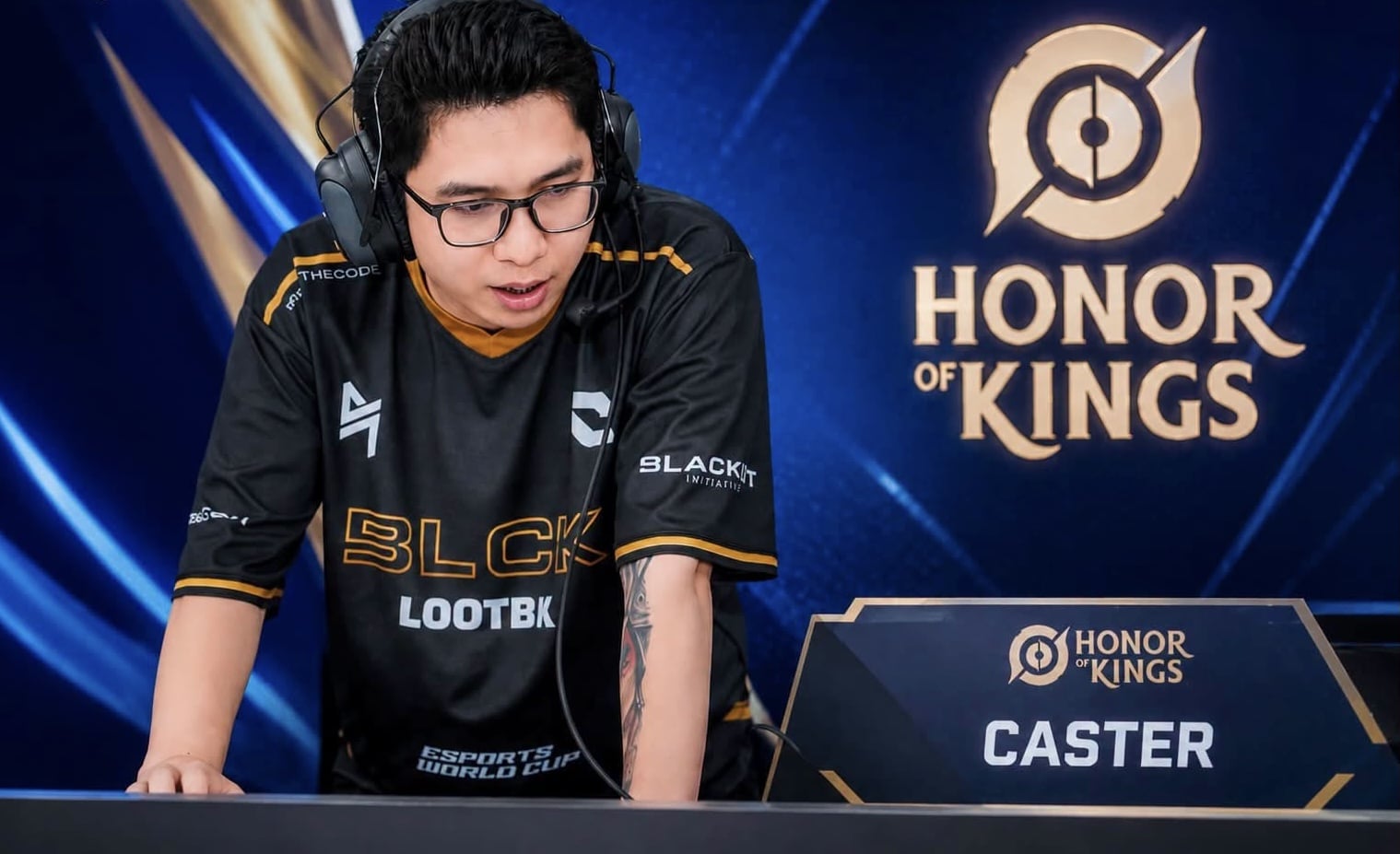
MANILA, Philippines – For more than a decade, JGame Esports coach Gerald “Tgee” Gelacio has navigated the shifting landscape of competitive esports, moving from League of Legends (LoL) to Wild Rift (WR) and eventually, Honor of Kings (HOK).
His journey has been shaped by international competition, championship runs and even the uncertainty of building a career in an industry where an established competitive scene can disappear almost overnight.
Tgee’s involvement in gaming began long before he entered the big leagues. As a young player, he spent time playing League casually before eventually turning his attention to tournaments and organized competition.
His early years coincided with a Philippine esports scene that offered almost no guarantee of a sustainable career.
While the esports scene in the country now flourishes with multiple leagues that offer pro players a chance for a sustainable path, it hasn’t always been that way. Not when Tgee was on the rise, that is.
Support from organizations and regular salaries were far from sure things, making it difficult to convince his family that gaming could become more than a hobby.
The 33-year-old tactician initially kept his competitive pursuits from them, balancing schoolwork with practice so he could devote time to gaming after completing his academic responsibilities.
That changed when he and his teammates in Mineski began finding success in international qualifiers.
In 2013, Tgee competed in the LoL World Championship as a support player for Mineski, which earned its place in the Season 3 World Championship after winning the Southeast Asia regional qualifiers through the Garena Premier League (GPL).
Backed by his solid ensemble of Elijah “Snoy” Guerrero, Lance “Kaigu” Hernandez, Danyll Jann “Yume” Balisi, and Eric Allen “Exo” Gubatan, Tgee made GPL his stomping grounds.
The team advanced to the main event in Los Angeles, California, where it faced the world’s top teams.
The breakthrough helped persuade his family to support his pursuit of esports despite the uncertainty surrounding the industry.
His first salary, however, was far from the earnings associated with established professional players today.
“My first ever salary at the time was just ₱3000. To play all the time is really just my passion,” Tgee recalled.
Tgee said he saved what he earned to cover transportation between Sampaloc and Taft, highlighting the modest beginnings of a career that would eventually take him to the global stage.
Before organizations and professional opportunities became more established, access to equipment and a place to practice was already a significant advantage.
Tgree recalled how Mineski provided his team access to a computer shop where they could train and improve.
Despite his preference for staying with one game, however, Tgee eventually moved away from League of Legends PC as competitive opportunities in the Philippines became increasingly scarce.
WR offered an alternative at a time when its competitive roadmap and prize pools attracted players looking for a viable esports career.
“The prize pool was so big that it encouraged me and the other players to try it,” he said, explaining why he decided to explore the MOBA scene.
The transition was more than just merely learning another game.
Aside from shifting from one meta to another, quite literally, Tgee had to start from scratch and climb the ranks again from square one.
It was also a response to the changing competitive landscape, as local tournament opportunities dwindled and international qualification became increasingly difficult.
For Tgee, the move eventually led to one of the defining achievements of his career: a gold medal at the 2023 Southeast Asian Games in Cambodia.
The achievement came with the promise of continued competition.
But, that outlook changed when the Wild Rift esports program’s future became uncertain and its previously announced competitive plans were withdrawn or suspended.
Tgee said the announcement was particularly difficult because the players had come to regard esports as their livelihood.
“We also considered it our work. For us, it was sad, but there was nothing we could do about it.”
For a player who had already experienced the decline of one competitive scene, the prospect of losing another was a familiar disappointment.
Still, it was not the end of his career.
The old adage reads; “get knocked down seven times, get up eight.” No other saying seemingly fits Tgee like a glove.
Now an Honor of Kings coach for JGame Esports, Tgee has carried the lessons of his years as a competitor into a new role, drawing on his experience across multiple multiplayer online battle arena (MOBA) titles.
That, however, doesn’t stop him from reflecting on the “what could’ve beens,” from LoL to WR.
“I think personally, patay na siya kasi nawala yung esports niya dito sa Pinas, sobrang dalang,” Tgee said of LoL’s status in the country, describing how the dwindling number of tournaments pushed him to explore other games.
It was a difficult reality for someone who had been competing since 2012, but it also marked the beginning of a career defined by adaptation.
As Wild Rift’s competitive future became uncertain next, HOK presented another opportunity. Tgee said the timing of the game’s tournament plans, alongside an offer from Blacklist International in 2024, prompted him and his teammates to give it a try.
“We tried it. Blacklist offered us the opportunity to try Honor of Kings, and that’s when we thought, ‘Sure, let’s give it a try. It’s a new game,” he said.
The adjustment, however, required a considerable amount of work.
Familiarity with the MOBA genre gave Tgee a foundation, but it did not eliminate the need to understand a new game’s heroes, abilities and mechanics.
“It was difficult at first. We were like students because we studied the heroes and their skills every day,” he said. “We studied three to five heroes per day.”
The team approached the transition through daily study and practice, learning the game one hero at a time.
For Tgee, his past experiences—both the bad and good—reinforced the value of the knowledge he had accumulated across different titles. While each game had its own systems and nuances, his understanding of the MOBA genre allowed him to adapt more readily.
“The games I play are all MOBAs, so the transition is easy. You just have to learn how the game works because there are differences,” he said.
“The good thing is that we already have a base of knowledge.”
That experience now informs his work in coaching, where familiarity with the genre must be matched by an understanding of the particular demands of Honor of Kings.
After more than a decade in competitive gaming, Tgee acknowledges that his new hat demands some difficult stretches.
Losing scrims and struggling in tournaments can lead to burnout, he said, but he has learned to regard those periods as part of the job rather than reasons to walk away.
“There are times when I experience burnout, especially when we keep losing in scrims or tournaments. But that’s okay because it’s part of coaching and playing,” he said.
His continued involvement in esports, he added, comes from a passion that predates the professional opportunities he eventually found.
“I also don’t give up because this is my passion, which is why I’m still here until now.”
That persistence has since translated into success in Honor of Kings, where Tgee led Blacklist International to the Philippine Kings League (PKL) Fall 2025 championship after a 4-3 victory over BOOM Esports in the grand finals.
He later guided SIBOL’s HOK team to a bronze-medal finish at the 2026 Asian Games in Aichi-Nagoya, Japan, where the Philippines bowed to defending champion China in the semifinals.
For Tgee, the value of his career is not limited to the tournaments he has entered or the medals he has won. It also lies in having continued to pursue the work through changes in games, teams and competitive opportunities.
Asked what he would tell his younger self, he looked back on the decision to pursue esports and the family that eventually came to support it.
“I’m very proud of myself because I really pursued what I wanted to do in life, and I’m happy that it started out of passion and not for the money,” he said.
“I’m very thankful to my family because they eventually supported me.”
From the early days of practicing at a computer shop to competing internationally and taking on coaching responsibilities, Tgee’s career has repeatedly required him to learn something new.
The games may have changed but the decision to keep going has remained the same.