Taxpayers have spent $49M to feed the National Guard members stationed around DC for the last year
Want to bookmark your favourite articles and stories to read or reference later? Start your Independent Membership today.
Tens of millions of taxpayer dollars have been spent to feed National Guard members stationed in Washington, D.C., according to a new report.
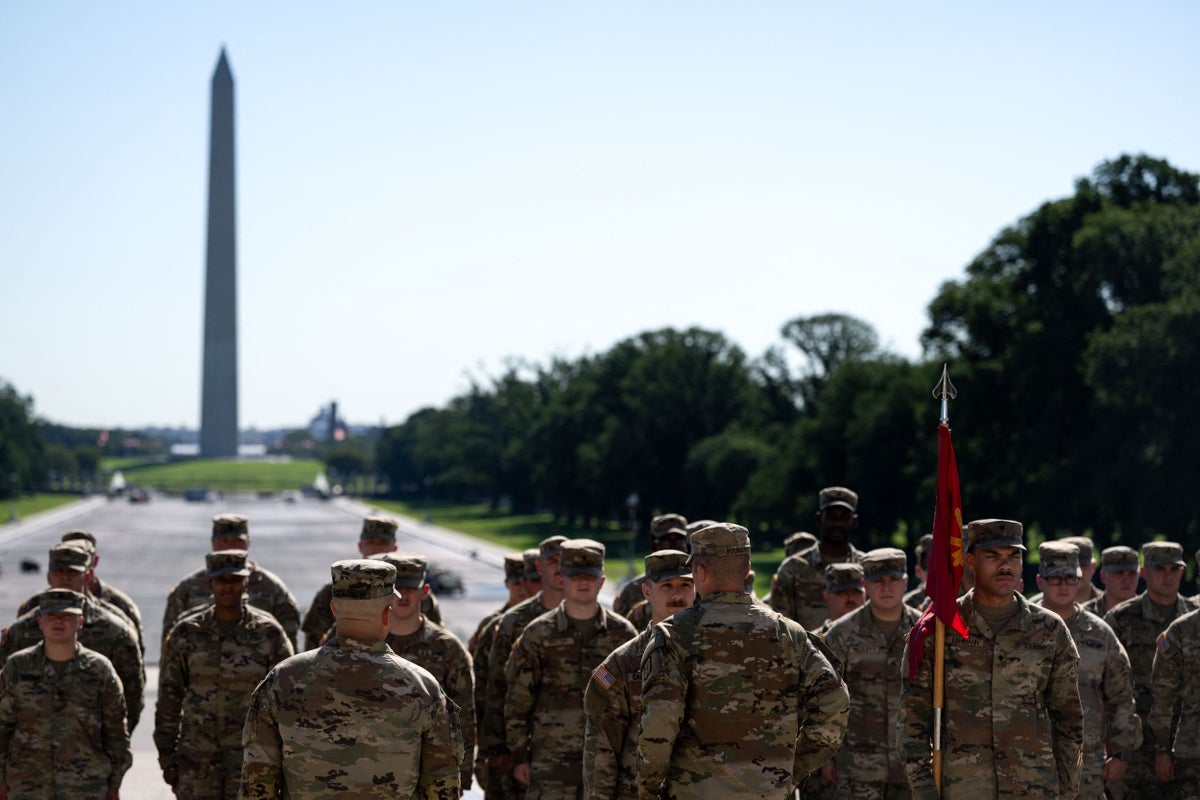
Since last October, the Defense Department has shelled out $49 million on meals for troops deployed to the capital by President Donald Trump in response to what he called a crime emergency, The Washington Sun reported, citing four government contracts.
One contract, worth $15.6 million, covered “catered breakfast, lunch and dinner and midnight meals for service members.” Another, valued at $9.9 million, provided for “catered meals” from May through June. One company, Maryland-based Sardi’s Catering, received upwards of $33 million for the work.
An additional $20 million in taxpayer funds could be spent on feeding the troops by the year’s end, according to the outlet.
The Congressional Budget Office estimated in January that it would cost at least $18 million per month to deploy 1,000 National Guard personnel to a U.S. city. Congressional Democrats previously estimated the total cost of the D.C. deployment would exceed $600 million by August.
The Independent has contacted the Pentagon for comment.
Trump first ordered National Guard troops into Washington’s streets in August 2025, announcing an initial deployment of 800 troops and a monthlong federal takeover of the Metropolitan Police Department. He said the measures were intended to combat what he called “out-of-control” crime.
“I'm announcing a historic action to rescue our nation's capital from crime, bloodshed, bedlam and squalor and worse,” Trump said at the time. “This is Liberation Day in DC, and we're gonna take our capital back.”
The mission eventually expanded to more than 4,000 troops and is scheduled to continue through the remainder of Trump’s second term.
In August, the Justice Department hailed the surge as a success, citing year-over-year declines of 45 percent in homicides, 64 percent in carjackings and 33 percent in robberies.
Reuters reported that same month that just 1.3 per cent of the criminal cases filed in the Superior Court of the District of Columbia, which handles most of the city’s criminal prosecutions, mention the National Guard’s soldiers.
Democrats, meanwhile, sharply criticized the deployment, calling it an alarming precedent and an unnecessary use of taxpayer money. They noted that crime in Washington had already been declining from its pandemic-era peak.
“What’s interesting is that despite that significant investment of taxpayer dollars now six months into the mission, the National Guard has been unable to identify any specific measurable public safety outcomes directly attributable to their presence,” Michigan Senator Gary Peters said in February.
“This is just a very expensive publicity stunt and very dangerous for our country, particularly if you want to try to normalize having people in military uniforms in our cities,” he added.
Protests have also erupted on city streets and local officials have challenged the deployment in court.
In November, a judge ruled that the deployment was unlawful and ordered it overturned. A federal appeals court later allowed the troops to remain in place while the case proceeds.
Though the Washington deployment remains the longest of Trump’s second term, he has also sent National Guard troops to other cities, including Los Angeles, Chicago and New Orleans.