Tawee Dissects Toxic Waste Crisis: Structural Corruption and Financial Loopholes, Calls to Restore Community Lawsuit Rights with Six Proposals to Reclaim Justice - Thairath English
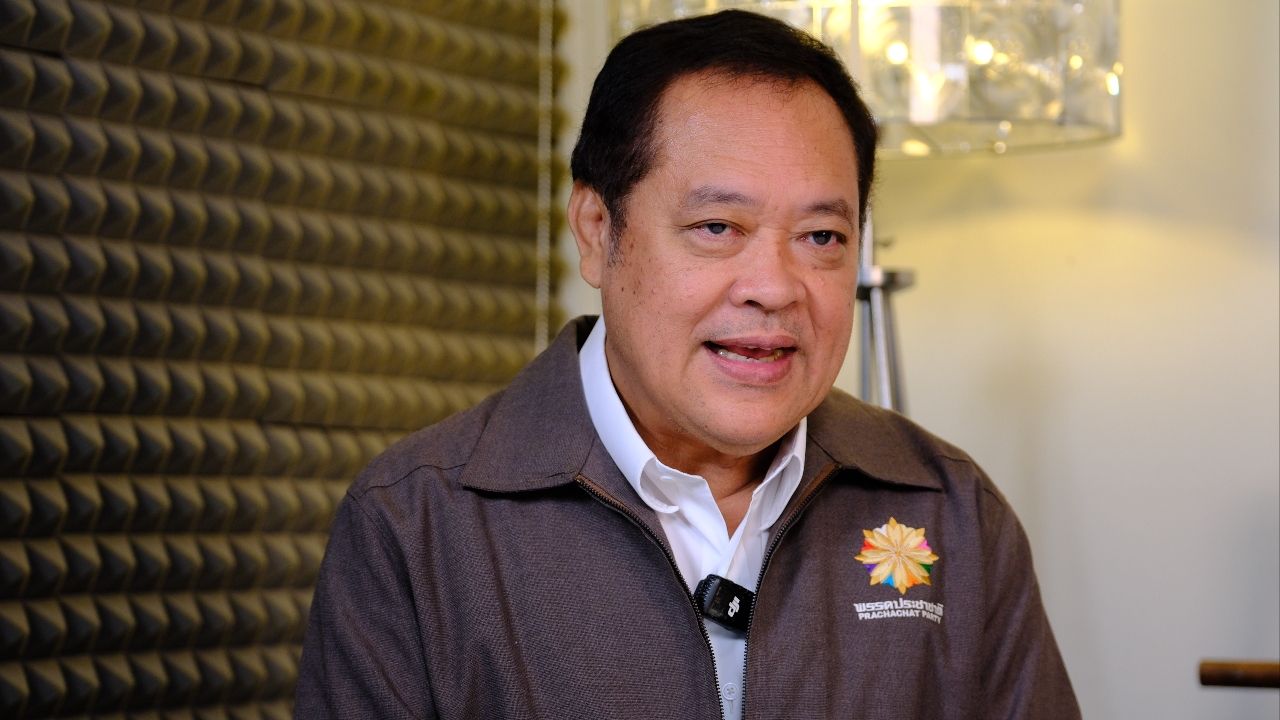
Tawee dissects the toxic waste crisis as a consequence of structural corruption and financial loopholes, demanding the restoration of lawsuit rights to communities and presenting six proposals to break the deadlock and reclaim justice.
On 3 Nov 2026 GMT+7, Police Colonel Tawee Sodsong, former Minister of Justice, advisor to the parliamentary commission, and head of the Prachachart Party, addressed Thailand's toxic waste and industrial pollution problems. He said these issues arise not only from legal shortcomings but also from structural corruption and financial loopholes that allow some officials to remain inactive, effectively protecting environmental criminals. He called for legal reforms to restore the power of directly affected communities to file lawsuits.
He stated that "toxic waste" results from structural corruption and financial loopholes and that lawsuit rights must be returned to the affected communities.
True justice should not be measured by the profits of monopoly capital groups or GDP figures gained at the cost of destruction, but by the "right to survival and quality of life of ordinary people."
Previously, private sector surveys on government agency corruption were often met with excuses or legal threats. Today’s toxic waste crisis is "conclusive evidence" because agencies accused of risk are responsible for pollution control, water management, urban planning, forestry, industrial factories, customs, and law enforcement.
Police Colonel Tawee said the problem is not only the law itself but structural corruption exploiting legal loopholes, allowing some officials to "idle" and become pillars protecting environmental criminals without accountability. Images of chemical and toxic waste runoff flooding Prachinburi province, causing villagers to hold signs saying "We don’t want cancer," represent the last straw of despair.
- Toxic waste pits as tall as seven-story buildings: Industrial waste pits in Prachinburi have expanded over 350 rai, dug just 10 meters above groundwater. Illegal chemical dumping from the EEC caused fires releasing toxic fumes. Acidic gypsum waste piles in Si Maha Phot district were washed by rain into water sources.
- Urban planning favors investors: Landfilling blocked waterways in Si Maha Phot district, so floodwaters carried chemicals and heavy metals into the Prachinburi River, destroying the community’s drinking and usage water.
- Nominees hold licenses: Foreign capital uses nominees to hold shares and rubber processing licenses but secretly smelts chemicals and recycles toxic waste. For example, factories in Chonburi violated 17 cases but remain open, discharging wastewater into the soil.
- 15,000 tons of cadmium waste: Transported from Tak province to hidden sites in Samut Sakhon and Chonburi. Accounting questions remain on how thousands of tons disappeared without proper transport documentation.
- Customs checkpoints rely on foreigners: 816 tons (about 100 containers) of red dust from electric arc furnace steel smelting from Albania nearly entered Thailand but were intercepted due to international monitoring alerts. This shows gaps in Thailand’s import screening. Meanwhile, electronic waste continues to be smuggled in.
- Cases shuffled around: In the Case of the Jon Basin No. 16 Reservoir in Chachoengsao Province, heavy metal contamination rendered it unusable, yet local police, the Forestry Crime Suppression Division, and DSI all declined responsibility. As a former Minister of Justice, Tawee admitted this issue cannot be solved by administrative orders but must be addressed by law.
Police Colonel Tawee also noted new loopholes where affiliated companies guarantee each other. Even if villagers win lawsuits, they might not receive compensation. While the government announced a crackdown on nominees, the Ministry of Commerce issued a 2026 ministerial regulation exempting licensing for inter-affiliate service businesses (No. 5), published in the Royal Gazette on 28 August 2026. This regulation exempts licensing for services among affiliates, including management, IT, and debt guarantees, reducing government visibility into foreign financial networks.
1️⃣ Factory A operates hazardous waste business, owning land and machinery.
2️⃣ The parent company pools Factory A's cash into a central account (Cash Pooling) and charges management and IT fees monthly.
3️⃣ Factory A uses remaining assets to guarantee debts for affiliated Company B.
4️⃣ When toxic leaks occur and villagers sue successfully, Factory A may be left with only factory ruins and debts, lacking assets for enforcement.
Tawee added that worryingly, the law counts "affiliated companies" by the number of common shareholders or directors, not just capital share. Nominee networks holding minor shares can link multiple companies to guarantee each other’s debts. As a result, profits are recorded at affiliates, while damages are left to the public.
Therefore, proposals to break the justice deadlock center on "people first."
1. Allow communities to be direct "victims": Break the old framework where courts often do not recognize villagers broadly affected by pollution as victims. Communities can sue officials neglecting duties under Section 157 in anti-corruption courts and sue polluters civilly and criminally without waiting for the NACC, police, DSI, or prosecutors, preventing case delays and political interference.
2. Close affiliate guarantee loopholes: Prohibit hazardous waste factories from using assets to guarantee debts of other affiliates, remove the "counting people" criterion, and require disclosure of guarantees and inter-company transactions in financial statements.
3. Establish guarantee and community rights protection funds: Require hazardous waste factories to post restoration bonds reflecting real costs in accounts inaccessible to parent companies, and secure environmental insurance to prevent capital transfers and evasion. Set up funds to help villagers fight lawsuits and prevent Strategic Lawsuit Against Public Participation (Anti-SLAPP).
4. Audit waste accounts for "input, treatment, residue" quarterly and disclose publicly.
5. Upgrade to a specialized environmental court: Allow immediate temporary suspension of operations and, in civil cases, require factories to prove they did not cause pollution, since all data is held by the factories, not the community.
6. Ensure communities truly represent local people: Public consultation resolutions must come from affected locals. Fake communities face immediate prosecution, and ministerial regulations dismantling state screening tools should be reviewed.
"Thailand is not the world's garbage dump, nor are Thai lungs meant to filter toxins! When electronic waste and toxic residues are illegally buried on our land, justice can only occur when the power to protect life returns to the people," Tawee said. He added, "Our land, rivers, and clean air are heritage we must pass to future generations. We cannot allow authorities to hand the country over to multinational capital groups as a dumping ground in exchange for benefits. It is time for power and justice to truly return to the people."