Swedish rights prize honours Pakistani human rights lawyer Jalila Haider
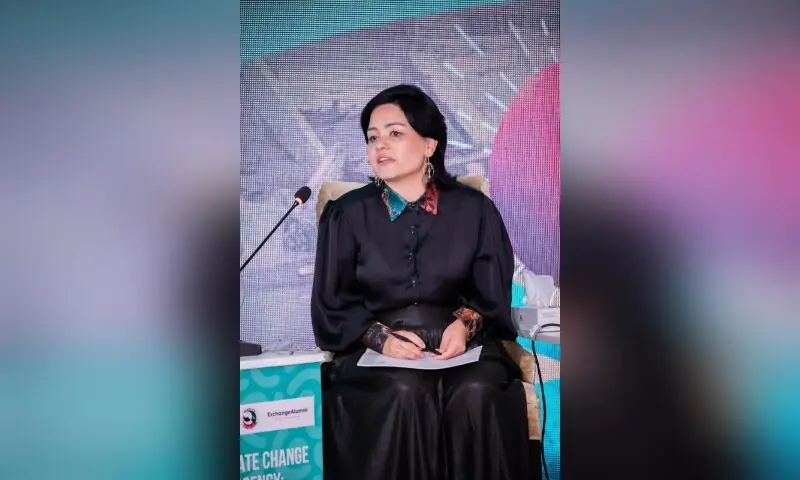
Human rights lawyer and activist Jalila Haider on Wednesday received the Right Livelihood prize, dubbed an “alternative Nobel”.
The Sweden-based Right Livelihood Foundation honoured Haider “for breaking barriers, as the first female lawyer from her Hazara community, to challenge ethnic, state and patriarchal persecution, guided by the conviction that no human being is illegal.”
According to the foundation’s website, Haider in 2018 “led a seven-day hunger strike against the targeted killing of Hazaras” that led to direct negotiations between the army chief and Hazara women, “resulting in a sustained decrease in attacks against the community”.
It added that Haider had combined legal work with street activism and community empowerment, securing “justice for thousands targeted or ignored by those in power, specifically ethnic, gender and religious minorities, as well as refugees”.
“Her law firm has also helped restore freedom of movement for more than 600 political activists and human rights defenders,” the Right Livelihood Foundation said.
Haider is a founding member of the Women’s Democratic Front as well, the foundation said, adding that she “helped pioneer Balochistan’s first Women’s March, a street mobilisation that sparked discussions on feminism across the deeply patriarchal region”.
Through her organisation ‘We the Humans’, Haider has “helped over 400 widows of terrorism victims gain financial independence”, the foundation said.
“Despite detention, cyber-harassment and death threats, she continues to work towards a world where, in her words, ‘no human being is illegal’,” the foundation said.
The Right Livelihood Award was established in 1980, when Swedish-German stamp collector Jakob von Uexkull sold part of his collection to fund it, after the foundation behind the Nobel Prizes refused to create new awards in the fields of environmental protection and international development.
A prominent US artificial intelligence researcher and two women-led rights groups were also recognised.
The jury said in a statement it had chosen US artificial intelligence researcher Timnit Gebru “for challenging concentrated power in artificial intelligence and pioneering digital technology rooted in justice, lived experience and human agency.”
Gebru is known for her work examining how biases influence AI and in 2017, Gebru co-founded Black in AI.
The foundation also gave the nod to the Rural Women’s Assembly — a grassroots movement of more than 178,000 small-scale farmers across 11 Southern African nations.
The Georgian Young Lawyers’ Association (GYLA), which the jury described as “Georgia’s oldest and most prominent human rights organisation,” was also honoured.